
Zen’kyo-an Marishi-ten Hall: A Sacred Site for Demon Slayer Fans
Zen’kyo-an Marishi-ten Hall (禅居庵 摩利支天堂) stands quietly near the geisha district of Gion in Higashiyama Ward, Kyoto City. This ancient temple has recently gained attention as a sacred site among fans of the anime “Demon Slayer.” The reason lies in the deep connection between the boar’s head constantly worn by popular character Hashibira Inosuke and the Marishi-ten deity enshrined in the temple grounds.
This article comprehensively covers everything you need to know before visiting this sacred site—from the history of Zen’kyo-an Marishi-ten Hall to its connection with Demon Slayer, highlights, how to pay respects, and access information.
What is Zen’kyo-an Marishi-ten Hall? Basic Information and History
Zen’kyo-an as a Tatchū of Kenninji Temple
Zen’kyo-an is a tatchū (small temple within the grounds of a larger temple) of Kenninji, the head temple of the Rinzai Zen Buddhist sect and known as Kyoto’s oldest Zen temple. While located within Kenninji’s grounds, Zen’kyo-an functions as an independent temple with its own history and faith.
Though the main deity is Avalokiteshvara, it is more widely known for the Marishi-ten enshrined in its grounds. Therefore, it is affectionately called “Marishi-ten Hall,” and its official name is “Zen’kyo-an Marishi-ten Hall.”
Founding in the Late Kamakura Period and Zen Master Seisetsu Seisho
Zen’kyo-an was founded in 1333 (Genkō 3) during the late Kamakura period. It was established by Sadamune Ogasawara under the guidance of Zen Master Daikan Seisetsu Seisho, an immigrant monk from Yuan (present-day China).
Zen Master Seisetsu Seisho was a high priest welcomed as the 23rd abbot of Kenninji, and he brought a Marishi-ten statue from China. This statue is still carefully preserved as a secret Buddha and is opened to the public only once a year on October 20 during the Grand Opening Festival.
One of Japan’s Three Great Marishi-ten Temples
Zen’kyo-an Marishi-ten Hall is counted among “Japan’s Three Great Marishi-ten Temples.” Marishi-ten is a protective deity in Buddhism who is the personification of shimmering heat waves (kagerō). Because this form is invisible, it is believed to bring blessings of good fortune, victory, and long military success.
During the Sengoku period, many samurai lords worshipped Marishi-ten, particularly Oda Nobuhide, the father of Oda Nobunaga, who is known to have rebuilt the Marishi-ten Hall. The current Marishi-ten Hall is designated as a Kyoto Prefecture Cultural Property.
Why is it a Sacred Site for Demon Slayer? The Relationship Between Inosuke and Boars
The Character Hashibira Inosuke
Hashibira Inosuke, who appears in “Demon Slayer,” is a fellow Demon Slayer corps member of the protagonist Tanjiro Kamado. His greatest feature is a boar’s head covering that he constantly wears. A character raised in the mountains with a wild personality, embodying “reckless determination,” he has captivated many fans with his direct combat style.
Inosuke was raised by a boar according to his backstory, and the boar covering is his identity itself. His courageous and straightforward nature fascinates many fans.
The Deep Connection Between Marishi-ten and Boars
Marishi-ten is a celestial deity in Buddhism with origins in Hindu mythology. In Japan, it is often depicted riding on a boar, representing the connection between Marishi-ten’s supernatural powers and the boar’s forward momentum and valor.
At Zen’kyo-an Marishi-ten Hall, because of this relationship with boars, boar statues and carvings are placed throughout the temple grounds. “Koma-inoshishi” (guardian boars) similar to guardian lions protect the approach, and boar statues are also found at the water basin, making it truly a “boar-filled” temple.
Why Inosuke Fans Visit
The visible alignment between Inosuke’s trademark boar’s head and Zen’kyo-an’s boar faith has led to the temple being recognized as a sacred site, particularly among Inosuke fans of Demon Slayer.
Just as Inosuke faces difficulties with “reckless determination,” visitors come to receive the power of “reckless forward progress” before important tests, competitions, or new challenges. It has become a popular spot for students preparing for exams, athletes, business professionals, and others seeking victory.
Highlights of Zen’kyo-an Marishi-ten Hall
Boar Statues Throughout the Grounds
What immediately catches the eye upon visiting Zen’kyo-an Marishi-ten Hall are the boar statues scattered throughout the temple grounds.
Koma-inoshishi (Guardian Boars)
A pair of guardian boars, similar to the guardian lions found at shrines, are placed on both sides of the approach. These boars in the open and closed mouth positions are cherished as welcoming and protective presences for visitors.
Boar at the Water Basin
A boar statue can be seen at the water basin where visitors purify themselves before paying respects.
Various Boar Monuments
The grounds feature boars of various sizes that have been offered, each with different expressions and poses. Finding all the boars becomes part of the joy of visiting.
The Marishi-ten Hall (Main Hall)
The Marishi-ten Hall is a historic structure designated as a Kyoto Prefecture Cultural Property. This hall, rebuilt by Oda Nobuhide, enshrines the secret Buddha—the Marishi-ten statue brought from China by Zen Master Seisetsu Seisho.
Normally kept secret and not open to the public, the statue is opened once a year on October 20 during the Grand Opening Festival, allowing visitors to directly view it. On this day, a great general scripture recitation is also performed, drawing many worshippers.
Boar Omamori (Fortune Telling Sticks)
One of the highlights of Zen’kyo-an Marishi-ten Hall is the omamori fortune sticks contained in ceramic boar containers. After drawing an omamori, you can take the boar container home with you whether or not you tie the paper at the designated area.
These charming boar figurines are often kept at home as talismans, and for Demon Slayer fans, they become special commemorative items reminiscent of Inosuke.
Goshuin (Temple Stamps)
You can receive a goshuin (temple stamp) at Zen’kyo-an Marishi-ten Hall. The Marishi-ten goshuin is written with powerful brushwork and is popular as a memento of your visit.
If you bring a goshuin book, it will be written for you on the spot (depending on the time and season, it may be a pre-written version). This is a must-have item to record your sacred site pilgrimage to Demon Slayer locations.
Garden (Usually Closed to the Public)
Zen’kyo-an has a dry landscape garden embodying Zen philosophy with beautiful scenery. However, this garden is normally closed to the public and can only be viewed during special openings.
It is recommended to check the official Zen’kyo-an website or Kyoto City Tourism Association for information about special openings.
The Blessings and Faith of Marishi-ten
Guardian Deity of Good Fortune and Victory
Marishi-ten derives from Marichi in Sanskrit, meaning “shimmering heat waves.” Because heat waves have no substance and cannot be grasped, Marishi-ten is also considered an invisible entity that cannot be captured by enemies.
From this characteristic, samurai lords during the Sengoku period deeply revered Marishi-ten as a guardian deity for long military success. In modern times, it is believed to bring blessings of good fortune and victory in all “contests”—including exams, job interviews, sports competitions, and business negotiations.
Protection from Misfortune and Calamity
Marishi-ten is also believed to have the power to ward off bad luck and protect from disasters. Being an invisible entity, it is believed to hide and protect people from calamities and misfortune.
For people born in the Year of the Boar, it particularly serves as a guardian deity throughout their lives and is worshipped as a lifelong protective deity.
The Spirit of Reckless Determination
Boars have the habit of charging straight ahead once they set their target. This “reckless determination” spirit symbolizes the courage to face difficulties and strong willpower to achieve goals.
Many visitors to Zen’kyo-an Marishi-ten Hall feel they receive the power of this reckless determination, finding courage to move toward their own goals.
How to Pay Respects and Etiquette
The Flow of a Visit
- Pass Through the Mountain Gate
Go through Kenninji’s grounds and head to Zen’kyo-an Marishi-ten Hall’s mountain gate.
- Purify at the Water Basin
Cleanse your hands and mouth at the water basin with the boar statue.
- Bow to the Guardian Boars
Bow respectfully to the guardian boars while proceeding along the approach.
- Pay Respects at the Marishi-ten Hall
Offer your coin offering before the main hall and pay respects with two bows, two claps, and one bow (or by pressing palms together).
- Tour the Boar Statues in the Grounds
Walk around and view the various boar statues scattered throughout, offering your wishes at each.
- Draw Fortune Sticks or Receive a Goshuin
If desired, draw an omamori or receive a goshuin stamp.
Points to Note When Visiting
- The main Zen’kyo-an temple is normally not open to the public. Only the Marishi-ten Hall can be visited.
- Please pay respects quietly and be considerate of other visitors.
- Photography is permitted, but please refrain from using flash or speaking loudly.
- The grounds are smoke-free.
Best Times to Visit
Zen’kyo-an Marishi-ten Hall is open for visits year-round, but certain times are particularly recommended.
October 20 (Grand Opening Festival)
Once a year, the secret Buddha Marishi-ten statue is opened to the public on this special day. A great general scripture recitation takes place starting at 1:00 PM.
New Year in the Year of the Boar
Once every 12 years, the New Year in the Year of the Boar is especially crowded with many visitors.
Exam Season (January–March)
Many students preparing for exams and their families visit during this period for blessing.
Access Information
Basic Information
Address
〒605-0811 Kyoto City, Higashiyama Ward, Komatsuchō 146 (Within Kenninji Temple)
Visiting Hours
9:00 AM–5:00 PM (Marishi-ten Hall only. The main Zen’kyo-an temple is not open to the public)
Admission Fee
Free
Closed Days
None (Open year-round)
Access by Public Transportation
Keihan Electric Railway
- About 7 minutes on foot from Gion-Shijo Station
- About 10 minutes on foot from Kiyomizu-Gojo Station
Hankyu Electric Railway
- About 10 minutes on foot from Kawaramachi Station
Kyoto Bus
- About 5 minutes on foot from Higashiyama-Yasui Bus Stop
- About 7 minutes on foot from Minamiza-mae Bus Stop
- About 10 minutes on foot from Gion Bus Stop
Access by Car and Parking
Zen’kyo-an Marishi-ten Hall does not have its own parking lot. Kenninji’s parking lot is not available for visitors, so it is recommended to use nearby coin parking or public transportation instead.
Since the Gion area has narrow streets and many tourists, using trains or buses is highly recommended.
Nearby Sightseeing Spots
Kenninji Temple (Head Temple)
The head temple Kenninji, where Zen’kyo-an belongs, is known as Kyoto’s oldest Zen temple and houses remarkable artworks including Sotatsu Tawaraya’s “Wind and Thunder Gods Folding Screens” (reproduction) and “Dual Dragon Painting.” The garden is also beautiful and should be visited together with Zen’kyo-an.
Yasaka Shrine
Yasaka Shrine, symbolic of Gion, is about a 10-minute walk from Zen’kyo-an. Known for its blessings of protection from misfortune and matchmaking, it is crowded with visitors year-round.
Kodaiji Temple
Founded by Nene, the principal wife of Toyotomi Hideyoshi, to honor Hideyoshi’s memory. Famous for its beautiful garden and illuminations. About a 15-minute walk from Zen’kyo-an.
Kiyomizu Temple
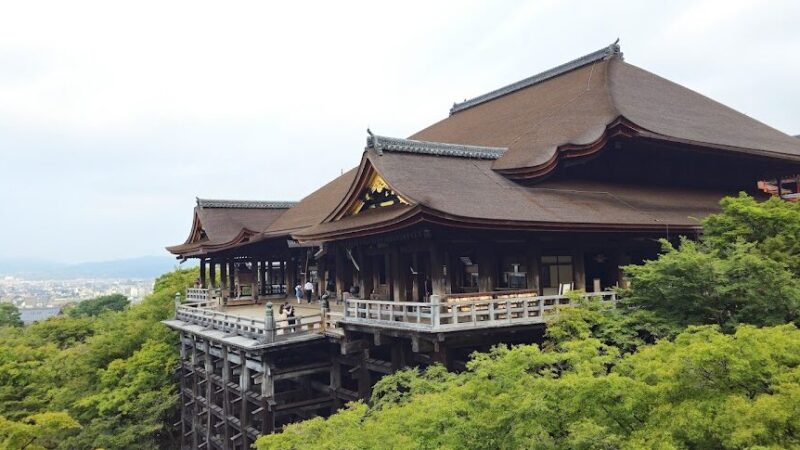
One of Kyoto’s representative tourist attractions. The view from the main hall, known for its “Kiyomizu stage,” is spectacular. About a 20-minute walk from Zen’kyo-an.
Hanamikoji Street
A charming stone-paved street in Gion. You can enjoy a stroll while experiencing Kyoto’s traditional atmosphere. About a 5-minute walk from Zen’kyo-an.
Comparison with Other Demon Slayer Sacred Sites
Kamado Shrine (Fukuoka Prefecture)
A shrine with the name “Kamado” matching the surnames of protagonist Tanjiro Kamado and his sister Nezuko. Known for blessings of matchmaking and protection from misfortune, it draws many Demon Slayer fans as a sacred site.
Kumotori Mountain (Tokyo, Yamanashi, and Saitama Prefectures)
Believed to be the model for Tanjiro’s hometown. With an elevation of 2,017 meters, it is also popular among mountain climbing enthusiasts.
Tofukuji Temple (Kyoto Prefecture)
One of the temples believed to be a model for buildings appearing in the work. Also famous as a spot for autumn foliage viewing.
Among these sacred sites, Zen’kyo-an Marishi-ten Hall is especially meaningful for Inosuke fans, and its convenient location makes it easy to visit as part of a Kyoto sightseeing tour.
Photography Spots at Zen’kyo-an Marishi-ten Hall
Commemorative Photos with Guardian Boars
The guardian boars on both sides of the approach are the most popular photography spot. Some fans even visit in Inosuke cosplay with boar head masks (though care should be taken not to disturb other visitors).
Exterior of the Marishi-ten Hall
The Marishi-ten Hall, designated as a Kyoto Prefecture Cultural Property, is a substantial historic structure. The front view photographs beautifully.
Boar Statues in the Grounds
Collecting and photographing boars with various expressions and poses is enjoyable. Finding all the boars and capturing them in photos makes a wonderful memento of your sacred site pilgrimage.
Mountain Gate
The mountain gate of Zen’kyo-an is also popular as a photography spot. Its charming Kyoto-style appearance is appealing.
Visitor Testimonials and Reviews
Demon Slayer Fan Impressions
“As soon as I entered the grounds, I saw so many boar statues and thought of Inosuke. I felt I received the spirit of reckless determination.”
“The boar container for the fortune sticks is so cute that I display it in my room. I treasure it as Inosuke merchandise.”
“I visited on the Grand Opening Festival day and was able to view the secret Buddha Marishi-ten statue. It was a precious experience.”
Voices of Exam Students and Challengers
“I visited before my exams and passed successfully. I think my reckless determination helped.”
“I came here before taking on a new challenge at work. I’m feeling the blessings of victory luck.”
“I was born in the Year of the Boar, so I feel a special connection to this place. I visit every year.”
Conclusion: Receive the Power of Reckless Determination at Zen’kyo-an Marishi-ten Hall
Zen’kyo-an Marishi-ten Hall is a special place that, while being an ancient temple continuing from the Kamakura period, beautifully connects with modern anime culture.
The many boar statues arranged throughout the grounds bring to mind Demon Slayer’s Hashibira Inosuke, making it an important sacred site pilgrimage location for fans. At the same time, it remains a place of faith visited by many seeking blessings of good fortune, victory, and protection from misfortune.
Its location near the center of Kyoto and close to Gion makes it easy to visit as part of other sightseeing. By combining it with nearby attractions like Kenninji, Yasaka Shrine, and Kiyomizu Temple, you can simultaneously enjoy Kyoto’s history, culture, and modern pop culture.
Before important life challenges—whether exams, job interviews, sports competitions, or business negotiations—why not visit Zen’kyo-an Marishi-ten Hall? You will surely receive the power to face difficulties with reckless determination.
Whether you’re a Demon Slayer fan planning Kyoto sightseeing or seeking blessings of good fortune and victory, Zen’kyo-an Marishi-ten Hall is a must-see spot. The boars arranged throughout the grounds will surely welcome you warmly.