
![[Theatrical Version “SHIROBAKO”] Musashino City, Tokyo](https://anime-place.site/cms/wp-content/uploads/2026/07/places-347-【劇場版「SHIROBAKO」】-東京都武蔵野市.jpg)
The theatrical version of “SHIROBAKO” released on February 29, 2020, is a beloved work as a sequel to the popular TV series depicting the animation production process. The sacred sites set in Tokyo, which served as the stage for this work, are scattered over a wide area centered on Musashi-Sakai, including Ogikubo, Mitaka, and Shinjuku.
This article provides detailed introductions to all sacred sites and filming locations appearing in the theatrical “SHIROBAKO,” thoroughly explaining efficient pilgrimage routes, photography tips, and highlights of each spot. By actually visiting the stage of the work, you will be able to more deeply experience the world in which Miyamori Aoi and others work and live.
What is Theatrical “SHIROBAKO”? The Charm of the Work and Characteristics of Sacred Sites
The theatrical “SHIROBAKO” depicts a world several years after the TV anime version, following Musashino Animation’s challenge to produce a theatrical anime. It is a moving work depicting the growth of production staff including the protagonist Miyamori Aoi and meetings with new colleagues.
Characteristics of the Tokyo Area Where the Work Is Set
The sacred sites of this work are primarily developed around Musashino City, Tokyo. The area around Musashi-Sakai Station is where many anime production companies actually gather, and it makes sense that this location was chosen as the stage for the work. Through meticulous background depiction based on the production team’s research, existing shopping streets and buildings are realistically recreated, making this a work where you can fully enjoy the charm of sacred site pilgrimage.
In the theatrical version, in addition to locations from the TV version, many new sacred sites appear such as Shinjuku and Ogikubo. Various areas throughout Tokyo become the stage in line with the story development, creating a structure where sacred site pilgrimage across a wide area can be enjoyed.
Sacred Site Pilgrimage Spots in the Musashi-Sakai Area
Musashi-Sakai is the central stage of the theatrical “SHIROBAKO.” It is set as the location of Musashino Animation, and many of Miyamori Aoi’s daily scenes unfold in this area.
Around JR Musashi-Sakai Station
JR Chuo Line Musashi-Sakai Station is one of the most important sacred sites of the work. Located about 20 minutes by rapid Chuo Line from Shinjuku in the “Sakai” district of Musashino City, Tokyo. The station’s north-south free passage and ticket gates appear multiple times in the work and are depicted in commuting scenes of Miyamori and others.
The landscape in front of the station is faithfully reproduced in the work, and you can feel as if you’ve entered the world of “SHIROBAKO” the moment you leave the station. In particular, the north exit rotary is a frequently appearing location where Miyamori moves around by bicycle.
Skip-pu Street Shopping Street
Skip-pu Street Shopping Street, just a short walk from the north exit of Musashi-Sakai Station, is depicted in the work as the townscape around “Musashino Animation.” The atmosphere of the arcade shopping street is realistically expressed in the work and appears multiple times as a shopping street that Miyamori and others regularly use.
Various restaurants and retail shops line the shopping street, and many are actually operating. When you stroll around comparing the scenes in the work, you can feel the characters’ living experience more intimately. The shopping street’s decorations change with the seasons, so it’s appealing to enjoy different faces depending on when you visit.
nonowa Musashi-Sakai
nonowa Musashi-Sakai, a commercial facility directly connected to Musashi-Sakai Station, also appears in the work. This facility, which opened in 2013 as an in-station facility, has cafes, restaurants, bookstores and other tenants, and scenes depicting Miyamori and others using it for meetings or breaks are shown.
The cafe space within the facility is also ideal as a rest spot for sacred site pilgrims. It’s a precious spot where you can take a break while immersed in the world of the work.
Patisserie Ourson Musashi-Sakai Store
Patisserie Ourson Musashi-Sakai Store, which appears in a scene where Miyamori and others purchase cake in the theatrical version, is an actual pastry shop within walking distance of Musashi-Sakai Station. The storefront is faithfully depicted in the work, making it a must-see spot for fans.
Since it’s an actually operating store, it’s necessary to respect the store’s rules when visiting and be considerate not to inconvenience other customers. It’s also recommended to actually purchase a cake as a souvenir of your sacred site pilgrimage.
Purification Plant Area Near Musashi-Sakai
The area around a purification plant on the way from Ome Kaido toward Musashi-Sakai appears in an important scene of the theatrical version where Miyamori Aoi was walking when at her wit’s end. Located diagonally opposite a shopping mall, this area becomes the stage for an impressive scene expressing Miyamori’s emotional state.
The surrounding townscape is also carefully depicted in the work, and walking the same path while recalling the scene is a spot where you can empathize more deeply with the character’s emotions.
Sacred Site Pilgrimage Spots in the Ogikubo Area
The Ogikubo area also appears as an important stage in the theatrical version. Scenes including the first meeting between Miyamori and new character Miyai Kaede are important to the story development and unfold in Ogikubo.
JR Ogikubo Station West Exit
JR Ogikubo Station West Exit appears in the theatrical version as the place where Miyamori and Miyai were talking about eating. Ogikubo Station, where the Chuo Line and Tokyo Metro Marunouchi Line stop, is about 10 minutes from Shinjuku with good accessibility.
The landscape of the station’s west exit is depicted in detail in the work, with the rotary and building layout in front of the station faithfully reproduced. When you actually visit, you can experience the sensation of the work’s scenes spreading right before your eyes.
Pretale Ogikubo SS (Gas Station)
Pretale Ogikubo SS, which appears in the theatrical version as the place where Miyamori and Takanashi unexpectedly reunite, is an actual gas station in the Ogikubo area. In a scene where Miyamori is putting gas in her car, she has an impressive reuniting with Takanashi after a long time.
A gas station, an ordinary place, becomes an important turning point in the story, and it’s a spot where the realistic depiction of reunion in the mundane daily life shines.
Nissan Prince Nishi-Tokyo Dealership Ogikubo Store
Nissan Prince Nishi-Tokyo Dealership Ogikubo Store, which appears in a scene where Hiraoka and Honda converse, is also one of the sacred sites in the Ogikubo area. The exterior of the car dealership and surrounding townscape are depicted in the work and appear in character movement scenes.
Restaurants Near Ogikubo
Multiple restaurants in Ogikubo that served as models for those appearing in the work exist. By visiting around the shop where Miyamori and Miyai first faced each other, you can feel the characters’ interactions more deeply.
Sacred Site Pilgrimage Spots in the Mitaka Area
Mitaka, the station next to Musashi-Sakai, also appears as an important stage in the theatrical version.
JR Mitaka Station
JR Mitaka Station appears in the theatrical version as the station where Miyamori got off to make a phone call. As one of the main stations on the Chuo Line, it’s about 15 minutes by rapid from Shinjuku.
The station’s platform and ticket gates area are depicted in the work, serving as the stage for Miyamori’s emergency phone call scene. The atmosphere inside the station and surrounding landscape are faithfully reproduced, and it’s a deeply moving spot when visited while recalling scenes from the work.
Townscape Around Mitaka Station
The commercial facilities and townscape around Mitaka Station also appear in the work. The landscape of the station plaza and shopping street is depicted as a background, presenting a different urban expression from Musashi-Sakai.
Sacred Site Pilgrimage Spots in the Shinjuku Area
The Shinjuku area also appears as an important stage in the theatrical version, with important scenes unfolding toward the story’s climax.
Shinjuku Ballt9
Shinjuku Ballt9 is the actual movie theater where the theatrical “SHIROBAKO” was released and also appears in the work as a movie theater scene. It’s a cinema complex located about 5 minutes on foot from Shinjuku Station’s east exit.
In the work, there’s a scene of Miyamori and others going to see a movie, with the exterior depicted in ticket purchase scenes. In addition to visiting as a sacred site pilgrimage, you can also have the special experience of actually watching the theatrical “SHIROBAKO” here.
Sunshine Aquarium
Sunshine Aquarium inside Sunshine City in Higashi-Ikebukuro, Toshima Ward, Tokyo, also appears in the theatrical version. It’s depicted in the work as a research scene, with an impression of a scene visiting to see octopuses.
The address is 3-1 Higashi-Ikebukuro, Toshima Ward, Tokyo, Sunshine City. Located about 8 minutes walk from Ikebukuro Station, it’s a popular sightseeing spot as an aquarium in a high-rise building in the urban center.
Shinjuku Alta Front Giant Video Screen
The giant video screen in front of Shinjuku Alta at the east exit of Shinjuku Station also appears in the work. This location, where advertisements were displayed coinciding with the theatrical release, is also depicted as a background in the work, functioning as a symbolic spot of Shinjuku.
The atmosphere of Shinjuku’s bustling entertainment district is realistically expressed in the work, with an impressive contrast drawn between anime production and urban bustle.
Sacred Site Pilgrimage Spots in Nishi-Tokyo City Area
Following the TV version, the area around Tanashiro in Nishi-Tokyo City also appears as the stage for the theatrical version.
Around Seibu Shinjuku Line Tanashi Station
The area around Seibu Shinjuku Line Tanashi Station appeared in TV version episodes 8 and 16, but is also depicted in some scenes of the theatrical version. Located in Nishi-Tokyo City, Tokyo, it’s a somewhat distant area from Musashi-Sakai.
The landscape of the shopping street and residential area around Tanashi Station is depicted in the work, allowing you to feel the expansion of the characters’ living sphere.
Proposal for Efficient Sacred Site Pilgrimage Routes
Since the sacred sites of the theatrical “SHIROBAKO” are scattered across a wide area of Tokyo, efficient route planning is important. Here we introduce model courses for visiting major spots in one day.
Half-Day Course: Musashi-Sakai Concentration Plan
For those with limited time, a course concentrated on the Musashi-Sakai area is recommended.
- JR Musashi-Sakai Station (Starting point): Photograph inside the station, ticket gates, and rotary
- Skip-pu Street Shopping Street: Stroll through the shopping street, check the exterior of each store
- nonowa Musashi-Sakai: Take a break at a cafe while recalling the work
- Patisserie Ourson Musashi-Sakai Store: Photograph the cake shop exterior (note operating hours)
- Purification Plant Area: Recreate scenes along Ome Kaido
Required time: Approximately 3-4 hours
Transportation: On foot or bicycle (rental bicycles available)
Full-Day Course: Complete Chuo Line Conquest Plan
A course for visiting major sacred sites over a full day.
Morning
- JR Musashi-Sakai Station (Start at 9:00)
- Tour sacred sites in the Musashi-Sakai area (2 hours)
- Move to JR Mitaka Station (5 minutes by train)
- Explore the area around Mitaka Station (1 hour)
Afternoon
- Move to JR Ogikubo Station (approximately 15 minutes by train)
- Sacred site pilgrimage in the Ogikubo area (2 hours)
- JR Ogikubo Station West Exit
- Pretale Ogikubo SS
- Nissan Prince Nishi-Tokyo Dealership Ogikubo Store
- Move to Shinjuku Station (approximately 10 minutes by train)
- Sacred site pilgrimage in the Shinjuku area (2 hours)
- Shinjuku Ballt9
- Shinjuku Alta Front
Required time: Approximately 8 hours
Transportation: Utilize the JR Chuo Line
Two-Day Course: Complete Coverage Plan
For those who want to thoroughly visit all sacred sites.
Day 1: Musashi-Sakai, Mitaka, and Nishi-Tokyo Area
- Morning: Leisurely explore the Musashi-Sakai area
- Afternoon: Tour sacred sites in Mitaka and Tanashi stations
- Evening: Return to Musashi-Sakai and dine at the shopping street
Day 2: Ogikubo, Shinjuku, and Ikebukuro Area
- Morning: Detailed pilgrimage in the Ogikubo area
- Afternoon: Sacred site pilgrimage in the Shinjuku area
- Evening: Visit Sunshine Aquarium in Ikebukuro
This plan allows time to leisurely take photos and enjoy meals at each spot.
Seasonal Ways to Enjoy Sacred Site Pilgrimage
The sacred sites of the theatrical “SHIROBAKO” show different faces depending on the season.
Spring (March-May)
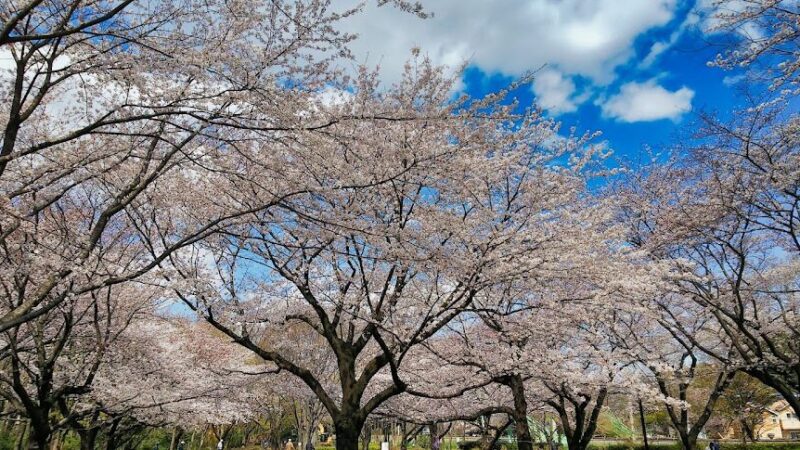
Cherry blossom trees around Musashi-Sakai are beautiful during this season. Spring scenery is also depicted in scenes from the work, and you can have a special experience where the actual season overlaps with the work’s world. Skip-pu Street Shopping Street is decorated for spring and wrapped in a cheerful atmosphere.
Summer (June-August)
You can experience the seasonal feeling close to the theatrical release period. With beautiful fresh greenery, you can tour while comparing with summer scenes in the work. However, heat precautions are essential.
Autumn (September-November)
An ideal season for sacred site pilgrimage due to comfortable weather. Autumn leaves are beautiful, and trees around Musashi-Sakai and street trees are colored. Long-distance walking can be done comfortably during this period.
Winter (December-February)
Since the theatrical version was released in February, the winter atmosphere fits perfectly with the work’s world. The illuminations and year-end/New Year decorations of the shopping street are sights to see. Prepare well for the cold.
Photography Tips and Etiquette During Sacred Site Pilgrimage
We introduce photography techniques to better enjoy sacred site pilgrimage and etiquette that must be observed.
Photography Techniques
Angle Matching: Save screenshots from the work to your smartphone beforehand, and look for the same angle on site to make comparison photos easier.
Time of Day Selection: Visiting at the same time of day as scenes in the work makes the lighting and atmosphere much closer. It’s recommended to visit morning scenes in the morning and evening scenes at dusk.
Wide-Angle Lens Usage: In narrow spaces like shopping streets, using your smartphone’s wide-angle mode or wide lens makes it easier to recreate the wide angles shown in the work.
Etiquette to Observe
Consideration for Private Property: Photographs of shops or residences and other private property should be taken with permission or limited to exteriors only. Always confirm with store staff before photographing inside stores.
Not Obstructing Passage: In places with heavy foot traffic such as shopping streets and station fronts, care must be taken not to obstruct other pedestrians. Avoid long photography sessions and be subtle during busy times.
Consideration for Operating Businesses: For stores like Patisserie Ourson that are actually in operation, either use them as a customer or limit photography to exteriors only. Even with sacred site pilgrimage purposes, the same etiquette as regular customers is required.
Noise Consideration: In residential areas, avoid loud conversations and noise, respecting the life of community residents.
Ways to Enjoy Sacred Site Pilgrimage on a Budget
We introduce tips for keeping sacred site pilgrimage costs down while having a fulfilling experience.
Saving on Transportation
Using All-Day Passes: When touring widely along the Chuo Line, all-day passes like the Ku-Nai Pass or Holiday Out Pass are convenient. They often cost less than normal round-trip fares and are free to get on and off, allowing flexible route changes.
IC Card Points: Earn JRE POINTS or PASMO points to apply toward next transportation costs. Those who regularly go on sacred site pilgrimages can save even more by linking with credit cards with high point return rates.
Saving on Food
Lunch Time Utilization: Many restaurants in Musashi-Sakai and Ogikubo offer affordable set menus during lunch time. Enjoying local cuisine while on sacred site pilgrimage is also recommended.
Convenience Store and Supermarket Usage: Convenience stores and supermarkets near nonowa Musashi-Sakai and the station offer boxed lunches and drinks to purchase and enjoy breaks in a park economically.
Saving on Accommodation
When visiting from distant areas, there are few accommodation facilities around Musashi-Sakai, so using hotels in Shinjuku or Kichijoji as a base is standard. Using early booking discounts and weekday rates can reduce accommodation costs.
Items and Apps Useful for Sacred Site Pilgrimage
We introduce items and apps to make sacred site pilgrimage more comfortable and efficient.
Essential Items
Smartphone: A necessity for sacred site pilgrimage including map apps, storing work screenshots, and photography. Don’t forget to carry a mobile battery.
Comfortable Walking Shoes: When visiting multiple areas in one day, there will be lots of walking. Choose comfortable shoes like well-worn sneakers.
Beverages: Especially in summer, frequent hydration is important for heat stroke prevention.
Notebook and Pen: Taking notes about visited locations and observations is convenient for later reflection.
Recommended Apps
Google Maps: Essential as a basic map app. Registering sacred site locations as favorites beforehand is convenient.
Transfer Guide App: Ideal for finding optimal routes when using multiple lines like the JR Chuo Line and Seibu Shinjuku Line.
Photo Comparison App: Apps that let you view work screenshots and photos taken on site side-by-side double the enjoyment of sacred site pilgrimage.
Highlights and Summary of Theatrical “SHIROBAKO” Sacred Site Pilgrimage
Sacred site pilgrimage for the theatrical “SHIROBAKO” is a precious opportunity to experience realistic Tokyo streets unique to a work depicting anime production behind the scenes. Sacred sites centered on Musashi-Sakai, where many anime production companies actually exist, become special places where the work’s world view and real reality intersect.
Experiences Gained Through Sacred Site Pilgrimage
You can experience the living feeling and breath of characters that cannot be felt just by viewing the work through actually visiting the locations. The station Miyamori Aoi passed through every day, the gas station where she reunites with Takanashi, the Ogikubo street where she meets Miyai. Standing in each place will carve the story more deeply into your heart.
Coexistence with Communities
Sacred site pilgrimage also serves as a bridge connecting work fans and local communities. When visiting places like Musashi-Sakai shopping streets or Ogikubo shops that are actually operating, it’s important to be conscious of contributing to the local economy while appropriately using them as customers.
Deeper Understanding of the Work
By touring sacred sites, you can realize how carefully the production team researched and depicted realistic backgrounds. The work “SHIROBAKO” itself, which depicts anime production sites, is based on thorough location scouting and research, which you can experience through sacred site pilgrimage.
Sacred site pilgrimage for the theatrical “SHIROBAKO” will surely be a special experience for fans of the work. Using the information provided in this article, please visit the sacred sites within Tokyo and experience the world where Miyamori Aoi and others worked and lived. It will become an unforgettable memory that deepens your love for the work even further.
Final Checklist for Planning Sacred Site Pilgrimage
Before departure, confirm the following items to realize a fulfilling sacred site pilgrimage.
- [ ] Listing visited sacred sites and setting priorities
- [ ] Confirming transportation routes and required time
- [ ] Preparing work screenshots
- [ ] Checking weather forecast (alternative plan for rain)
- [ ] Charging mobile battery
- [ ] Preparing comfortable clothing and shoes
- [ ] Confirming business hours (especially shop-type spots)
- [ ] Confirming transportation IC card balance
- [ ] Confirming camera/smartphone storage space
- [ ] Preparing water and light snacks
Sacred site pilgrimage for the theatrical “SHIROBAKO” becomes an enjoyable experience from the planning stage through execution on the day and even after returning home to organize photos. We hope this article becomes a help in making your sacred site pilgrimage more fulfilling. Please walk through the “SHIROBAKO” world scattered throughout Tokyo and experience it with your own feet.


完全ガイド-800x450.jpg)