The Hokuho Culture Museum, located in Konan Ward, Niigata City, Niigata Prefecture, is a cultural facility that preserves and showcases the former residence of the wealthy farmer Itō family. In recent years, it has garnered attention among fans as a pilgrimage site, as it shares an atmosphere with the worldview of the popular anime “Demon Slayer.”
This article provides comprehensive information useful for those planning a pilgrimage, thoroughly explaining why the Hokuho Culture Museum is beloved by Demon Slayer fans, its highlights, access methods, photography spots, and precautions when visiting.
What is the Hokuho Culture Museum? Basic Information
The Hokuho Culture Museum is a cultural facility centered on the main residence of the Itō family, known as a major landowner in Echigo. It is a magnificent wooden structure constructed over eight years starting from Meiji 15 (1882) and is designated as a Nationally Registered Tangible Cultural Property.
Facility Overview
- Site Area: Approximately 8,800 tsubo (approximately 29,000 square meters)
- Building: A grand mansion boasting over 65 rooms
- Garden: A stroll garden displaying beauty throughout the four seasons
- Collections: Approximately 2,000 art pieces, historical documents, folk materials, and more
The Hokuho Culture Museum has long been cherished by local residents and tourists as a valuable facility conveying Niigata’s history and culture. Recently, its unique atmosphere has been recognized as sharing the worldview of “Demon Slayer,” revealing new charm.
Why is the Hokuho Culture Museum Called a Sacred Site for Demon Slayer?
The Hokuho Culture Museum attracts attention as a pilgrimage site for “Demon Slayer” fans due to its architectural style and garden landscape that vividly preserve the atmosphere of the Taishō and early Shōwa periods.
Taisho Romance Felt in Architectural Beauty
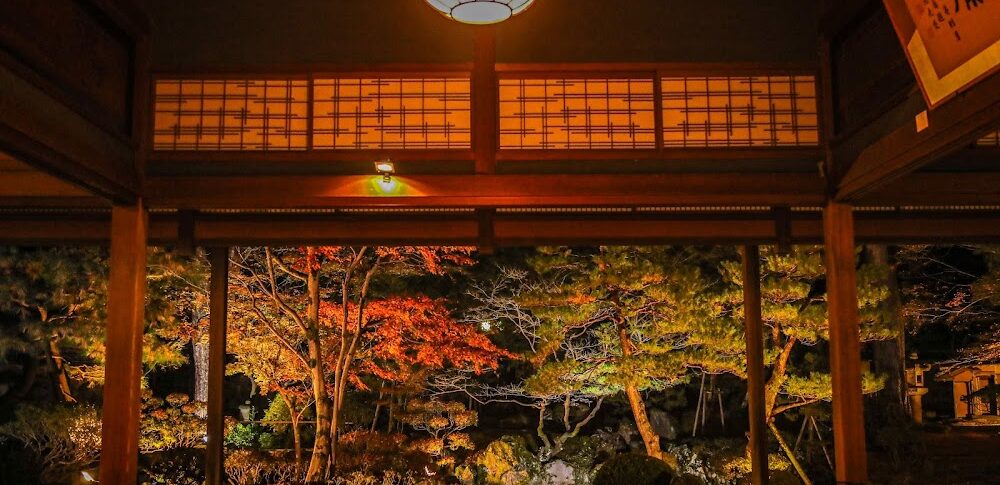
The story of “Demon Slayer” is set in the Taishō era, and the architectural style of the Hokuho Culture Museum precisely aligns with that historical background. Long corridors, lattice doors, tatami-mat rooms, and shoji screens—elements that evoke the atmosphere of mansions appearing in the work can be seen throughout.
Wisteria Flowers and Butterfly Garden
In spring, beautiful wisteria flowers bloom magnificently in the museum’s garden. In “Demon Slayer,” wisteria flowers are depicted as an important motif that keeps demons at bay, and this wisteria trellis has become a photography spot visited by many fans.
Additionally, butterflies can be seen dancing in the garden, which overlaps with the image of the “Butterfly Mansion” appearing in the work, serving as another reason for its recognition as a sacred site.
The Landscape of the Japanese Garden Viewed from the Veranda
The view of the Japanese garden from the long veranda evokes scenes of mansions in the work. Many fans feel that it resembles the atmosphere of scenes where the protagonist, Tanjirō Kamado, underwent training and recuperation.
Main Attractions of the Hokuho Culture Museum
Beyond being a pilgrimage site, the Hokuho Culture Museum is extremely valuable as a cultural facility. Here, we introduce must-see points during your visit.
1. The 100-Mat Grand Hall
One of the greatest attractions of the Hokuho Culture Museum is the 100-mat grand hall. The open spatial design without pillars brings together the finest building techniques of the time, allowing visitors to experience an overwhelming sense of scale.
From this grand hall, you can overlook the beautiful garden and enjoy its scenery throughout the four seasons. Particularly during the autumn foliage season, you can see the spectacular “frame garden” view where the window frame serves as a frame for the garden.
2. Stroll Garden
The expansive 2,000-tsubo stroll garden presents different faces throughout the year.
- Spring: Wisteria flowers, cherry blossoms, and azaleas bloom brilliantly
- Summer: Fresh greenery and the cool scenery of the pond
- Autumn: Spectacular autumn foliage created by approximately 150 maple trees
- Winter: Snowy landscape and the charm of snow-tied trees
Within the garden, ponds, waterfalls, stone bridges, and lanterns are arranged, with the design creating new scenery at every step.
3. Sanrakutei (Tea Room)
The tea room “Sanrakutei” within the garden is a space where you can enjoy tea in a tranquil atmosphere. The garden view from here is exceptional, allowing you to spend a leisurely time.
4. Long Corridors and Lattice Doors
The long corridor running through the facility is precisely the worldview of “Demon Slayer.” The contrast of light and shadow filtering through the lattice doors is ideal for photography.
There is also a “nightingale floor” that makes sounds when walked on, where you can experience the security measures and building techniques of that era.
5. Itō Family Art Collection
Art pieces and antiques collected by the Itō family are displayed throughout the facility.
- Japanese paintings
- Ceramics
- Calligraphy and paintings
- Historical documents
- Folk materials
These collections are valuable materials for understanding Niigata’s cultural history.
Recommended Photography Spots for Demon Slayer Fans
We introduce spots particularly worth photographing when visiting for a pilgrimage. However, remember to be considerate of other visitors and follow facility rules when photographing.
Wisteria Trellis (Late April to Early May)
The period when wisteria flowers are in full bloom is the best photography season for Demon Slayer fans. The sight of purple wisteria flowers hanging down is as beautiful as if recreating the work’s worldview.
Photography Tips:
- Early morning or evening with soft light is recommended
- Shoot from below the wisteria trellis, looking up
- Reflection of wisteria flowers in the garden pond
Long Corridor
The long corridor lined with lattice doors is an excellent photography spot where you can feel the Taishō-era atmosphere. The contrast of light and shadow is beautiful, allowing dramatic photographs.
Photography Tips:
- Composition utilizing the corridor’s depth
- Utilize light filtering through lattice doors
- Sit on the veranda with the garden as background
Grand Hall Overlooking the Garden
The garden view from the 100-mat grand hall is like a painting in its beauty. Particularly during autumn foliage season, trees colored red and yellow are magnificent.
Photography Tips:
- “Frame garden” composition with the window frame as a frame
- Include both tatami and garden in the shot
- Capture seasonal color changes
Stone Bridge and Pond
The stone bridge and pond within the garden are photography spots overflowing with Japanese sentimentality. The reflection of buildings and trees in the pond is beautiful, creating ethereal photographs.
Photography Tips:
- Make use of water surface reflections
- Silhouette the figure crossing the stone bridge
- Include koi swimming together
Access Methods and Directions
Here we explain access to the Hokuho Culture Museum in detail by transportation method.
Access by Train and Bus
From JR Niigata Station:
- Board a Niigata Kōtsū bus from the south exit bus terminal of Niigata Station
- Get off at “Hokuho Culture Museum Mae” bus stop (approximately 30 minutes travel time)
- Walking distance from the bus stop
Main Bus Routes:
- W1 Line (bound for Toyosaka)
- W2 Line (bound for Toyosaka via Kizaki)
The one-way fare is approximately 500 yen. As bus service runs 1-2 times per hour, it’s recommended to check the timetable in advance.
Access by Private Vehicle
From Niigata City Center:
- Via National Route 49, approximately 20 minutes
- Approximately 15 minutes from “Onmegashira IC” on the Niigata Bypass
When Using Expressways:
- Approximately 10 minutes from “Niitsu IC” on the Banei Expressway
- Approximately 15 minutes from “Niigata Airport IC” on the Japan Sea East North Expressway
Parking Information:
- Free parking available (accommodates approximately 100 vehicles)
- Large buses can park
- Early arrival is recommended during peak seasons (wisteria flowers and autumn foliage) due to congestion
Taxi
When using a taxi from Niigata Station, travel time is approximately 20-25 minutes, with fares around 3,000-4,000 yen.
Museum Hours, Admission Fees, and Closure Days
Museum Hours
- April to November: 9:00 AM to 5:00 PM
- December to March: 9:00 AM to 4:30 PM
※Last admission is 30 minutes before closing
Admission Fees
- Adults: 800 yen
- Elementary and Middle School Students: 400 yen
- Group Discount: 10% off for groups of 20 or more
※Fees may change; please check the official website for the latest information.
Closure Days
- Open year-round (temporary closures possible)
- The facility may close temporarily for maintenance; it’s recommended to confirm before your visit
Precautions and Etiquette When Visiting
The Hokuho Culture Museum is a valuable cultural property visited by many guests. Please follow the following etiquette for a pleasant visit.
Photography Precautions
- Photography inside the facility is generally allowed, but flash photography is prohibited
- Refrain from using tripods or selfie sticks as they may inconvenience other visitors
- Do not touch or get too close to exhibits
- Commercial photography requires prior permission
- Confirm with the facility in advance regarding cosplay photography
Behavior Etiquette Inside the Facility
- Remove shoes and use slippers in areas where you step up
- Refrain from loud conversations and rowdy behavior
- Eating and drinking only in designated areas
- Do not touch exhibits or buildings
- Take trash with you or dispose in designated bins
Tips to Avoid Crowds
- Wisteria flower season (late April to early May) and autumn foliage season (November) are particularly crowded
- Weekday mornings are relatively uncrowded
- Immediately after opening and near closing time tend to have fewer visitors
- Early arrival is recommended on weekends and holidays
Seasonal Attractions and Best Times to Visit
The Hokuho Culture Museum has different charms depending on the season. It’s recommended to choose the season based on your purpose of visit.
Spring (March to May)
Attractions: Cherry blossoms, wisteria flowers, azaleas
The wisteria flowers blooming from late April to early May are one of the museum’s greatest attractions. For Demon Slayer fans in particular, this period could be called the best season for pilgrimage.
A “wisteria festival” is held during the blooming period, and nighttime illumination may be conducted.
Summer (June to August)
Attractions: Fresh greenery, cool garden, lotus flowers
The Hokuho Culture Museum in summer features beautiful fresh greenery, and lotus flowers bloom in the garden pond. The garden view from the veranda is cool and refreshing, providing a pleasant time even during hot summers.
This is a period with relatively few tourists, making it recommended for those who wish to view the exhibits leisurely.
Autumn (September to November)
Attractions: Autumn foliage, autumn wildflowers
The autumn foliage season from mid to late November is a popular period rivaling spring’s wisteria. Approximately 150 maple trees color red and yellow, enveloping the entire garden in autumn’s golden brocade scenery.
The autumn foliage of the “frame garden” viewed from the 100-mat grand hall is a beauty that will remain in your memory for life.
Winter (December to February)
Attractions: Snowy landscape, snow-tied trees
The snowy landscape unique to snow country Niigata is also exceptional. The snow-tied ornaments on garden trees are beautiful as a winter symbol and allow you to experience traditional Japanese aesthetics in a serene atmosphere.
This is the period with the fewest tourists, making it ideal for those who wish to view exhibits quietly.
Nearby Tourist Attractions
We introduce nearby tourist attractions worth visiting when at the Hokuho Culture Museum.
Niigata City Aquarium Marinepia Nihonkai
Located approximately 20 minutes by car from the Hokuho Culture Museum, this is the largest aquarium on the Sea of Japan coast. Dolphin shows and diverse marine life exhibits are popular.
Niigata Senbei Kingdom
A facility where you can experience making Niigata’s famous senbei rice crackers. You can create your own original senbei, perfect as souvenirs. Approximately 15 minutes by car from the Hokuho Culture Museum.
Fukushima Lagoon
A natural, wetland area known as a haven for wild birds. You can enjoy nature throughout the four seasons, and the observation deck offers panoramic views of the Niigata Plain. Approximately 10 minutes by car from the Hokuho Culture Museum.
Niigata Furusato Village
A tourism facility where you can enjoy Niigata’s special products and local cuisine. Ideal for purchasing souvenirs and experiencing Niigata’s food culture.
History of the Hokuho Culture Museum and the Itō Family
The museum’s building was constructed as the main residence of the Itō family, wealthy farmers of Echigo. Understanding the Itō family’s history allows for a deeper appreciation of this facility’s value.
History of the Itō Family
The Itō family were wealthy farmers of Echigo continuing from the Edo period. During the era of the seventh-generation head, Itō Bunikichi, the family reached its peak, with owned land totaling 1,300 hectares (equivalent to approximately 280 Tokyo Domes).
This main residence, constructed over eight years beginning in Meiji 15 (1882), is a masterpiece into which the highest-level building techniques and aesthetic sense of the time were poured.
Opening as a Museum
Following the agricultural land reform of Shōwa 21 (1946), the Itō family was forced to give up much of their land. However, to preserve this precious cultural heritage for future generations, public opening began in Shōwa 25 (1950) as the Hokuho Culture Museum Foundation.
Since then, it has been cherished by many people as a facility conveying Niigata’s history and culture.
In-Museum Facilities and Services
Dining and Cafe
The facility features rest areas where you can enjoy light meals and sweets. You can leisurely enjoy tea while overlooking the garden.
- Matcha and Japanese sweets set
- Seasonal sweets
- Light meal menu
Museum Shop
The shop near the entrance offers Hokuho Culture Museum original merchandise and Niigata specialty products.
- Postcards
- Photo collections
- Niigata sake
- Traditional crafts
- Confections
Barrier-Free Information
- Wheelchair rental available
- Partial barrier-free accommodation
- Multi-purpose restrooms available
- Note: As a historic building, there are many steps, so it is not completely barrier-free
Frequently Asked Questions
Can I photograph freely?
Individual photography inside the facility is generally permitted. However, flash photography, tripod use, and commercial photography are prohibited. Also, remember to be considerate of other visitors.
Can I do cosplay photography?
Cosplay photography requires prior confirmation and permission from the facility. Rules may be in place from the perspective of consideration for other visitors and facility protection. Always inquire beforehand.
When is the best time to see the wisteria flowers?
The flowers typically bloom from late April to early May. However, as timing varies depending on the year’s climate, it’s recommended to check the official website or SNS for blooming status before your visit.
How long should I plan to spend?
If viewing thoroughly, approximately 1.5 to 2 hours is a reasonable estimate. If you plan to take a garden stroll or photograph, plan for additional time.
Can I bring pets?
Generally, pets cannot enter the facility. However, assistance dogs such as guide dogs may be admitted.
Can I enjoy it on rainy days?
Rainy days are less suitable for garden walks, but you can still view the garden from inside the facility. A rain-wetted garden has its own charm, offering a different beauty from sunny days.
Summary: Experience the World of Demon Slayer at the Hokuho Culture Museum
The Hokuho Culture Museum is both a precious pilgrimage site where you can feel the worldview of “Demon Slayer” and an important cultural property conveying Niigata’s history and culture.
The building vividly preserving the Taishō-era atmosphere, the garden displaying beautiful scenery throughout the four seasons, and spectacular views particularly of wisteria flowers and autumn foliage are worth seeing whether you’re a fan or not.
When visiting, keep the following points in mind:
- Best Seasons: Wisteria flowers (late April to early May), autumn foliage (mid to late November)
- Access: Approximately 30 minutes by bus from Niigata Station, or approximately 20 minutes by car
- Time Required: Approximately 1.5 to 2 hours
- Photography Etiquette: No flash, remember to be considerate of other visitors
- Avoiding Crowds: Weekday mornings are recommended
By respecting the property’s value as a cultural asset and following etiquette during your visit, you can have a more fulfilling pilgrimage experience. When visiting Niigata, be sure to visit the Hokuho Culture Museum to simultaneously experience the worldview of “Demon Slayer” and traditional Japanese beauty.
The Hokuho Culture Museum, which presents different faces throughout the seasons, is a fascinating spot with new discoveries with each visit. We hope your pilgrimage becomes a wonderful memory.