“Zatsu Tabi -That’s Journey-” is a popular manga work by Kengo Ishizaka that depicts the main character, Chika, traveling freely throughout various parts of Japan. With the TV anime adaptation decided for 2025, the popularity of pilgrimage tourism to sacred sites is increasing more and more. In this article, I will comprehensively explain the sacred site pilgrimage spots centered on Niigata Prefecture, particularly Awashimaura Village, which serves as the stage for the work.
What is “Zatsu Tabi -That’s Journey-“?
“Zatsu Tabi -That’s Journey-” is a travel manga serialized in Dengeki Maoh, with 12 volumes published to date. The charm of this work lies in the depiction of Suzugamori Chika, the protagonist, visiting various places throughout Japan on a whim and enjoying her travels, including “failures” that don’t go according to plan.
The characteristic of the work is its faithful depiction of actual tourist destinations. The landscape artwork is beautiful, and the character expressions showing various emotions are rich, filled with a charm that makes readers think “I actually want to go there.” The protagonist’s attitude of positively accepting “travel happenings” such as expected shops being closed or missing planned trains embodies a contemporary travel style.
Episodes Featuring Niigata Prefecture
Niigata Prefecture is an important setting that appears multiple times in “Zatsu Tabi.” In Journey 5, Niigata Prefecture is depicted alongside Tochigi Prefecture, and in Journey 6, Niigata Prefecture and Tokyo are the stages. Particularly impressive is the episode where Chika visits Awashima Island in Awashimaura Village, Niigata Prefecture.
Awashima Island is a small island located in northern Niigata Prefecture, even further north than Sado Island, with a circumference of approximately 23 km. It is known as Niigata Prefecture’s only inhabited island. The entire island falls within Awashimaura Village and offers beautiful blue seas and abundant nature. In the work, the charm of this island is depicted in full.
Basic Information About Awashimaura Village and Access Methods
About Awashimaura Village
Awashimaura Village is a small village with a population of approximately 300 people, floating in the Sea of Japan with abundant nature. Beautiful coastlines and peaceful rural landscapes spread across the island, allowing visitors to spend quiet time away from urban hustle and bustle. The island’s main settlements are divided between the Uchiura District on the east coast and the Kamatani District on the west coast.
The island’s industries center on fishing and tourism. Particularly during the spawning season from May to June, sea bream gather in nearby waters, and catches reach their peak. The local dish “wappani” (bream simmered in seasoned broth), made with fresh sea bream during this season, is known as Awashima’s signature cuisine.
Access Methods
Access to Awashima Island is via ferry or high-speed boat from Iwafune Port in Murakami City, Niigata Prefecture.
Access to Iwafune Port:
- Approximately 15 minutes by bus from JR Murakami Station
- Approximately 1 hour 30 minutes by car from Niigata Airport
- Approximately 1 hour by car from Niigata City center
From Iwafune Port to Awashima Port:
- Ferry: Approximately 1 hour 30 minutes travel time (2 round trips daily)
- High-speed boat: Approximately 55 minutes travel time (2 round trips daily, operates April to November)
Services may be suspended due to weather, so it’s recommended to check operational status in advance. Particularly in winter, the sea is prone to rough conditions and suspension is more likely. When planning a sacred site pilgrimage, it’s important to schedule with some flexibility.
Detailed Sacred Site Pilgrimage Spots on Awashima
Uchiura District
The Uchiura District is a settlement located on the east coast of Awashima, where Awashima Port, the island’s main port, is located. This area serves as the tourism hub, with accommodations and restaurants concentrated here.
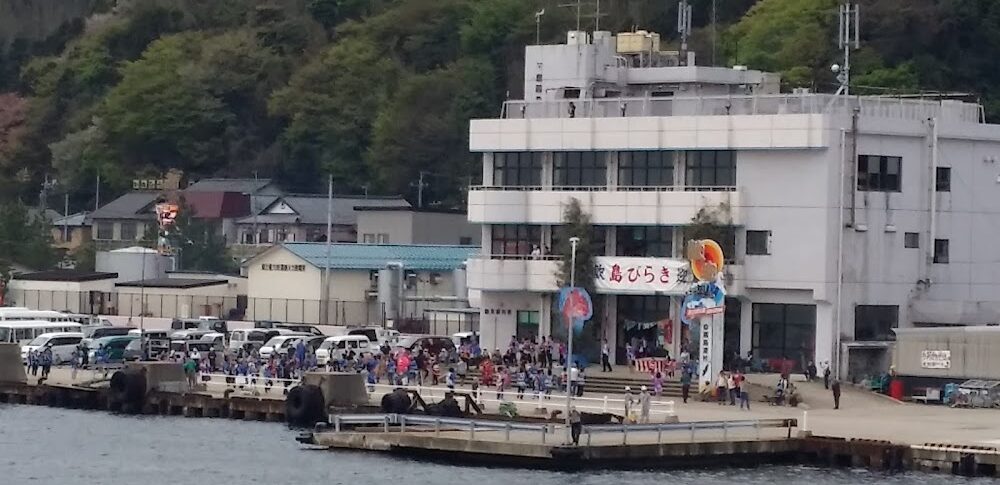
Awashima Port functions as an important facility and gateway to the island. The work depicts an impressive scene of the protagonist arriving at the island. Around the port, there is a waiting room and tourist information center where you can obtain information about the island.
Along the road leading from the port to the settlement, old-fashioned houses line the way, allowing visitors to feel the peaceful island atmosphere. Comparing the scenery depicted in the work with the actual landscape while walking is the essence of sacred site pilgrimage.
Restaurants in the Uchiura District: Several popular dining establishments for locals and tourists are scattered throughout the area. At the oldest restaurant in Awashima, you can enjoy dishes made with fresh seafood. Dishes made with locally caught squid and sea bream are particularly exquisite and appear in the work as famous local cuisine.
Kamatani District
The Kamatani District is a settlement located on the west coast of Awashima, with fewer people than Uchiura and a more pristine natural environment. Visitors can enjoy the island’s original landscape in a quiet setting.
Access to Kamatani District from Uchiura is possible on foot or by bicycle. Buses operate within the island, but with limited frequency, so renting a bicycle is recommended. The distance from Uchiura to Kamatani is approximately 3 km, about 40 minutes on foot.
The west coast is known for its beautiful sunsets, offering spectacular views of the sun sinking into the Sea of Japan. The work also features impressive sunset scenes, making this a must-see point for sacred site pilgrims.
Awashima Ranch
On Awashima, there is a ranch where visitors can experience horse riding and driving a horse-drawn carriage. This ranch, which appears in the work, is popular as a tourist spot on the island.
The ranch offers beginner-friendly horse-drawn carriage experiences and riding experiences for the more experienced. Interacting with horses in the island’s peaceful landscape provides a special memory that cannot be experienced in the city.
Operating hours and experience fees vary by season, so it’s recommended to confirm before visiting. Particularly during summer vacation periods, crowding can occur, so advance reservations are advisable.
Awashima’s Specialty Dish “Wappani”
When visiting Awashima, you must try the local dish “wappani.” This dish appears in the work and is an important element of sacred site pilgrimage.
What is Wappani?
Wappani is a hearty fisherman’s dish made by placing fresh seafood in a cedar wooden box with broth made from miso and heated stones, causing it to come to a boil all at once. It originated from the traditional cooking method of Awashima, said to derive from a dish eaten by fishermen aboard boats.
The soup, which comes to a boil instantly when heated stones are added, concentrates the fish’s umami and is exquisite. Wappani made during the sea bream spawning season from May to June, using fresh fatty bream, offers the finest flavor.
Places Where Wappani Can Be Eaten
Restaurants and inns in the Uchiura District serve wappani. However, advance reservations are often required, so it’s recommended to contact accommodations or restaurants in advance to confirm.
Prices vary by establishment, but the average is around 2,000 to 3,000 yen per person. As a luxurious dish using fresh local seafood, its value is more than justified.
Accommodations on Awashima
To fully enjoy sacred site pilgrimage on Awashima, staying overnight on the island is recommended. While day trips are possible, the limited number of ferry operations makes overnight stays ideal for leisurely exploring the island.
Inns
Awashima has several inns where visitors can experience island life in a homey atmosphere. Many inns serve meals made with fresh seafood, allowing guests to taste Awashima specialties including wappani.
Inn rates with two meals typically range from 8,000 to 12,000 yen per night. Reservations become difficult during busy seasons (summer vacation, Golden Week, etc.), so early booking is recommended.
Campground
Awashima also has a campground where visitors can enjoy camping in nature by bringing their own tent. The starry sky is exceptional, offering a view of the full stars that cannot be seen in the city.
Campground usage fees are relatively reasonable, ranging from about 500 to 1,000 yen per tent. However, with minimal facilities, it’s better suited for experienced campers than beginners.
Sacred Site Pilgrimage Spots on Niigata’s Mainland
Besides Awashima, “Zatsu Tabi” features spots on Niigata’s mainland. Incorporating these into your pilgrimage itinerary will make for a more fulfilling trip.
Murakami City
Murakami City, serving as the gateway to Awashima, is also an important stage depicted in the work. Landscapes featured in the work can be found around Iwafune Port and in the Murakami City area.
Murakami City is famous as a salmon town, with numerous restaurants serving salmon dishes. The townscape retaining the charm of a castle town is also appealing, offering enjoyment simply from strolling through.
Main Sights:
- Landscapes around Iwafune Port
- Castle town area in Murakami City
- Restaurants serving salmon dishes
- Murakami Station (train station featured in the work)
Other Niigata Prefecture Spots
The work features various locations throughout Niigata Prefecture. Creating your own pilgrimage route using a sacred site pilgrimage map is also one of the joys.
Unofficial sacred site pilgrimage support websites provide detailed map information where you can confirm spots appearing in each chapter of the work. Bringing an electronic version of the manga with you allows you to compare the work with actual landscapes on location, enabling you to enjoy sacred site pilgrimage more deeply.
Planning and Preparation for Sacred Site Pilgrimage
Travel Reservation Methods
When planning a sacred site pilgrimage to Awashima, the following reservations are necessary:
- Ferry/High-speed boat reservations: Early booking is recommended as boats may be fully booked during peak seasons
- Accommodation reservations: As accommodations on the island are limited, reservation about one month in advance is ideal
- Bicycle rental reservations: Convenient for efficiently exploring the island (advance reservation may not be necessary but confirmation is recommended)
Some travel agencies may have organized sacred site pilgrimage tours to Awashima. Those anxious about making individual arrangements might also consider package tour options.
Packing Checklist
Since Awashima is a remote island, shopping is not as convenient as on the mainland. Preparing the following items ensures peace of mind:
- Manga volumes or e-books: Essential for sacred site pilgrimage. Electronic versions are convenient for portability
- Camera/Smartphone: For landscape photography. Bring extra batteries
- Sunscreen/hat: The island has strong sunlight
- Comfortable walking shoes: Essential for exploring the island
- Rain gear: Weather changes easily on the Sea of Japan coast
- Medications: No pharmacy on the island, so bring necessary medications
- Cash: No ATMs on the island, so bring sufficient cash
Best Season
The best season to visit Awashima varies depending on your purpose:
Spring (April to June):
- Sea bream spawning season when wappani tastes best
- High-speed boat service begins (from April)
- Mild weather makes sightseeing comfortable
Summer (July to August):
- Sea swimming is enjoyable
- Peak tourism season with most visitors
- Reservations are difficult, requiring early planning
Autumn (September to November):
- Fewer tourists allow enjoying the island peacefully
- High-speed boat operates through November
- Local seafood is delicious
Winter (December to March):
- Fewest tourists
- Seas are rough with high suspension likelihood
- Experience the island’s quiet atmosphere
Spring through autumn are the most accessible seasons for sacred site pilgrimage.
Ways to Enjoy Sacred Site Pilgrimage
Comparing the Work with Landscapes
One of “Zatsu Tabi’s” charms is its faithful depiction of actual landscapes. Bringing manga volumes or e-books and comparing scenes from the work with actual landscapes allows you to experience the author’s perspective when visiting. Awashima’s beautiful coastlines and peaceful settlement landscapes are particularly impressive in the work. Taking photographs from the same angle and sharing on social media is also one of the joys of sacred site pilgrimage.
Following the Protagonist’s Footsteps
Following the same route as protagonist Suzugamori Chika allows deeper immersion in the story’s world. Eating the same dishes at restaurants the protagonist visited or taking photos at the same locations deepens attachment to the work.
Fan sites like “VisitSuzugamori” allow tracing the protagonist’s footsteps on maps, proving helpful for pilgrimage planning.
Enjoying “Zatsu Tabi” Style Travel
Incorporating the work’s theme of “zatsu (casual) travel” is another way to enjoy sacred site pilgrimage. Rather than meticulous planning, embracing schedule changes and happenings as “part of the journey” aligns with the work’s worldview.
For example, if your target restaurant is closed, explore another shop instead. If you miss a planned bus, try walking around. Such flexibility can lead to unexpected discoveries and encounters.
Sacred Site Pilgrimage Related Goods and Information Sources
Official and Unofficial Sacred Site Pilgrimage Maps
Several convenient resources exist for “Zatsu Tabi” sacred site pilgrimage:
Official “Zatsu Map”:
The TV anime official website publishes “Zatsu Map,” introducing spots featured in the work. Locations including Awashima and other tourist attractions are presented alongside work scenes.
Unofficial Sacred Site Pilgrimage Maps:
Unofficial sites like “Map of That’s Journey” map out spots from manga volumes 1-12 in detail. Connected to Google Maps, they are extremely helpful for actual pilgrimage planning.
Sacred Site Pilgrimage Doujinshi
Fan-created sacred site pilgrimage travelogues are distributed at Comic Market and similar events. The “Zatsu Tabi -That’s Journey- Sacred Site Pilgrimage” series has multiple volumes available on BOOTH and similar platforms.
These doujinshi include actual pilgrims’ experiences and photographs, serving as pilgrimage references. Typically B5 size, full color, approximately 24 pages per volume.
Collaboration Projects and Pamphlets
As the work’s popularity grows, regional collaborations have expanded. Awashimaura Village and Niigata Prefecture tourism associations may create “Zatsu Tabi” tie-up pamphlets and maps.
These official collaboration goods can be obtained at local tourism information centers and accommodations. Limited edition designs exist, making collecting them enjoyable as pilgrimage mementos.
Pilgrimage to Sacred Sites in Other Prefectures
Since “Zatsu Tabi” features settings throughout Japan, many sacred sites exist beyond Niigata Prefecture. Creating long-term plans to pilgrimage sites nationwide is a unique way fans enjoy the work.
Major Sacred Sites List
The work features the following prefectures:
- Journey 1: Fukushima Prefecture
- Journey 2: Miyagi and Toyama Prefectures
- Journey 3: Toyama and Kagawa Prefectures
- Journey 4: Kyoto Prefecture
- Journey 5: Tochigi and Niigata Prefectures
- Journey 6: Niigata and Tokyo Prefectures
- Journey 7: Mie Prefecture
- Journey 8: Hiroshima Prefecture
- Journey 9: Aomori and Wakayama Prefectures
- Journey 10: Wakayama and Iwate Prefectures
- Journeys 11-12: Shimane Prefecture
Shimane Prefecture appears across multiple chapters, featuring picturesque spots like Miho Shrine, Mihonoseki Lighthouse, and Izumo Taisha.
Planning a Multi-Prefecture Journey
For efficiently visiting scattered sacred sites, regional grouping is recommended. For example:
- Hokuriku area: Combine Toyama Prefecture (Kurobe Gorge Trolley Train, etc.) with Niigata Prefecture
- San’in area: Spend several days exploring Shimane Prefecture locations
- Shikoku area: Visit Kagawa Prefecture Takamatsu area and surroundings
The charm of “Zatsu Tabi” is discovering the distinctive attractions of each region through the work.
Expansion of Sacred Site Pilgrimage Through TV Anime Adaptation
With the TV anime adaptation decided for 2025, “Zatsu Tabi” sacred site pilgrimage enthusiasm is growing even more. The anime’s beautiful landscapes are rendered even more attractively than the original, serving as a catalyst for new fan interest in sacred site pilgrimage.
Changes After Anime Broadcasting
Anime adaptation heightens interest in featured tourist destinations, typically increasing actual visitor numbers. For small remote islands like Awashimaura Village, anime-driven tourism revitalization holds significant meaning.
Regional authorities actively collaborate with anime, potentially developing limited merchandise sales, stamp rallies, and various other projects.
Value as Anime Tourism
“Zatsu Tabi” has attracted attention from the Anime Tourism Association, being considered for “Anime Sacred Sites 88.” As a work featuring real tourist destinations, it receives high evaluation for its fusion of regional revitalization and anime culture.
Through the work, discovering previously unknown regional attractions and actually visiting contributes to the local economy. Such circulation represents the ideal form of anime tourism.
Etiquette and Precautions During Sacred Site Pilgrimage
Sacred site pilgrimage enjoyment requires consideration for residents and appropriate manners.
Basic Etiquette
- No trespassing on private property: Even if featured in the work, avoid entering private land
- Mind the noise: Act quietly in residential areas
- Take garbage with you: Especially on remote islands where waste management is burdensome
- Be considerate when photographing: Avoid inadvertently photographing other tourists or residents
- Respect at operating establishments: Obtain staff permission before photographing
Awashima-Specific Precautions
Awashima is a small island where life continues with limited resources:
- Conserve water: Island water is precious, avoid waste
- Honor reservations: Always keep ferry and accommodation reservations
- Protect natural environment: Avoid damaging plants on beaches and trails
- Contribute to local economy: Patronize local establishments when possible
Emergency Response
Medical facilities are limited on remote islands, requiring particular health management attention:
- Bring necessary medications: No pharmacy exists on the island
- Don’t overexert when unwell: Make reasonable decisions to return to the mainland if needed
- Note emergency contacts: Keep accommodation and village office contact numbers
Conclusion: Rediscovering Niigata’s Charm Through Sacred Site Pilgrimage
Through “Zatsu Tabi -That’s Journey-” sacred site pilgrimage, you can deeply understand Niigata Prefecture’s Awashimaura Village charm. Beautiful nature, fresh seafood, and warm encounters with islanders provide valuable experiences unavailable in the city.
The work’s approach to enjoying “imperfect journeys” offers new perspectives on contemporary travel styles. Enjoying travel including things not going as planned—such is “Zatsu Tabi’s” spirit. Why not embark on Niigata’s sacred site pilgrimage with this mindset?
How Awashima, a small island, has become known and visited by many through the work represents a wonderful fusion of anime/manga and regional tourism. Dive into the “Zatsu Tabi” world yourself and discover new Niigata charm.
Sacred site pilgrimage is more than sightseeing—it should be conducted with affection for the work and respect for the region. While observing proper etiquette, enjoy a memorable journey like protagonist Chika.