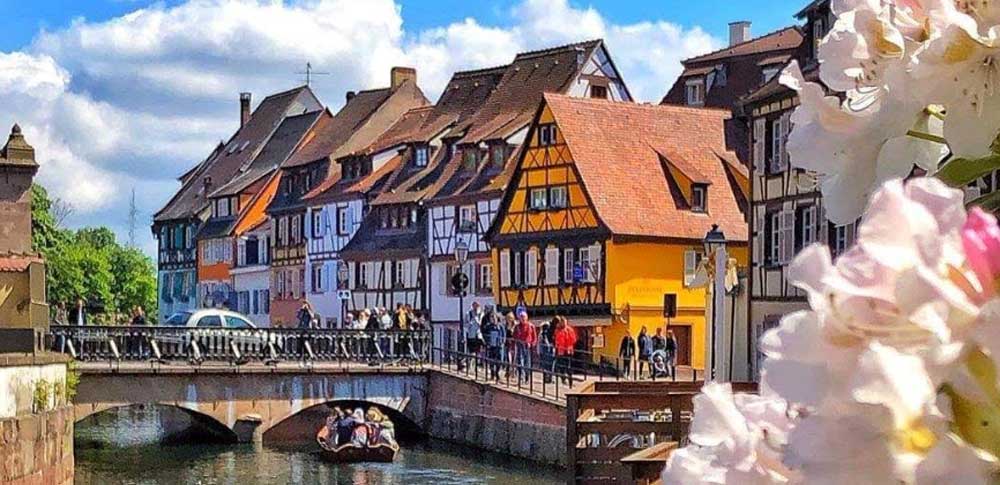
Colmar and Howl’s Moving Castle: A Deep Connection
The Town Visited by Director Hayao Miyazaki
Colmar (Colmar), located in the Alsace region of eastern France, has garnered worldwide attention from Studio Ghibli fans as the town where location scouting for the masterpiece “Howl’s Moving Castle” took place. In December 2001, Director Hayao Miyazaki visited this beautiful medieval town when participating in a Ghibli film event held in Paris.
Despite being a small town with a population of approximately 70,000, Colmar is a special place where centuries of history and culture are condensed. Located near the border with Germany, it possesses a unique atmosphere where French and German cultures blend, and its landscapes are said to have greatly stimulated Director Miyazaki’s creativity.
The Film’s World Born from Location Scouting
In the production of “Howl’s Moving Castle,” the staff of Studio Ghibli carefully observed the townscape of Colmar, conducting photography and resource collection. The street scenes that appear in the film, particularly the medieval European atmosphere with half-timbered buildings lined up, drew great inspiration from Colmar’s actual landscape.
The cobblestone roads Sophie walks on in the film, the streets lined with colorful buildings, and above all, the impressive triangular-roofed architecture align remarkably with the actual scenery of Colmar. The French Tourism Bureau has officially acknowledged it as the “model,” and it has now become a sacred site visited by many Ghibli fans, primarily Japanese tourists.
Geography and Historical Background of Colmar
Jewel of the Alsace Region
Colmar is located in the Alsace region at France’s easternmost point, in a strategic location near the borders with Germany and Switzerland. This geographical characteristic has greatly influenced the town’s culture and architectural style. It is positioned approximately 70 kilometers southwest of Strasbourg, the central city of the Alsace region, with the two cities connected by rail in about 30 minutes.
The Alsace region is adjacent to Germany across the Rhine River, and historically the region’s allegiance changed hands multiple times between France and Germany. This complex history has formed a unique cultural identity, creating a fascinating region where French and German elements intermingle in all aspects—architecture, language, and cuisine.
History of the Town from the Middle Ages
Colmar’s history dates back to the 9th century. In the Middle Ages, it prospered as an imperial free city and developed as a center of trade. Many half-timbered buildings constructed between the 13th and 17th centuries still remain today, and these are the town’s greatest charm.
Particularly during the Renaissance period of the 16th century, merchants enriched by silver mines and the textile industry constructed luxurious mansions. These buildings feature decorations in fine detail, conveying the high level of craftsmanship of the time. Having miraculously escaped the ravages of World War II, the medieval townscape has been preserved in almost complete form, earning it the nickname “living museum.”
Maison Pfister: A Must-See Sacred Site for Howl Fans
The Actual Building Model Appearing in the Film
The most important pilgrimage site for fans of “Howl’s Moving Castle” is the “Maison Pfister” (Pfister House). This building, constructed in 1537, is a Renaissance-style mansion built by hat manufacturer Louis Schérer. It was constructed by a merchant from Besançon who had made his fortune in the Liévrault Valley silver mines as a building symbolizing his wealth.
The most distinctive feature of Maison Pfister is the beautiful fresco painting on the second floor and the octagonal tower-shaped bay window positioned at the corner. The walls are decorated with intricate murals depicting figures from the Old and New Testaments and emperors of the Holy Roman Empire, testifying to the high level of artistry of the 16th century.
Comparison with Scenes from the Film
In the opening scene of “Howl’s Moving Castle,” where Howl and Sophie take an aerial walk, the building that appears is Maison Pfister. The triangular roof, the shape of the bay window, and the decorative patterns on the walls match the characteristics of the building depicted in the film remarkably.
Fans who have watched the film multiple times would surely be moved the moment they see Maison Pfister in person, thinking, “This is exactly the building!” It is evident that Director Miyazaki and the staff of Studio Ghibli observed this building in detail and faithfully incorporated it into the film. Currently, Japanese tourists can be seen photographing themselves in front of this building on a daily basis.
Access to Maison Pfister and Photography Spots
Maison Pfister is located on Rue des Marchands, nearly in the center of Colmar’s old town. It is approximately 15 minutes on foot from Colmar Station and about 5 minutes from Unterlingen Square, the center of the old town.
The best photography spot is at a slight distance from the front of the building. By changing the angle, you can capture the octagonal bay window and the fresco paintings on the wall more beautifully. Early morning light that gently illuminates the building is particularly recommended. Since the building is currently privately owned, interior viewing is not possible, but simply enjoying the exterior is well worth the visit.
Charm of Colmar’s Old Town Townscape
Medieval Landscape Woven by Half-Timbered Houses
The greatest charm of Colmar is undoubtedly the medieval half-timbered (colombage) building townscape that has continued since the Middle Ages. The sight of colorfully painted half-timbered houses lined up gives a sensation as if you have wandered into a fairy tale world.
Half-timbered architecture is an architectural style that developed in the Alsace region from the 15th to 17th centuries. It is characterized by a structure where wooden frameworks are exposed and gaps are filled with plaster or brick, with different timber framework patterns for each era. In Colmar, these buildings have been preserved in excellent condition, forming a townscape that looks like a textbook of architectural history.
Beautiful Houses Colored with Pastel Colors
What makes Colmar’s buildings particularly striking is the pastel-colored exterior walls. Buildings painted in soft hues of light pink, yellow, blue, and green color the streets, bringing to reality the whimsical world depicted in Ghibli works.
These colors are not merely decorative; they historically had meanings indicating occupation or the owner of the house. For example, butchers used red, bakers used yellow, and so on. Currently, strict regulations have been imposed on building paint to preserve the historical landscape, maintaining harmony throughout the town.
Little Venice District and Canal Scenery
The most romantic area in Colmar is the district called “Petite Venise” (Little Venice). Half-timbered houses line up along the Rosh River, and the reflection of buildings in the canal creates a beautiful landscape.
This district was formerly home to fishermen, boatmen, and leather tanners, and buildings facing the water feature small balconies and flower-decorated windows. From spring to summer, flowers such as geraniums and petunias color the buildings, creating an even more beautiful sight. You can stroll the pathways along the canal or participate in boat tours to view the townscape from the water.
Main Tourist Attractions in Colmar
Unterlingen Museum
A must-see when visiting Colmar is the Musée Unterlinden (Unterlingen Museum). This museum, housed in a 13th-century Dominican convent that has been remodeled, contains art works from the Middle Ages to the present day.
Particularly famous is the “Isenheim Altarpiece” by 16th-century painter Matthias Grünewald. This work is known worldwide as an important religious painting, and art enthusiasts from around the world visit simply to see this work. Medieval Alsatian sculptures, paintings, and archaeological artifacts are also exhibited, allowing you to deepen your understanding of this region’s culture and history.
Saint-Martin Church
Saint-Martin Church (Collégiale Saint-Martin), located at the center of Colmar’s old town, is a Gothic-style church constructed between the 13th and 14th centuries. Also called “Colmar Cathedral,” it serves as a landmark of the town.
Its exterior is characterized by red and green roof tiles, and the interior stained glass is beautiful, and it is highly regarded as a masterpiece of medieval religious architecture. From the tall tower, you can enjoy a panoramic view of the old town, and the full vista of the townscape with densely packed half-timbered houses can be enjoyed. Around the church, there is a former market square, and the area is now lively with restaurants and cafes.
Old Customs House (Koïfhus)
The Old Customs House (Koïfhus/Coïfhus), constructed in 1480, was a historic structure that once functioned as the commercial center of the Alsace region. Its distinctive feature is multi-colored roof tiles in the Burgundian style, and it is one of Colmar’s important historic buildings.
The first floor of the building was used for merchandise storage and trading, and important meetings were held on the second floor. Currently used as an exhibition space, limited-time events and exhibitions are held. The square in front of the building hosts seasonal events including Christmas markets, and is bustling with locals and tourists.
House of Heads (Maison des Têtes)
The “House of Heads” (Maison des Têtes), built in 1609, is a luxurious Renaissance-style building with 106 face sculptures carved into its exterior walls, from which it takes its name. These sculptures express various human expressions and emotions, demonstrating the high level of sculpture technique of the time.
At the corner of the building is the “Coopersmith Statue” created by French sculptor Bartholdi (creator of the Statue of Liberty). Currently, the first floor operates as a restaurant, where you can enjoy meals within a historic building. You can experience something special, savoring Alsatian traditional cuisine while immersing yourself in the medieval atmosphere.
Access to Colmar and Practical Tourism Information
Access Methods from Paris
The most convenient way to reach Colmar from Paris is by TGV (French high-speed train). Direct trains run from Paris’s Gare de l’Est to Colmar in approximately 2 hours 30 minutes, or about 3 hours with a transfer in Strasbourg.
Prices fluctuate depending on the season and booking timing, but early reservations start from around 30 euros one way, with typical prices ranging from 50 to 80 euros. It is recommended to book in advance through the SNCF (French Railways) official website or app. You can also fly from Paris to Strasbourg and then travel to Colmar by train from there.
Day Trip Tourism from Strasbourg
Many travelers stay in Strasbourg, the central city of the Alsace region, and make day trips to Colmar. From Strasbourg to Colmar by TER regional train takes approximately 30 minutes, with fares around 15 euros one way.
It is quite possible to visit all major tourist attractions in Colmar in one day, but if you wish to enjoy the town’s atmosphere at leisure, an overnight stay in Colmar is recommended. The townscape at dusk or in the early morning has an exceptional beauty, offering charm that cannot be experienced on a day trip.
Best Time to Visit
Colmar can be visited year-round, but each season offers different attractions.
Spring (April-June) is one of the most beautiful seasons, with flowers coloring the town. Particularly from May to June, geraniums bloom on building balconies and windowsills, creating a spectacular contrast between the pastel-colored buildings and flowers. The temperature is also comfortable, making it an optimal time for tourism.
Summer (July-August) is peak tourist season. With stable weather and long daylight hours, you can enjoy sightseeing at a leisurely pace. However, tourists are numerous, and hotels and restaurants are crowded. Early reservations are essential.
Autumn (September-November) is the wine harvest season in the Alsace region. Harvest festivals are held along the nearby wine route, where you can enjoy new wine. Autumn foliage is also beautiful, and tourism can be enjoyed in a calm atmosphere.
Winter (December-February) is especially recommended during the Christmas season. Colmar’s Christmas market boasts one of the largest scales and greatest beauty in the Alsace region. The half-timbered townscape illuminated with lights is truly a winter fairy tale world.
Time Needed for Tourism
Colmar’s old town is relatively compact, and major tourist attractions can be visited on foot. Touring just Maison Pfister, Little Venice, major churches, and squares is possible in approximately 3-4 hours.
However, if you plan to carefully view museums, take leisurely breaks at cafes, or enjoy shopping, a full day is recommended. Additionally, if you plan to visit the nearby wine route or tour neighboring villages, a stay of 2-3 days is ideal.
Alsatian Cuisine and Gourmet Experience
Traditional Alsatian Cuisine
When visiting Colmar, be sure to taste the traditional cuisine of the Alsace region. You can enjoy unique cuisine that blends French and German food cultures.
Choucroute is one of the representative dishes of Alsace. It is a dish of fermented cabbage (sauerkraut) with sausage, pork, bacon, and other meats, simmered in white wine. It is generous in portion and particularly recommended during cold seasons.
Tarte Flambée is a dish of thin pizza dough topped with cream cheese, onions, and bacon, then baked. Called “Flammekuchen” in Alsatian, it is characterized by its crispy texture and savory flavor.
Baeckeoffe is a dish of mutton, pork, and beef with vegetables marinated in white wine and slow-cooked in an earthenware pot. It is named after the practice of cooking using leftover heat from bakeries.
Charm of Alsatian Wine
The Alsace region is a major producer of white wine representing France. Colmar is located in the center of the “Alsace Wine Route,” with numerous wineries scattered throughout the surrounding area.
The characteristic of Alsatian wine is that the variety name serves as the wine name. Riesling, Gewürztraminer, Pinot Gris, Muscat—each has its own distinctive aroma and flavor. Particularly Riesling, a signature variety of Alsace, is characterized by fruity, refreshing taste.
Within Colmar, numerous wine bars and wine shops offer tasting opportunities. Wine tours visiting surrounding wineries are also popular.
Recommended Restaurants and Cafes
Colmar has a variety of dining establishments, from traditional Alsatian restaurants to modern bistros.
Restaurants utilizing half-timbered buildings in the old town allow you to enjoy meals in a historical atmosphere. Restaurants in the Little Venice district are particularly popular because you can dine on terrace seating along the canal, in a romantic atmosphere.
At cafes, you can enjoy traditional Alsatian baked goods like “Kugelhopf” and tarts alongside coffee or hot chocolate. Afternoon tea time is particularly when locals also relax at cafes, where you can experience a leisurely atmosphere.
Attractions around Colmar
Villages Along the Alsace Wine Route
Using Colmar as a base, you can visit beautiful villages along the Alsace Wine Route. These villages also have preserved half-timbered buildings and each possesses unique charm.
Eguisheim is one of the villages selected as “one of France’s most beautiful villages.” Located about 10 minutes by car from Colmar, the town is arranged in concentric circles around a central castle. The colorful half-timbered houses and flower-decorated streets are beautiful, and many wine producers are based here.
Riquewihr is a village that has preserved its 16th-century appearance nearly completely, retaining a strong medieval atmosphere enclosed by city walls. Located approximately 15 kilometers north of Colmar, about 20 minutes by car, it is a popular village with shops selling wine and souvenirs.
Kaysersberg is known as the birthplace of Albert Schweitzer. Medieval castle ruins tower on a hill overlooking the village. It is characterized by a beautiful landscape where a stone bridge and half-timbered houses are harmonized.
Combined Tourism with Strasbourg
Strasbourg, the capital of the Alsace region, is a city worthy of visiting in combination with Colmar. While being an international city with the European Parliament located there, the old town “Grand’Île” is registered as a World Heritage site and contains numerous historic buildings.
Strasbourg Cathedral is known as a masterpiece of Gothic architecture, with intricate sculpture and beautiful stained glass as main attractions. The district called “Petite France” features half-timbered houses lined up along canals, possessing a different charm from Colmar.
Strasbourg’s Christmas market is the oldest and largest in France, attracting visitors from around the world in December. By visiting both Colmar’s and Strasbourg’s Christmas markets, you can fully enjoy the Alsatian Christmas atmosphere.
Cultural Connections between Colmar and Ghibli Works
Director Hayao Miyazaki’s Interest in Europe
Director Hayao Miyazaki has maintained deep interest in European culture and architecture over many years. In works such as “Porco Rosso,” which draws inspiration from the Adriatic coast of Italy, and “Kiki’s Delivery Service,” which draws from Stockholm in Sweden and Dubrovnik in Croatia, he has created numerous works that gain inspiration from actual locations.
In “Howl’s Moving Castle” as well, accurately recreating the atmosphere of a medieval European city was emphasized. Colmar was selected as an ideal location for that purpose. The half-timbered architecture, cobblestone roads, and canalside scenery—all elements of medieval Europe concentrated in the townscape of Colmar—played an important role in shaping the film’s world.
Sacred Pilgrimage for Ghibli Fans
Since the release of “Howl’s Moving Castle,” Colmar has become an important sacred site for Japanese Ghibli fans. Particularly in front of Maison Pfister, Japanese tourists photographing from the same angle as scenes in the film can be seen on a daily basis.
The local Colmar city government and tourism bureau welcome this interest from Japan, with Japanese-language pamphlets provided at the tourism information office. Some hotels and restaurants also provide services for Japanese tourists.
For Ghibli fans, visiting Colmar is not merely tourism but a special experience of actually stepping into the world of a beloved work. The emotion of realizing that landscapes seen in the film actually exist, along with their beauty, leaves a deep impression on many visitors.
Connection to Beauty and the Beast
Interestingly, Colmar is also known as one of the setting models for the Disney film “Beauty and the Beast.” Disney animators reportedly visited this town and used it as reference for film production.
In this way, Colmar has become a place with special meaning for animation fans as a town that has inspired multiple animation works. The unique atmosphere resulting from the fusion of French and German cultures, along with the fairy tale-like beautiful townscape, continues to stimulate creators’ imaginations.
Practical Advice for Colmar Tourism
How to Choose Accommodation
Colmar has various types of accommodations. Hotels that have been renovated from half-timbered buildings in the old town allow you to stay in a historical atmosphere. These hotels are themselves like tourist attractions, recommended for travelers seeking special experiences.
Modern hotel chains are also available near the station and in the new town, offering comfortable stays at relatively reasonable prices. Vacation rentals and guesthouses are also increasing, suitable for those wishing to interact with locals.
Accommodations, especially during Christmas season and summer high season, fill up quickly, so booking several months in advance is recommended. Staying in the old town allows you to enjoy the illuminated townscape at night or take early morning walks through the quiet town.
Efficient Tourism Routes
The old town of Colmar is a size that can be toured on foot, and there are recommended routes for efficient touring.
First, head from Colmar Station or your accommodation to Unterlingen Square, the center of the old town. After viewing the Unterlingen Museum here, visit Saint-Martin Church and the Old Customs House. Next, walk along Rue des Marchands to Maison Pfister, and enjoy photography there at your leisure.
Then visit the House of Heads and head to the Little Venice district. Stroll along the canal and consider participating in a boat tour. Lunch can be enjoyed at a Little Venice district restaurant while overlooking the canal.
In the afternoon, freely explore the paths of the old town and visit shops and cafes. In the evening, revisit Maison Pfister and major sites, enjoying the scenery in different light.
Souvenirs and Shopping
Colmar offers numerous souvenirs unique to the Alsace region. The most popular is locally produced wine. Wine shops allow you to select while tasting, and specialist staff recommend options based on your preferences.
Traditional pottery called “Alsatian pottery” is also a popular souvenir. Characterized by colorful flower patterns, it is practical as tableware and kitchenware. Also popular as souvenirs representing the region are storks dressed in traditional Alsatian costume—stuffed animals and figurines.
For food items, foie gras, mustard, gingerbread (Pain d’épices), and Kugelhopf molds are standard. Particularly during the Christmas season, an abundance of seasonally limited items such as Christmas ornaments and candles are available.
Language and Cultural Considerations
In Colmar, French is the official language, but English is relatively understood due to tourism. However, using basic French greetings (Bonjour, Merci, etc.) creates a good impression with locals.
The Alsace region has its own dialect, “Alsatian,” still spoken especially among elderly people. This language is similar to German, with its influence visible in place names and cuisine names.
In restaurants, following French custom, greet first upon being seated, and use “S’il vous plaît (please)” when ordering and “Merci (thank you)” after the meal. Tipping is not mandatory, but leaving 5-10% when service is good is appreciated.
Conclusion: Experiencing the Ghibli World in Colmar
Colmar in the Alsace region of France holds special significance for Ghibli fans as the town that served as the model for “Howl’s Moving Castle.” This town, which Director Hayao Miyazaki actually visited to gain inspiration for the film, has miraculously preserved medieval beautiful townscapes and can truly be called a “living fairy tale world.”
Half-timbered architecture including Maison Pfister, houses colored in pastel hues, and romantic canalside scenery all give visitors the emotion of realizing that the world seen in the film actually exists. Additionally, gourmet experiences unique to the region, such as Alsatian cuisine and wine, are major attractions of the journey.
The excellent accessibility, being approximately 2 hours 30 minutes from Paris, is also one of the attractions. By combining visits to Strasbourg and villages along the Alsace Wine Route, you can enjoy a more enriched trip through the Alsace region.
For fans of “Howl’s Moving Castle” and indeed for all travelers who love beautiful townscapes, Colmar is a special place worth visiting. The experience of seeming to wander into the film’s world and the emotion of actually standing in that location will surely become lifelong memories.
On your next trip to France, be sure to visit Colmar and experience the Ghibli world firsthand. Walking cobblestone roads, gazing at half-timbered buildings, and touching Alsatian culture will deepen your understanding and affection for “Howl’s Moving Castle.”
Related Articles
- Complete Guide to the Alsace Wine Route: A journey around wineries near Colmar and beautiful villages
- Strasbourg Tourism Guide: The charm of the UNESCO-designated old town and Christmas markets
- A Journey Visiting Model Locations of Ghibli Works: Introduction to Ghibli sacred sites around the world
- Beautiful Villages in Eastern France: Hidden attractions in the Alsace and Burgundy regions
- Half-Timbered Architecture in Europe: Exploring traditional architectural styles in Germany, France, and Switzerland