
【Demon Slayer】Edo-Tokyo Open-Air Architectural Museum (Tokyo) Complete Guide | Digital Rally・Sacred Sites・Thorough Explanation of Highlights
The Edo-Tokyo Open-Air Architectural Museum located in Koganei City, Tokyo is an outdoor museum that relocates and preserves historic buildings from the Edo period through the early Showa era. This facility, which retains a strong Taisho-era atmosphere, harmonizes perfectly with the worldview of the anime “Demon Slayer,” gaining attention as a sacred site for fans. Selected as one of the digital rally spots where you can enjoy AR photography with Tanjiro and others as part of the “TOKYO Anime Tourism 2026” starting January 24, 2026, this article provides a thorough explanation of the relationship between the Edo-Tokyo Open-Air Architectural Museum and Demon Slayer, details of the digital rally, and the facility’s appeal.
TOKYO Anime Tourism 2026 Digital Rally Complete Guide
Digital Rally “TOKYO Anime Tourism 2026” Overview
“TOKYO Anime Tourism 2026,” sponsored by Tokyo Metropolitan Government, is a tourism promotion project utilizing Japanese anime content that receives high acclaim domestically and internationally. This time, it is collaborating with “Demon Slayer” and being held as a digital rally event spanning 16 spots throughout the city.
This event aims to fuse the cultural charm of Tokyo with the worldview of anime works, providing both domestic and international tourists with a new Tokyo experience. The Edo-Tokyo Open-Air Architectural Museum was selected as one of the 16 spots because its architecture brimming with Taisho romance perfectly matches the time period setting of Demon Slayer.
Dates・Participation Method
Event Period: January 24, 2026 (Saturday) – March 15, 2026 (Sunday)
How to Participate:
- Access the dedicated app or website
- Scan QR codes placed at each spot
- Earn points and take AR photos with characters
- Exchange accumulated points for original merchandise
Participation is free, but a regular admission fee is required to enter the Edo-Tokyo Open-Air Architectural Museum. The digital rally is conducted in designated areas within the park, allowing memorial photos with characters such as Tanjiro, Nezuko, Zenitsu, and Inosuke against the backdrop of historic buildings.
Digital Rally Spots (16 locations) Details
At each of the 16 rally spots throughout the city, different Demon Slayer characters are positioned. At the Edo-Tokyo Open-Air Architectural Museum, you can experience the atmosphere closest to the work’s worldview in the area reproducing a Taisho-era street.
Other spots include Takao-sannguchi Station, Asakusa, and Tokyo Skytree Town, among other Tokyo tourist attractions, making it an optimally designed route not only for Demon Slayer fans but also for those wanting to enjoy Tokyo sightseeing. By visiting each spot, you can rediscover Tokyo’s diverse attractions.
Original Merchandise・Redemption Method
Depending on the number of points acquired, you can receive original merchandise at two exchange locations. Merchandise includes limited-design clear files, stickers, enamel pins, and other items of high value as collector’s items.
Exchange Locations:
- Tokyo Metropolitan Government Related Facilities
- Designated Tourist Information Centers
Since merchandise is limited in quantity, early participation is recommended. Additionally, special commemorative items are prepared for participants who complete all 16 spots, offering the fun of aiming for complete collection.
Edo-Tokyo Open-Air Architectural Museum and Demon Slayer’s Worldview
Architecture Breathing Taisho Romance
The Edo-Tokyo Open-Air Architectural Museum preserves numerous buildings from the Taisho era (1912-1926), the setting of Demon Slayer. Various structures evoke the atmosphere of the Asakusa streets featured in the work and the urban environment the characters visit on their missions.
Buildings of particular note:
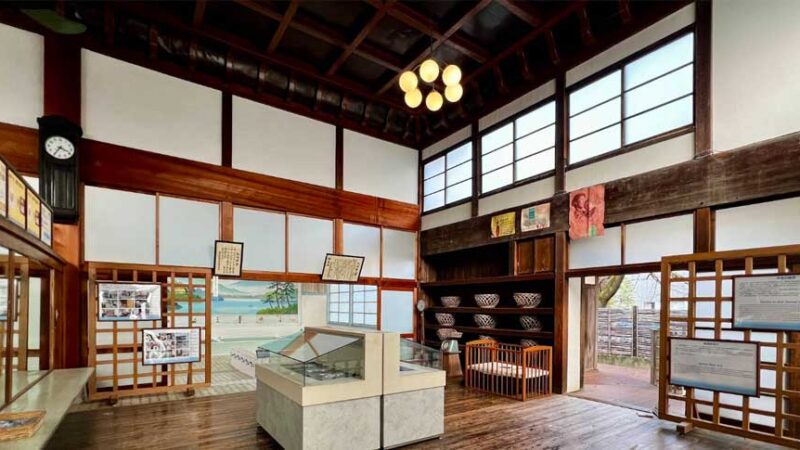
Kodakara-yu (Public Bath Architecture)
- Built in Showa 4 (1929), a public bathhouse
- Experience the common people’s culture of the Taisho era featured in Demon Slayer
- Its elaborate shrine-style exterior is popular as a photography spot
- Also famous as a model for the Studio Ghibli film “Spirited Away”
Takahashi Korekiyo Residence
- A Taisho-era politician’s mansion
- Japanese-Western architectural style conveys the era’s atmosphere
- Interior decoration and furniture placement overlap with the work’s image
Takei Shosendo (Stationery Store)
- Early Taisho commercial building
- Recreates the appearance of commercial facilities of the time
- Evokes the atmosphere of streets Tanjiro might have visited
Value as Demon Slayer Sacred Site
The reason the Edo-Tokyo Open-Air Architectural Museum is recognized as a Demon Slayer sacred site is not merely the alignment of historical accuracy. It is a precious place where you can experience “Taisho-era Japan,” the core setting of the work, through actual buildings.
In anime production, such facilities may be referenced as materials for Taisho-era architecture and streetscapes. The Edo-Tokyo Open-Air Architectural Museum serves as a “living archive” for understanding and more deeply enjoying the work’s world.
Night Market Events and Demon Slayer Experience
The Edo-Tokyo Open-Air Architectural Museum regularly holds “Night Market” events. The Taisho buildings illuminated at night are exactly the world of Demon Slayer. The streets lit by lanterns evoke the image of nights where Tanjiro and his companions battle demons, leading many fans to post “Demon Slayer’s world” on SNS.
At night markets, you can also enjoy the traditional festival atmosphere, offering a precious opportunity to re-experience festival scenes from the work. Cosplay participation is popular, and photography capturing the feeling of stepping into the work’s world is possible.
Edo-Tokyo Open-Air Architectural Museum Facility Information・Highlights
Garden Map and Main Areas
The Edo-Tokyo Open-Air Architectural Museum features 30 historic buildings across approximately 7 hectares. The grounds are divided into three main zones.
Center Zone
- Visitor Center (former Kokadenzen)
- Exhibition rooms・Museum shop
- Rest facilities
West Zone
- Farmhouse and merchant house buildings
- Denenchofu House (Taisho-period residence)
- Thatched-roof old folk houses
East Zone
- Downtown shopping street recreation area
- Kodakara-yu, Takei Shosendo, etc.
- Taisho and early Showa urban architecture
The digital rally AR spots are primarily set in the East Zone, where you can enjoy photos with characters against the backdrop of streets brimming with Taisho romance.
Connection to Other Works Such as Jujutsu Kaisen
The Edo-Tokyo Open-Air Architectural Museum is also known as a sacred site for “Jujutsu Kaisen.” Kodakara-yu and the Nishikawa Family Villa are said to have been used as models for the Zenin family, which appears in the Shibuya Incident arc.
The fact that it has become the setting or model location for multiple anime works demonstrates the architectural and cultural value it possesses. For anime fans, it is an efficient spot where they can visit sacred sites for multiple works in a single visit.
Relationship with Studio Ghibli
The Edo-Tokyo Open-Air Architectural Museum is also famous as an inspiration source for the Studio Ghibli work “Spirited Away.” Director Hayao Miyazaki is said to have conducted field research at the museum, with Kodakara-yu’s exterior reportedly being one of the models for the bathhouse.
This fact demonstrates that the Edo-Tokyo Open-Air Architectural Museum plays an important role in Japanese anime culture. A facility connected to all three major popular works—Demon Slayer, Jujutsu Kaisen, and Spirited Away—is extremely rare domestically.
Access・Basic Information
Location・Transportation Access
Address: 〒184-0005 Koganei City, Tokyo, Sakuramachi 3-7-1 (Within Koganei Park)
Access by Train:
- JR Chuo Line “Musashi-Koganei Station” North Exit, then bus 5 minutes
- Seibu Bus “Koganei Park West Entrance” get off, 5 minutes walk
- Kanto Bus “Edo-Tokyo Open-Air Architectural Museum” get off, 3 minutes walk
- JR Chuo Line “Higashi-Koganei Station” North Exit, then bus 6 minutes
- CoCobus “Tatemono-en Entrance” get off, 10 minutes walk
- Seibu Shinjuku Line “Hanakogane Station” South Exit, then bus 5 minutes
- Seibu Bus “Koganei Park West Entrance” get off, 5 minutes walk
Access by Car:
- Approximately 20 minutes from “Chofu IC” on the Chuo Expressway
- Parking: Use Koganei Park parking (paid)
Opening Hours・Closed Days・Admission Fee
Opening Hours:
- April – September: 9:30 – 17:30 (Entry until 17:00)
- October – March: 9:30 – 16:30 (Entry until 16:00)
Closed Days:
- Every Monday (if Monday is a holiday, closed the following day)
- Year-end and New Year (December 28 – January 4)
Admission Fee:
- General: 400 yen
- Age 65 and over: 200 yen
- University students (including specialist schools): 320 yen
- High school, junior high students (outside Tokyo): 200 yen
- Junior high students (Tokyo residents or students), elementary students, preschoolers: Free
Annual passes and group discounts are also available, with discount options for repeat visitors.
Recommended Viewing Time・Recommended Viewing Route
Standard Viewing Time: 2–3 hours
Recommended Route for Demon Slayer Fans:
- Obtain garden map at Visitor Center (10 minutes)
- Head directly to downtown area in East Zone (5 minutes walk)
- AR photography and exterior viewing at Kodakara-yu (20 minutes)
- Stroll through shopping street architecture like Takei Shosendo (30 minutes)
- Experience Taisho-era mansion culture at Takahashi Korekiyo Residence (30 minutes)
- Earn digital rally points (15 minutes)
- Shop for souvenirs in Center Zone (20 minutes)
If you plan to view building interiors leisurely, allocating a half day is recommended. For those wanting to enjoy photography, morning hours with soft light are particularly good for beautiful photos.
Tips for Maximizing Your Visit to Edo-Tokyo Open-Air Architectural Museum
Digital Rally Strategy Points
- Advance Preparation
- Fully charge your smartphone battery
- Pre-download the dedicated app
- Check the garden map in advance for an efficient route
- Photography Techniques
- Position AR characters with buildings in the background
- Morning and early evening light creates beautiful photos
- Photograph from multiple angles to capture the best shot
- Avoiding Crowds
- Weekday mornings are relatively quiet
- Weekends are best right after opening
- Rainy days offer a chance to leisurely view indoor exhibits
Photography Spots
In Front of Kodakara-yu
- Epitomizes Demon Slayer’s Taisho romance worldview
- Frontal composition is the standard
- Twilight silhouette photography is also popular
Shopping Street Scenery
- Wide-angle photography capturing multiple buildings in one shot
- Back-alley atmosphere matches the work’s worldview
- Aim for times with fewer people
Japanese Room at Takahashi Korekiyo Residence
- Composition overlooking the garden from the tatami room
- Feel the lifestyle of Taisho-era upper classes
- Indoor photography should utilize natural light
Combining with Nearby Tourist Attractions
Koganei Park, where the Edo-Tokyo Open-Air Architectural Museum is located, is one of Tokyo’s largest parks. Combining the digital rally with the following spots will make for a more fulfilling day.
Facilities Within Koganei Park:
- Spacious lawn for picnicking
- Cycling course
- Cherry blossom season (late March – early April) is one of Tokyo’s premier flower-viewing spots
Nearby Demon Slayer-Related Spots:
- Takao-sannguchi Station (digital rally spot) approximately 40 minutes by train
- Asakusa (one of the sacred sites) approximately 50 minutes by train
Nationwide Demon Slayer Sacred Site Pilgrimage and Tokyo Spots
Major Sacred Sites Within Tokyo
Beyond the Edo-Tokyo Open-Air Architectural Museum, multiple sacred sites related to Demon Slayer exist throughout Tokyo.
Kumotori Mountain (Okutama Town, Nishi-Tama District, Tokyo)
- Believed to be the model for Tanjiro’s hometown
- Tokyo’s highest peak at 2,017 meters elevation
- Popular as a pilgrimage site for work fans, though for advanced hikers
Asakusa (Taito Ward, Tokyo)
- Appears in the work as a prosperous Taisho-era commercial area
- Asakusa Temple and Nakamise shopping street balance sightseeing and sacred site pilgrimage
- Sensoji Gate is a standard memorial photo spot
Washinomiya Shrine (Taito Ward, Tokyo)
- Famous for the Tori-no-Ichi festival
- Experience the festival atmosphere depicted in the work
- The Tori-no-Ichi festival in November is particularly lively
Takao Mountain (Hachioji City, Tokyo)
- Takao-sannguchi Station is a digital rally spot
- Easily accessible by cable car
- Enjoy mountain views from the peak and nature walks
Efficient Sacred Site Pilgrimage Routes
One-Day Course (Central Tokyo):
Morning: Asakusa (Asakusa Temple・Sensoji Gate・Washinomiya Shrine)
Afternoon: Edo-Tokyo Open-Air Architectural Museum
Two-Day Course (Including Nature):
Day 1: Takao-sannguchi Station → Takao Mountain hiking
Day 2: Edo-Tokyo Open-Air Architectural Museum → Asakusa
Full Course (3+ days):
Comprehensive sacred site pilgrimage including Kumotori Mountain climbing
Events・How to Obtain Latest Information
Official Information Sources
Edo-Tokyo Open-Air Architectural Museum Official Website:
- Latest opening hours and closed days
- Special exhibitions and event information
- Seasonal event announcements like night markets
TOKYO Anime Tourism Official Website:
- Detailed digital rally information
- Merchandise exchange status
- Character placement information by spot
Tokyo Metropolitan Government Press Release:
- New event announcements
- Collaboration project announcements
Information Gathering via SNS
Instagram・Twitter (X):
- Hashtags “#江戸東京たてもの園” “#鬼滅の刃聖地巡礼”
- Real-time crowd conditions
- Photography technique references from other visitors
YouTube:
- Visit report videos to confirm atmosphere beforehand
- Digital rally strategies
- Detailed introductions of building interiors
Conclusion: Experience Demon Slayer’s World at the Edo-Tokyo Open-Air Architectural Museum
The Edo-Tokyo Open-Air Architectural Museum is a precious cultural facility conveying the atmosphere of the Taisho era, the setting of Demon Slayer, to the modern day. Through the digital rally of TOKYO Anime Tourism 2026, a previously unprecedented experience of collaboration between the work’s characters and historic buildings has become possible.
Beyond merely serving as an anime sacred site, it also holds high educational value in teaching modern Japanese architectural history and Taisho culture. Buildings such as Kodakara-yu and Takahashi Korekiyo Residence not only deepen understanding of the work but also possess importance as Japanese cultural heritage.
During the digital rally period (January 24 – March 15, 2026), many fans are expected to visit, but after the period ends, the Edo-Tokyo Open-Air Architectural Museum will continue to hold value as a sacred site where you can feel Demon Slayer’s worldview.
The Edo-Tokyo Open-Air Architectural Museum in Tokyo, where you can simultaneously enjoy Taisho romance and Demon Slayer’s world. By all means, witness the air of the era in which Tanjiro and his companions lived with your own eyes. An experience awaiting you within historic buildings, where your understanding of the anime work deepens, is ready.