【Studio Ghibli】Heisei Tanuki War Pom Poko and Tama New Town: Complete Guide to Development History and Location Pilgrimage
Introduction: The Transformation of the Tama Hills as Depicted by Isao Takahata
“Heisei Tanuki War Pom Poko,” a Studio Ghibli animated film released on July 16, 1994, is a socially conscious work for which director Isao Takahata served as original author, screenwriter, and director. Set in the Tama district of Tokyo, the film depicts the struggles of tanuki (raccoon dogs) losing their homes due to new town development, addressing the universal themes of development and environmental destruction during Japan’s period of high economic growth.
This work is not merely fantasy; it possesses a documentary-like aspect, with meticulous research into the actual development history of Tama New Town, incorporating real locations and buildings into the work. Nearly 30 years after its release, the questions posed by this film remain unfaded, continuing to make us contemplate the coexistence of development and nature.
History of Tama New Town Development: Understanding the Film’s Background
Tama Hills Before Development: A Tanuki’s Paradise
Before Tama New Town was constructed, the Tama Hills were a satoyama (semi-natural grassland) area blessed with abundant nature. Spanning Tama City, Inagi City, Hachioji City, and Machida City, this region retained typical Musashino scenery with mixed forests and tanada (terraced rice paddies). Indeed, numerous wild animals including tanuki actually inhabited this area, so the film’s setting was far from exaggeration.
Until the 1950s, agriculture and forestry were practiced in this region, and people lived in harmony with nature. However, as post-war population concentration in central Tokyo accelerated, this peaceful landscape would face a major turning point.
1960s: Japan’s Largest New Town Project Launches
In the 1960s, serious housing shortages in central Tokyo made large-scale suburban housing supply urgent. In 1965, the Tokyo Metropolitan Government and the Japan Housing Corporation (now UR Urban Renaissance) announced plans to construct Japan’s largest new town in the Tama Hills.
The plan aimed to construct a giant city housing 300,000 people on approximately 3,000 hectares of land. This was an unprecedented scale of development project in Japan at the time. The development depicted in “Heisei Tanuki War Pom Poko” is based precisely on events from this period.
1970s: Full-Scale Development and the Beginning of Environmental Destruction
In 1971, the first phase of residents moved into Tama New Town. The development scenes depicted in the film’s opening, set in the “1960s,” refer to this period. Forests were rapidly cut down, valleys were filled in, and the former satoyama landscape quickly disappeared.
The development method was large-scale land reclamation using “cutting mountains and filling valleys.” This technique transformed the undulating topography of the Tama Hills into flat residential areas. Director Takahata succeeded in conveying the brutality of environmental destruction to audiences by depicting this development process from the tanuki’s perspective.
1980s-1990s: New Town Expansion and Completion
As the 1980s arrived, development expanded from Tama City to Inagi City and southern Hachioji City. By the early 1990s when the film was made, Tama New Town had become a giant city with over 200,000 residents.
At the 1994 release date, Tama New Town development had entered its final stages. Director Takahata deliberately released this work during this period because he believed that now, with development reaching a plateau, it was necessary to reflect on what had been lost and reconsider the direction of future urban development.
“Heisei Tanuki War Pom Poko” Analysis: Deep Messages about Environmental Issues
Director Isao Takahata’s Creative Intent
Through this work, director Isao Takahata did not intend to convey a simple “anti-development” message. Rather, while acknowledging the inevitability of development, he sought to depict a sense of loss for what disappears, and an attitude of seeking ways for humans and nature to coexist.
The director himself conducted extensive research in the Tama district, meticulously collecting photographs from before development and testimonies from residents. Studio Ghibli staff members also visited the site numerous times, creating detailed sketches of topography, vegetation, and building arrangements. This thorough research approach supports the work’s realism.
What the Tanuki Symbolizes: Japan’s Disappearing Pastoral Landscape
The tanuki appearing in the film are depicted not as mere animals, but as symbols of Japan’s traditional natural views and lifestyles lost through development. The “bakelore” (tanuki transformation magic) setting is based on tanuki folklore in Japanese folk culture, giving the work a deep cultural foundation.
Particularly striking is the “great yōkai operation” scene. The yōkai appearing here reflect traditional Japanese yōkai culture and represent an attempt to awaken the spiritual nature of Japanese people forgotten through modernization.
Multi-layered Themes in the Work
“Heisei Tanuki War Pom Poko” addresses multiple themes beyond environmental issues:
- Generational Differences in Values: The conflict between conservative elder tanuki and progressive younger tanuki symbolizes generational gaps during periods of social transformation.
- Limitations of Resistance and Necessity of Adaptation: The ultimate failure of the tanuki’s resistance and the emergence of those choosing adaptation to human society depict the inevitability of compromise and adaptation in actual society.
- Continuity of Memory: The importance of “passing stories down” mentioned at the film’s end appeals to the significance of preserving lost nature and culture in memory.
Real-Life Locations and Pilgrimage Guide: Walking Through Tama New Town
Tama Center Station Area: The Film’s Central Stage
Tama Center Station is the heart of Tama New Town and appears multiple times in the film. The area around Parthenon Tama (Tama City Complex Cultural Facility) is the setting for important scenes in the work.
Access: Get off at “Tama Center Station” on the Keio Sagamihara Line, Odakyu Tama Line, or Tama Monorail
The main street and shopping district in front of the station are depicted in the film as showing signs of development progress. Today, with Sanrio Puerland also located here, the area bustles as a tourist destination.
South Osawa Station Area: Symbol of Late-Stage Development
The area around South Osawa Station on the Keio Sagamihara Line was a region where development came relatively late, serving as the setting for the film’s later portions. About a 10-minute walk from the station, landscapes exist that seem to directly recreate scenes from the film.
The Mitsui Outlet Park area and surrounding hills retain vestiges of the satoyama where the tanuki once lived. Particularly, places where the boundary between developed and undeveloped areas is clearly visible serve as spots where visitors can experience the film’s themes.
Parks in Tama City: Precious Spots Where Nature Remains
Several parks have been preserved despite development:
Kotta-Kaitori Fureai Square: Located in the heart of Tama New Town, this park retains the atmosphere of mixed forest. It is thought to be one of the models for the forest scenes depicted in the film.
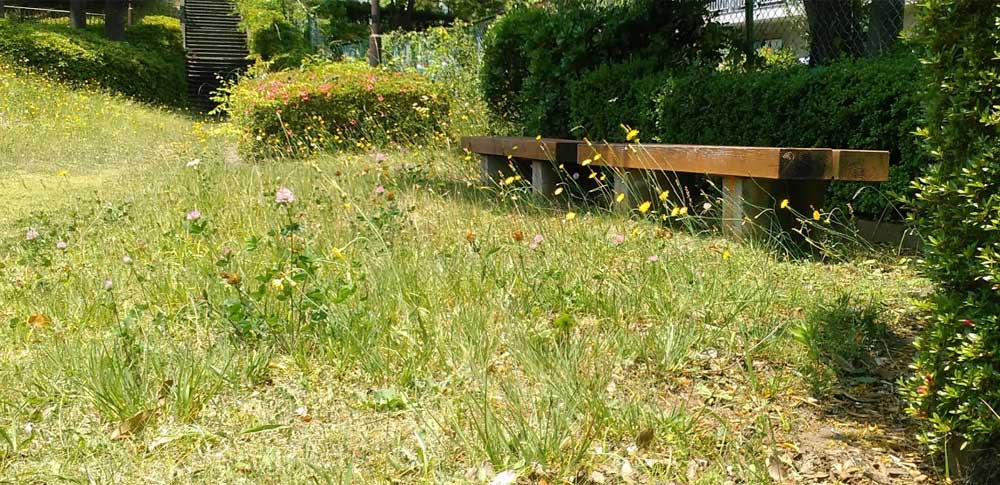
Sakura Park: This metropolitan park located in Renkoji, Tama City preserves the natural environment of the Tama Hills as-is, serving as a precious area. Visitors can still sense the atmosphere of “pre-development Tama Hills” depicted in the film’s opening.
Inagi City and Naganuma Station Area: Near Yomiuri Land
The film includes depictions reminiscent of Yomiuri Land’s ferris wheel. The area around Naganuma Station in Inagi City, near the Tamagawa River, is likely the region depicted as where the tanuki escaped to.
Southern Hachioji City: The Development Frontier
The Minami-Osawa and Horinai districts of Hachioji City saw development accelerate from the late 1980s onward, serving as “development’s frontline” in the film’s time period. Today, Tokyo Metropolitan University (formerly Tokyo Metropolitan University) campus is located here, giving the area an academic city character.
Connection with “Whisper of the Heart”: Two Stories Set in the Same Tama
Interestingly, another Studio Ghibli masterpiece, “Whisper of the Heart” (released in 1995), is also set in Tama New Town. Both works bear a close relationship as stories set in the same era and location.
Chronological Alignment: Two Contemporary Perspectives
“Heisei Tanuki War Pom Poko” and “Whisper of the Heart” both depict 1994, the same era. The former presents the perspective of tanuki losing their homes to development, while the latter presents the human perspective of living in the developed new town—a contrasting structure.
Common Locations and Buildings
Both works feature several common locations:
- Iroha Slope: The steep slope down which protagonist Shizuku Tsukishima rides her bicycle in “Whisper of the Heart” appears as similar topography in “Heisei Tanuki War Pom Poko.”
- Tama Center Station Area: Both works depict the landscape around Tama Center Station.
- Hilly Residential Areas: The appearance of residential areas built on undulating terrain serves as a shared visual element in both works.
Isao Takahata and Yoshifumi Kondo: Deep Understanding of Tama
Both director Isao Takahata of “Heisei Tanuki War Pom Poko” and director Yoshifumi Kondo of “Whisper of the Heart” worked at Studio Ghibli and shared research in the Tama district. The deep understanding and affection for Tama by both directors became the driving force behind these two masterpieces.
Current Tama New Town: Misconception as “Ghost Town”
Aging Issues and Challenges of Generational Succession
More than 50 years have passed since Tama New Town’s development, and the aging of initial residents is progressing. In some quarters, the term “becoming a ghost town” is used, but this does not accurately reflect reality.
Certainly, the generation that moved in during the 1970s is aging, and many of their children have moved out after becoming independent. However, recent years have seen increased inflow of younger generations, and generational succession is underway.
Redevelopment and Renovation: Creating New Appeal
Tama New Town actively pursues renovation and redevelopment of aging danchi (apartment complexes). Particularly around Tama Center Station, commercial facility renewal and public space redesign are progressing, creating new appeal.
Improved Transportation: Better Access to the City Center
With the development of the Keio Line, Odakyu Line, and Tama Monorail, access to the city center has dramatically improved. Approximately 30 minutes to Shinjuku provides significant appeal for Tama New Town.
Natural Environment Value: Green Space Within the City
Paradoxically, parks and green spaces preserved during development have become significant assets for Tama New Town today. The abundant natural environment unobtainable in the city center is highly valued, particularly by child-rearing families.
Coexistence with Wildlife: Did the Tanuki Really Disappear?
Wild Animals Still Inhabiting the Area Today
The tanuki depicted in the film lost their homes to development. However, wild animals actually still inhabit areas surrounding Tama New Town today.
Medium-sized mammals such as tanuki, raccoons, palm civets, and foxes have been confirmed in remaining green spaces and parks. Particularly in Sakura Park and preserved areas of the Tama Hills, a rich ecosystem is maintained.
Urban-Nature Coexistence Model
Tama New Town achieved considerable success in preserving nature within the city through planned green space placement. Green space arrangement conscious of ecological networks (ecosystem connections) also serves to ensure wildlife movement corridors.
As an Environmental Education Site
Elementary and junior high schools in Tama City and Inagi City conduct environmental education teaching local natural environments. “Heisei Tanuki War Pom Poko” is also utilized as teaching material to help children learn about local history and environmental issues.
What the Work Questions for Modern Times: Sustainable Development
Modern Perspective 30 Years Later: Universal Nature of the Film’s Message
Nearly 30 years after release, the message of “Heisei Tanuki War Pom Poko” has become even more important. With SDGs (Sustainable Development Goals) becoming a global issue, the film’s theme of balancing development and environmental conservation represents a precisely contemporary question.
Similar Cases in Other Regions: New Towns Nationwide
Large-scale development similar to Tama New Town was conducted throughout Japan. New towns such as Senri New Town (Osaka), Senboku New Town (Osaka), and Kohoku New Town (Yokohama) now face similar challenges.
Lessons for the Future: Planned Urban Renewal
The Tama New Town experience provides important lessons for future urban development:
- Flexible housing policy considering generational succession
- Coexistence of environmental preservation and urban development
- Community sustainability in city planning
- Importance of long-term perspective in urban planning
Cultural Value of Tama New Town: As a Ghibli Film Pilgrimage Site
Potential as Tourist Resource
Being the setting for two Ghibli masterpieces, “Heisei Tanuki War Pom Poko” and “Whisper of the Heart,” is a significant cultural asset for Tama New Town. As anime tourism gains attention in recent years, the Tama district increasingly gains recognition as a pilgrimage site for Ghibli fans.
Utilization for Regional Revitalization
Tama City has begun regional revitalization efforts leveraging the connection between Ghibli works and the region. Tourist maps are being created and walking events visiting locations connected to the works are being held.
Preservation of Cultural Memory
The film possesses value as a cultural record transmitting the historical event of Tama New Town development to future generations. As the generation knowing the Tama Hills before development shrinks, the work becomes a precious repository of memory.
Director Isao Takahata’s Legacy: Pinnacle of Socially Conscious Animation
Takahata’s Artistic Quality: Realism and Social Critique
Director Isao Takahata was an artist who consistently depicted social issues through the medium of animation. “Heisei Tanuki War Pom Poko” is one of his representative works, achieving a high degree of fusion between entertainment and social commentary.
Thorough Research Approach: Supporting the Work’s Realism
According to Studio Ghibli production materials, the making of “Heisei Tanuki War Pom Poko” involved enormous research. Historical materials about the Tama district, photographs from before development, interviews with residents, and sketches made on-site all supported the work’s realism through exhaustive research.
Music and Direction: Masaoka Yō’s Tanuki Festival Music
The work’s music is based on “tanuki festival music” by Japanese traditional music researcher Yō Masaoka, reflecting deep understanding of Japanese folk culture. The theme song “Itsudemo Dareka ga” (by Jōjō Taifu) aptly expresses the work’s themes.
Practical Pilgrimage Plan: One Day Exploring Tama New Town
Morning: Exploring the Tama Center Station Area
9:00 Arrival at Tama Center Station
Stroll around Parthenon Tama in front of the station. Experience firsthand the heart of developed Tama New Town.
10:00 Tama Central Park
Walk through this vast park while reflecting on the role of green space in urban planning.
11:00 Kotta-Kaitori Fureai Square
Savor the atmosphere of remaining mixed forest.
Afternoon: Heading to South Osawa and Hachioji Areas
13:00 South Osawa Station Area
Explore late-stage development areas. Observe the boundary between developed and undeveloped areas around Mitsui Outlet Park.
15:00 Sakura Park (Renkoji, Tama City)
In this metropolitan park where Tama Hills nature is preserved, recall the film’s opening scenes.
17:00 Seiseki-Sakuragaoka Station
Also visit the setting of “Whisper of the Heart,” experiencing the connection between two Ghibli works.
What to Bring and Precautions
- Comfortable walking shoes (there are many slopes)
- Camera (for landscape photography)
- Film images or stills (for comparison)
- Map app (Google Maps, etc.)
- Beverages (vending machines are abundant but scarce within parks)
Conclusion: What Was Lost and What Was Gained
“Heisei Tanuki War Pom Poko” is a masterpiece addressing the universal themes of development and environmental conservation while depicting the concrete historical event of Tama New Town development. Nearly 30 years after the film’s release, the questions it poses remain critically important.
The abundant nature of the Tama Hills was indeed lost. Yet simultaneously, a city housing over 220,000 people was born, becoming the living space for many people. How to evaluate this balance of “what was lost and what was gained” is a question without easy answers.
What matters, as director Takahata demonstrated through the film, is preserving what was lost in memory, passing it down in stories, and learning from it. The experience of Tama New Town provides valuable lessons for future urban development, environmental conservation, and building sustainable society.
Visiting present-day Tama New Town, one can see wild animals still living within the carefully preserved green spaces. While complete restoration of nature is impossible, Tama New Town demonstrates that ways exist to preserve nature within cities and enable coexistence between humans and wildlife.
“Heisei Tanuki War Pom Poko,” transcending the bounds of animated film, will continue to be passed down as a work questioning the nature of our society. Walking through the film’s settings in Tama New Town and visiting actual locations will make the work’s message resonate even more deeply.