【Complete Guide】The Borrower Arrietty Sacred Sites Pilgrimage|Detailed Map and Highlights of Nogawa, Hake no Koji, and Tenjin Bridge
The Studio Ghibli film “The Borrower Arrietty” was released in 2010. Known as the directorial debut of Hiromasa Yonebayashi, this film has sacred sites that Studio Ghibli has officially acknowledged as “places we greatly referenced.” These are Nogawa, Hake no Koji, Tenjin Bridge, and Musashino Park in the area around Koganei City, Tokyo.
Based on personal visits to the actual locations, this article provides a complete guide to sacred site pilgrimage where you can experience Arrietty’s world by comparing movie scenes with actual filming locations in detail. This comprehensive guide includes access methods, shooting spots, and points of interest in the surrounding areas, containing all the information useful for those planning to visit.
About “The Borrower Arrietty”
“The Borrower Arrietty” is a Studio Ghibli animated film based on the British children’s literature “The Borrowers” by Mary Norton. Planned and written by Hayao Miyazaki, directed by Hiromasa Yonebayashi, the film depicts the interaction between Arrietty, a 10-centimeter-tall girl, and Sho, a human boy with a heart condition.
The voice cast includes prestigious actors such as Mirai Shida, Takanori Iwata, Shinoba Otake, Keiko Takeshita, Tatsuya Fujiwara, Tomokazu Miura, and Kirin Kiki, with music and the theme song performed by French harpist Cecile Corbel.
The film is set in a grand mansion with a neglected garden. Arrietty lives in the floor space beneath the mansion with her father and mother, the three of them “borrowing.” The world of small people who “borrow” things necessary for living from human homes and live is depicted with delicate and beautiful imagery.
Filming Locations Officially Recognized by Studio Ghibli
The official Studio Ghibli website specifies the following four locations as “places greatly referenced” in the production of “The Borrower Arrietty”:
- Morimien Garden, Hirakawa City, Aomori Prefecture: A nationally designated scenic Japanese garden serving as an image model for the old mansion and garden appearing in the film
- Hake no Koji, Koganei City, Tokyo: A charming path serving as reference for the surrounding environment where Arrietty and her family live
- Nogawa, Tokyo: The model for the river in an important scene in the second half of the film
- Musashino Park, Tokyo: A nature-rich park along Nogawa serving as reference for the film’s nature depiction
This article provides detailed explanations of three locations in the Koganei City area (Hake no Koji, Nogawa, Musashino Park) and Tenjin Bridge.
Hake no Koji: Gateway to Arrietty’s World
What is Hake no Koji?
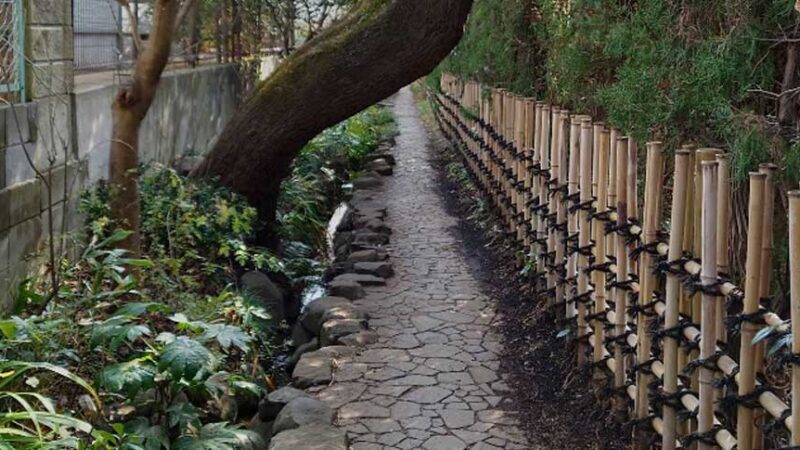
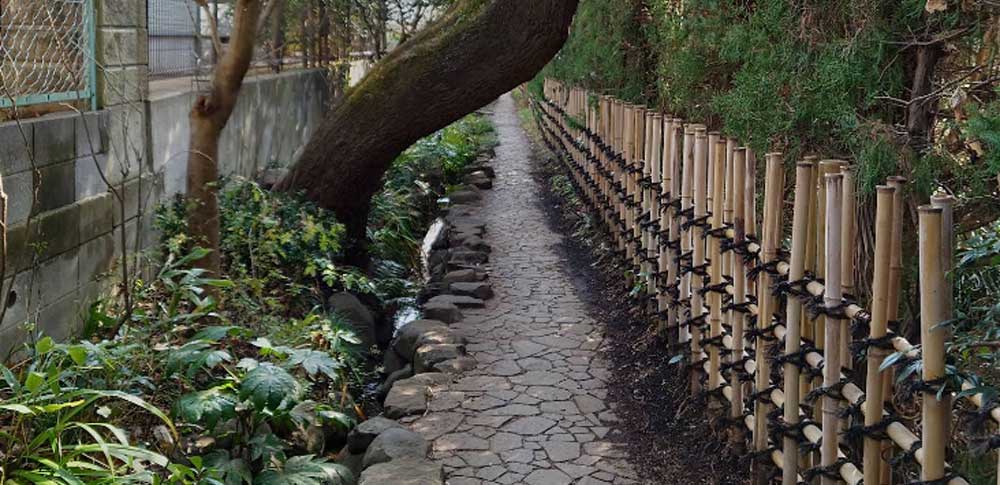
“Hake no Koji” is a charming path located along the Kokubun-ji Cliff Line (commonly called “hake”) in Nukaishiminamicho, Koganei City, Tokyo. “Hake,” a local dialect term in this region, refers to cliffs or cliff lines, specifically the stepped cliff that forms the boundary between the Musashino Plateau and the Tamagawa lowlands.
This path is surrounded by bamboo fences and trees, creating a quiet space isolated from urban bustle. Director Hiromasa Yonebayashi reportedly visited this location and incorporated it into the environmental depiction of the area surrounding the mansion where Arrietty lives.
Comparison with Film Scenes
Walking through Hake no Koji allows you to feel the atmosphere of the path Arrietty walked when she first went out to “borrow.” In particular, the following elements overlap with the film’s world view:
- Bamboo fences and stone walls: The bamboo fences and old stone walls lining the path evoke the boundaries of the human world from a small person’s perspective
- Dappled sunlight: Light filtering through the trees embodies the beauty of the outside world that Arrietty experienced
- Undulating terrain: The elevation changes characteristic of the cliff line express the adventurous environment for small people
Access and Walking Tips
Nearest Station: About 20 minutes walk from the south exit of JR Chuo Line “Musashikoganei Station,” or about 5 minutes walk from “Nukaishiminamicho” bus stop
Walking Tips:
- Please walk quietly as the path is in a residential area
- Early morning hours have fewer people and allow you to immerse yourself more in the film’s world
- You can enjoy seasonal changes in nature, but the new green season (around May) is especially recommended
Nogawa: The Stage for the Tea Kettle Boat Adventure Scene
Characteristics of Nogawa
Nogawa is a first-class river approximately 20 kilometers long that originates from spring water within the Hitachi Central Research Laboratory in Hitachi City, Kokubunji City, and joins the Tamagawa River in Setagaya Ward. In the Koganei City area, clear streams and verdant riverbanks create beautiful scenery and serve as a place of relaxation for local residents.
The river is narrow with a relatively gentle flow, and the riverbanks are rich in aquatic plants and wild birds. This natural abundance likely led to this environment being chosen as the stage for Arrietty’s adventure.
Climactic Scene in the Film
Near the end of the film, Arrietty and her family are discovered by humans and decide to depart in search of a new home. In this scene, they board a tea kettle (a small teapot from a human’s perspective) and travel down Nogawa River.
Visiting the actual Nogawa, you can confirm the following elements depicted in the film:
- Starting point from rocky area: Near Hake no Koji along Nogawa River, there are rocky areas where Arrietty and her family are believed to have boarded the tea kettle boat
- River flow: While depicted as a rushing current in the film, the actual Nogawa flows gently and slowly
- Riverbank vegetation: The water’s edge plants and trees express the enormous nature as seen from a small person’s perspective
Shooting Spots at Nogawa
Recommended Shooting Points:
- Rocky area near Hake no Koji: The likely model for the tea kettle boat departure point
- Riverbank before Tenjin Bridge: A beautiful point contrasting the river flow with greenery
- Along Nogawa in Musashino Park: The landscape of Nogawa as seen from the nature observation garden side
Best Seasons for Photography:
- Spring (late March to April): Cherry blossom rows are beautiful, matching the film’s seasonal feel
- Early summer (May to June): Fresh greenery is vibrant, with a landscape full of vitality
- Autumn (October to November): The contrast between fall foliage and clear stream is magnificent
Tenjin Bridge: Turning Point of the Story
Overview of Tenjin Bridge
Following Hake no Koji and descending along Nogawa, you come upon a small bridge called Tenjin Bridge. This bridge appears in an important scene in the film. Arrietty and her family, traveling by tea kettle boat down the river, pass beneath this bridge.
The actual Tenjin Bridge is a simple bridge used as a local residential road, yet its appearance is exactly the world of the film. Viewing Nogawa from above the bridge, you can reverse perspectives and experience pursuing Arrietty’s adventure from a human viewpoint rather than a small person’s perspective.
Recreation of Film Scenes
The following film scenes can be recreated in the area around Tenjin Bridge:
- Looking up from beneath the bridge: Descending to the riverbank and looking up from beneath the bridge allows you to experience the perspective of Arrietty and her family passing by in the tea kettle boat
- Viewing the river from atop the bridge: You can imagine the small people’s journey from a human perspective
- Surrounding landscape: The Nogawa scenery before and after the bridge corresponds remarkably well with the film’s scenes
Access and Precautions
As Tenjin Bridge is a small bridge in a residential area, please note the following when visiting:
- Keep conversations and noise at a low level
- Avoid prolonging time on the bridge and do not obstruct passage
- Be careful of your footing when descending to the riverbank and ensure your safety
- Do not trespass on private property
Musashino Park: Nature Observation and Recreation
The Charm of Musashino Park
Musashino Park is a metropolitan park spanning Fuchu City and Koganei City, Tokyo, spreading along Nogawa River. The park contains spring water near Nogawa’s source, diverse plants, and resident birds, allowing you to enjoy nature in all seasons.
This park, officially cited by Studio Ghibli as a reference location, served as an inspiration source for the abundant natural depictions in the film. It can be considered that Arrietty’s wonder upon first seeing the outside world and the small people’s way of life in nature were inspired by this park’s environment.
Main Attractions in the Park
Riverside Walking Path along Nogawa:
The walking path along Nogawa offers an excellent course to feel the film’s world view. While listening to the gentle sounds of the river, try observing the surroundings from a small person’s perspective.
Kunugi Garden and Deciduous Forest:
A typical Musashino deciduous forest is maintained here, offering an atmosphere like the backyard of the mansion where Arrietty lives. Particularly during the autumn acorn-gathering season, you can experience being immersed in the film’s world.
Nature Observation Garden:
Spring ponds and wetlands allow observation of diverse aquatic plants and insects. It’s an area where you can experience the “vast nature” as it would be to small people.
Activities at the Park
- Picnicking: You can relax leisurely on the grass lawns
- Birdwatching: The environment is suitable for bird observation
- Photography: Seasonal nature serves as subject matter
- Walking and jogging: You can exercise comfortably on well-maintained paths
Access:
- About 10 minutes by bus from the south exit of JR Chuo Line “Musashikoganei Station”
- About 20 minutes walk from Nishi-Tamagawa Line “Tama Station”
- Parking available (fee required)
Sacred Site Pilgrimage Model Courses
Here are model courses to efficiently visit Arrietty’s sacred sites in the Koganei City area.
Half-Day Course (approximately 3-4 hours)
Start: JR Musashikoganei Station
↓ About 20 minutes walk or by bus
1. Hake no Koji (Stay: 30 minutes)
- Enjoy the scenery of bamboo fences and stone walls
- Capture the atmosphere of the path in photographs
↓ About 5 minutes walk
2. Nogawa and Tenjin Bridge Area (Stay: 45 minutes)
- Search for the likely departure point
- Photograph from above and below the bridge
- Take a walk along the riverbank
↓ About 10 minutes walk
3. Musashino Park (Stay: 1-2 hours)
- Walk the riverside path along Nogawa
- Visit the nature observation garden
- Rest on the grass lawn
↓ Walk or take bus
Goal: Musashikoganei Station or Tama Station
Full-Day Course (approximately 6-7 hours)
Add the following to the half-day course:
4. Nogawa Park (spanning Chofu, Mitaka, and Koganei Cities, Tokyo)
- Explore a wider range along Nogawa
- Visit the nature observation center
5. Lunch at Local Cafe
- Numerous pleasant cafes are scattered throughout Koganei City
- Discussing Ghibli works is also enjoyable
6. Edo-Tokyo Open-Air Architectural Museum (if time permits)
- An open-air museum with historical buildings relocated and restored
- Observe old Japanese houses while imagining their floor spaces
Best Seasons and Times to Visit
Seasonal Recommendations
Spring (March to May):
The season closest to when the film is set, with beautiful new greenery and flowers. April in particular offers cherry blossoms. The mild temperature makes it ideal for walking.
Summer (June to August):
The greenery is at its most lush, creating a landscape full of life force. However, heat and insect countermeasures are necessary. Early morning or evening visits are recommended.
Autumn (September to November):
Fall foliage is beautiful, and you can feel autumn’s bounty like acorns. The weather is also pleasant, and you can obtain light ideal for photography.
Winter (December to February):
Few people make it easy to walk quietly and peacefully. With fallen leaves gone, the river’s conditions are clearly visible, offering a different charm. Take thorough cold-weather precautions.
Time-Based Tips
Early Morning (7:00 AM to 9:00 AM):
- Few people allow you to immerse yourself quietly in the film’s world
- Morning light is beautiful, ideal for photography
- Bird calls can be heard
Morning (9:00 AM to 12:00 PM):
- Light conditions are good, suitable for photography
- Relatively uncrowded
Afternoon (12:00 PM to 4:00 PM):
- More people visit during these hours
- The light around Tenjin Bridge is beautiful in the afternoon
Evening (4:00 PM to 6:00 PM):
- Beautiful scenery with sunset reflected on the river surface
- Fewer people, becoming quieter
Photography Tips and Etiquette
Photography Techniques
Be conscious of a small person’s perspective:
- Hold the camera low to the ground and shoot from low angles
- Include grass, flowers, stones, and tree roots in the foreground
- With a macro lens, you can better express the small people’s world view
Recreate scenes from the film:
- Rewatch the film beforehand and take screenshots of memorable scenes
- Search for the same angles and photograph them
- Creating comparison photos is enjoyable
Utilize natural light:
- Use dappled sunlight and river surface reflections
- Create atmospheric photos using backlighting
- The golden hour (shortly after sunrise and before sunset) is especially recommended
Visiting Etiquette
Sacred site pilgrimage is a popular activity with many fans visiting, so please observe the following etiquette:
- Remember it is a residential area: Hake no Koji is surrounded by residences. Keep conversations quiet and avoid noise
- Do not trespass on private property: Avoid entering private land while focused on photography
- Take all garbage with you: Remove all trash to protect the natural environment
- Treat flora and fauna carefully: Avoid damaging or removing animals and plants to protect the local ecosystem
- Observe traffic rules: Be aware of bicycles and cars on narrow roads
- Show consideration during crowded times: Share space with other visitors and take turns photographing at popular spots
Nearby Recommended Spots
We introduce nearby spots worth visiting before or after your sacred site pilgrimage.
Edo-Tokyo Open-Air Architectural Museum
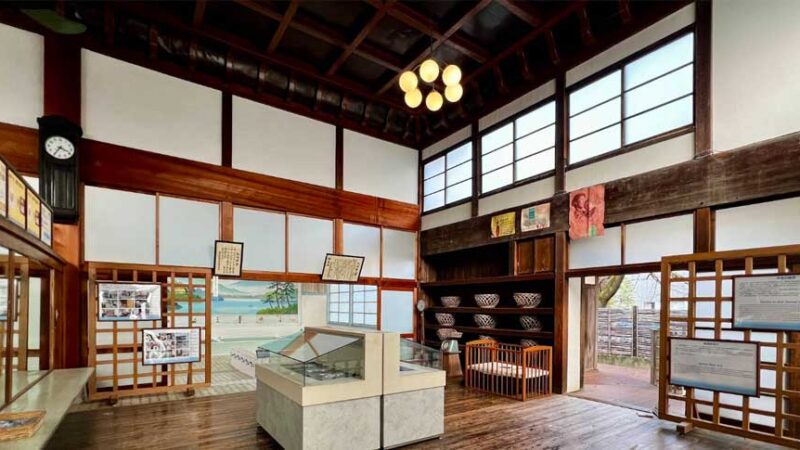
Located within Koganei Park, this open-air museum has historical buildings from the Edo period through the early Showa period relocated and restored. Observing the structure of old Japanese houses makes the “floor space” where Arrietty lives more concrete.
Hours: 9:30 AM to 5:30 PM (October to March until 4:30 PM)
Closed: Mondays (following day if a holiday), year-end and New Year’s
Admission: 400 yen for general admission, 320 yen for university students, 200 yen for high school and middle school students (outside Tokyo)
Koganei Park
A vast metropolitan park spanning approximately 80 hectares, featuring flowers in all seasons and spacious grass lawns. Ideal for picnicking and walking, it’s popular with families.
Hake no Mori Art Museum
An art museum established in the former residence of Western painter Kenichi Nakamura, characterized by architecture that utilizes the natural Hake environment. Regular special exhibitions are held, making it recommended for art enthusiasts.
Nogawa Park
Positioned adjacent to Musashino Park, this metropolitan park allows exploration of a wider area along Nogawa. The nature observation center allows you to learn about the Nogawa ecosystem.
Local Cafes and Restaurants
Various pleasant cafes and restaurants are scattered throughout the Koganei City area.
- Natural Cafe: Healthy menu using local ingredients
- Old House Cafe: Relax in a Showa retro atmosphere
- Bakery Cafe: Enjoy freshly baked bread and coffee
Access Information
Access by Train
JR Chuo Line “Musashikoganei Station”:
- About 30 minutes from Shinjuku Station
- About 50 minutes from Tokyo Station
- About 20 minutes walk from the south exit, or accessible by bus
Nishi-Tamagawa Line “Tama Station”:
- Convenient for accessing Musashino Park
- About 20 minutes walk from the station
Access by Bus
From the south exit of Musashikoganei Station:
- Keio Bus “heading to Fuchu Station” or “heading to Chofu Station”
- Get off at “Nukaishiminamicho,” about 5 minutes walk to Hake no Koji
Access by Car
Chuo Expressway:
- About 15 minutes from “Chofu IC”
- Paid parking available at Musashino Park (300 yen per hour, 100 yen per 30 minutes thereafter)
Notes:
- Parking along the street in the residential area around Hake no Koji is strictly prohibited
- Parking lots become crowded on weekends; use of public transportation is recommended
Packing Checklist
A packing list of items for a comfortable sacred site pilgrimage.
Essential Items
- Comfortable walking shoes: For walking on paths and riverbanks
- Drinks: Especially important for heat stroke prevention in summer
- Towel and handkerchief: For wiping sweat
- Sunscreen and hat: Sun protection
- Insect repellent spray: Essential especially in summer
- Smartphone and camera: For photography
- Mobile battery: Battery consumption is high for photography
Useful Items
- Maps and guidebooks: Print this article or reference it on your smartphone
- Film scene photos: For comparison photography
- Leisure sheet: For resting in the park
- Binoculars: For bird observation
- Notebook and pen: To note impressions and discoveries
- Rain gear: For uncertain weather
Combination with Other Sacred Sites
To pursue a complete sacred site pilgrimage of “The Borrower Arrietty,” consider visiting Morimien Garden in Hirakawa City, Aomori Prefecture.
Morimien Garden, Hirakawa City, Aomori Prefecture
The national designated scenic site that served as a model for the old Western-style building and Japanese garden appearing in the film. The main attractions are the beautiful garden created during the Meiji period and a building called “Morimitsu-kan” that combines Japanese and Western architectural styles.
Access:
- From Hirosaki Station on the Konan Railway to “Hiraka Station,” about 7 minutes walk
- Recommended to visit in combination with a Tokyo-to-Aomori trip
Sample Combination Plan:
- Day 1: Sacred site pilgrimage in the Tokyo Koganei City area
- Day 2: Travel to Aomori by Shinkansen
- Day 3: Visit Morimien Garden and explore Aomori
Conclusion: Experience Arrietty’s World
Nogawa, Hake no Koji, Tenjin Bridge, and Musashino Park in the Koganei City area of Tokyo are precious sacred sites where you can actually experience the world view of “The Borrower Arrietty.” As filming locations officially recognized by Studio Ghibli, they are visited by many fans.
By rewatching the film before visiting, you can be moved by scenes matching the actual locations and develop a deeper understanding of the work. Observing the surroundings from a small person’s perspective helps you notice the natural beauty and life processes that go unnoticed in daily life.
Located conveniently from central Tokyo while maintaining abundant nature and a quiet environment, this area is ideal for stepping away from daily life and immersing yourself in the world of Ghibli. Please visit this area multiple times to enjoy the changing faces of Nogawa and Musashino nature with each season.
Why not spend a special time contemplating Arrietty and Sho’s story while respecting etiquette toward residential areas and the natural environment? Small discoveries and great emotions surely await you.