
【Uma Musume Pretty Derby】Tokyo Racecourse Main Gate (Tokyo) Complete Guide|All Information for Holy Land Pilgrimage
The main gate of Tokyo Racecourse is one of the most important locations in holy land pilgrimage for “Uma Musume Pretty Derby.” In the anime, this place served as the stage for many memorable scenes, including the debut race of the protagonist Special Week, making it a must-visit holy site for fans.
This article comprehensively explains all information necessary for holy land pilgrimage, including detailed access methods to Tokyo Racecourse main gate, photography spots, opening information, and comparisons with anime scenes. We will also provide detailed introductions to precautions when actually visiting and points for a more fulfilling pilgrimage experience.
The Relationship Between Tokyo Racecourse and Uma Musume Pretty Derby
Positioning of Tokyo Racecourse in the Work
“Uma Musume Pretty Derby” is a story about “Uma Musume,” anthropomorphic versions of real racehorses, who train at Tracen Academy and strive to win races. In this world, Tokyo Racecourse is depicted as Japan’s premier racing venue.
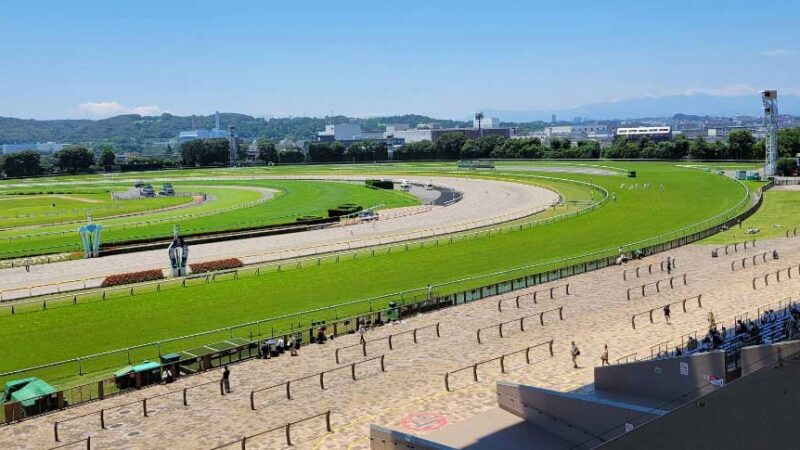
Tokyo Racecourse actually has one of Japan’s largest grandstands and hosts numerous GI races including the Japan Derby. In the anime, this grandeur and prestige are faithfully reproduced, and the venue appears multiple times as the dream stage for Uma Musume.
Main Scenes Appearing in the Anime
In anime Season 1, the story truly begins with a scene of Special Week’s debut race being held at Tokyo Racecourse. The waiting scene with her mother in front of the main gate (Episode 12) is particularly impressive and has become a memorable scene for many fans.
Additionally, the scene where Special Week jogs through the passage from Fuchu Racecourse Main Gate Station to Tokyo Racecourse has become a famous holy site for pilgrims among fans. This passage is an actual major access route to the racecourse and is depicted in fine detail in the anime.
Access Methods to Tokyo Racecourse Main Gate
Route from Fuchu Racecourse Main Gate Station (Recommended)
The smoothest route to Tokyo Racecourse main gate is using the Keio Racecourse Line’s “Fuchu Racecourse Main Gate Station.” This station was established exclusively for Tokyo Racecourse and can be accessed via the Keio Racecourse Line.
Access Steps:
- Transfer to the Keio Racecourse Line at Keio Line’s “Higashi-Fuchu Station”
- Get off at “Fuchu Racecourse Main Gate Station” one stop ahead (approximately 2 minutes travel time)
- The passage to the racecourse is directly in front of the ticket gate
- Walk straight through the covered passage for approximately 2-3 minutes to reach the main gate
From Fuchu Racecourse Main Gate Station to Tokyo Racecourse, a covered dedicated passage is maintained that is unaffected by weather, allowing comfortable access even on rainy days. This passage itself appears in the anime, so it can be enjoyed as part of the holy land pilgrimage.
Route from Higashi-Fuchu Station (Same Route as Special Week)
For those who wish to experience the route Special Week took in the anime, there is also a method to access on foot from Keio Line’s “Higashi-Fuchu Station.”
Access Steps:
- Get off at Keio Line’s “Higashi-Fuchu Station”
- Exit from the south exit and go straight along the road in front
- Arrive at Tokyo Racecourse main gate after approximately 10-15 minutes of walking
This route takes more time than using Fuchu Racecourse Main Gate Station, but by walking the same path as Special Week, you can immerse yourself more deeply in the anime’s world. However, on race days, the area is extremely crowded, so it’s recommended to allow extra time.
Access by Car and Parking Information
When visiting by car, the nearest interchanges are “Fuchu Smart IC” or “Inagi IC” on the Chuo Expressway. However, on race days, surrounding roads become very congested and parking lots often reach capacity, making public transportation use strongly recommended.
The racecourse has a parking lot with a capacity of approximately 13,000 vehicles, but on race days it often fills from early morning. For holy land pilgrimage purposes, consider visiting on non-race days or using train access.
Detailed Information About Tokyo Racecourse Main Gate
Structure and Characteristics of the Main Gate
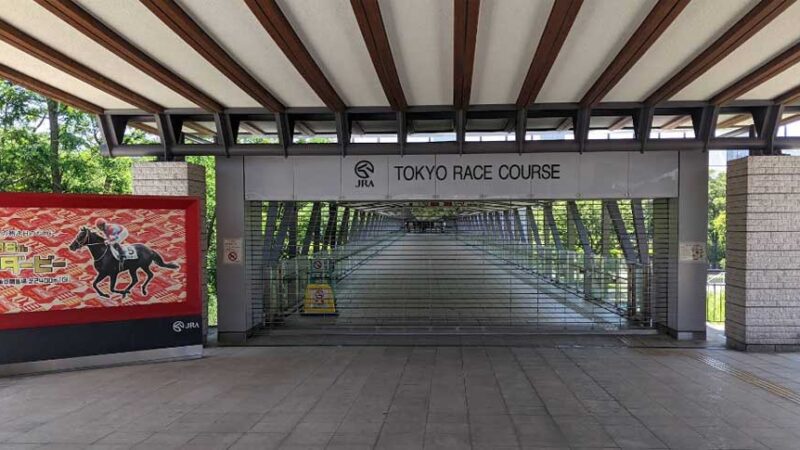
Tokyo Racecourse’s main gate is characterized by its dignified and formal design. On either side of the gate stand stone pillars, with “Tokyo Racecourse” written on the upper part. This majestic appearance conveys a sense of prestige befitting Japan’s premier racecourse.
The anime faithfully reproduces this grandeur of the main gate, depicting it as a symbolic place where Uma Musume enter their dream stage. Many fans find themselves moved when visiting in person, as the scenery they saw in the anime unfolds before their eyes.
Opening Days and Admission Hours
Admission through Tokyo Racecourse’s main gate is generally limited to race days or event days. On non-race days, the main gate is closed and entry is not possible.
Opening Schedule:
- Race Days: Usually 9:00 AM to 5:00 PM (until end of races)
- Event Days: Varies by event
- Non-race Days: Main gate closed, exterior photography only possible
Race scheduling can be confirmed on the JRA (Japan Racing Association) official website. Tokyo Racecourse primarily hosts races on weekends and holidays, but the number of race days throughout the year is limited, so advance confirmation is essential.
Admission Fees and Entry Methods
Admission fees for entering Tokyo Racecourse on race days are as follows:
- General Admission: 200 yen
- Reserved Seating Areas: Additional reserved seat tickets required (varies by seat)
- Special Viewing Seats: Separate fee structure available
For holy land pilgrimage purposes, general admission (200 yen) is sufficient. Tickets can be purchased at windows near the main gate, and automatic ticket machines are also available.
Holy Land Pilgrimage Photography Spot Guide
Photography Points at the Main Gate
The area in front of Tokyo Racecourse main gate is one of the most important photography spots for Uma Musume holy land pilgrimage. As the location where Special Week meets her mother in anime Episode 12, many fans visit.
Photography Tips:
- Best Angle: Capturing the main gate frontally comes closest to the anime
- Avoiding Crowds: Early morning right after opening or near closing on race days is ideal
- Non-race Days: Exterior photography is possible, though you cannot enter the gate area
On race days, large crowds make it difficult to photograph just the gate cleanly. You can aim for moments when the flow pauses, or photograph the exterior only on non-race days.
Passage from Fuchu Racecourse Main Gate Station to Main Gate
The covered dedicated passage connecting Fuchu Racecourse Main Gate Station to Tokyo Racecourse main gate is the stage where Special Week was jogging in the anime. This passage, called the “Main Gate Passage,” is depicted in fine detail in the anime.
Photography Tips:
- Photography Inside the Passage: Only the entrance area is photographable on non-race days
- Less Crowded Times: Early mornings or weekday race days are relatively empty
- Comparison with Anime: The ceiling and pillar arrangement match the anime
This passage is closed midway on non-race days, so you cannot walk the entire length. However, even just experiencing the atmosphere near the entrance provides sufficient immersion in the anime’s world.
Points of Interest Inside the Main Gate
If you’re able to enter on a race day, there are many points of interest beyond the main gate.
Main Photography Spots:
- Fuji View Stand: One of Japan’s largest racecourse grandstands
- Paddock: Where Uma Musume appear before races
- Winner’s Circle: Where victorious Uma Musume are honored
- Racing Oval: The actual race course
All these locations appear in the anime, allowing you to experience the actual atmosphere of the racecourse. The paddock in particular is frequently depicted in anime scenes featuring Uma Musume.
Comparison and Recreation Points with Anime Scenes
Episode 1: Special Week’s Debut Race
In anime Episode 1, Special Week’s first race at Tokyo Racecourse is depicted. You can re-experience passing through the main gate and heading to the paddock, imagining Special’s nervous feelings.
Recreation Points:
- Enter through the main gate and trace the path to the paddock
- Imagine Uma Musume walking in the paddock while photographing
- Take photos from the stands looking down at the racing oval
Episode 12: Meeting Mother at the Main Gate
In anime Episode 12, there’s an emotional scene where Special Week reunites with her mother in front of the main gate. This scene has left an impression on many fans’ hearts and is a must-visit spot during pilgrimage.
Recreation Points:
- Photograph with the main gate as background, from Special’s angle
- Afternoon when the light is soft is recommended
- Aim for quiet moments with few people to recreate the calm atmosphere
Jogging Scene
The scene where Special Week jogs through the passage from Fuchu Racecourse Main Gate Station to Tokyo Racecourse is also memorable. By actually walking this passage, you can re-experience Special’s daily training.
Recreation Points:
- Walk while observing surroundings from Special’s perspective
- Pay attention to the passage’s ceiling and pillar arrangement
- If possible, visit early morning to experience the quiet atmosphere
Precautions and Etiquette for Holy Land Pilgrimage
Photography Etiquette
Tokyo Racecourse is a public facility visited by many racing fans. During pilgrimage, consideration must be given to avoid inconveniencing other visitors.
Etiquette to Follow:
- Don’t block passages or entrances/exits
- Avoid using tripods during crowded times
- Keep conversations quiet and avoid loud noise
- Cosplay photography requires advance facility confirmation
- Always take trash with you
Particularly on race days when the facility is crowded, complete photography quickly and avoid obstructing traffic flow.
Differences Between Race Days and Non-Race Days
The accessible areas differ significantly between race days and non-race days.
Race Days:
- Admission through main gate possible (200 yen admission fee)
- Can view various facilities inside
- Can watch actual races
- Crowded, making photography difficult
Non-Race Days:
- Main gate is closed, exterior photography only
- Passage is also closed midway
- Few people, allowing calm photography
- Cannot enter the facility
It’s important to plan which day to visit based on your purpose. For detailed photography, non-race days are recommended; for experiencing the atmosphere, race days are better.
Seasonal Visitation Points
Tokyo Racecourse has different charms depending on the season.
Spring (March-May):
- Japan Derby held (May)
- Cherry blossom season with photogenic scenery
- Relatively comfortable weather
Summer (June-August):
- Fewer race days
- Heat protection essential
- Unique summer racing atmosphere
Autumn (September-November):
- Peak GI season
- Autumn Crown, Japan Cup, etc.
- Most vibrant period
Winter (December-February):
- Arima Kinen held (December)
- Cold weather countermeasures necessary
- Limited race days
Visiting during seasons matching anime scenes is nice, or experiencing the excitement of major races where Uma Musume competed is also recommended.
Nearby Holy Land Pilgrimage Spots
Other Holy Sites in the Fuchu Area
When visiting Tokyo Racecourse main gate, combining pilgrimage of other holy sites in the surrounding Fuchu area creates a more fulfilling experience.
Main Nearby Spots:
- Higashi-Fuchu Station: Station where Special Week arrived
- Fuchu Honmachi Station Area: Streetscapes appearing in anime
- Fuchu City Center: Areas surrounding locations that inspired Tracen Academy
Planning a route visiting Higashi-Fuchu Station, Tokyo Racecourse main gate, and surrounding areas allows for a satisfying half-day to full-day pilgrimage.
Around Tracen Academy
While Tracen Academy in the anime is modeled after the actual Miho Training Center (Ibaraki Prefecture) and Ritto Training Center (Shiga Prefecture), it is set to exist in Fuchu, Tokyo.
Imagining “if Tracen Academy were here” while walking the Fuchu area is another enjoyment of holy land pilgrimage.
Experiences from Fans Who Actually Visited
Visit Experience on Race Days
Many fans have visited Tokyo Racecourse on race days and shared their experiences on SNS and blogs.
Common Impressions:
- “Overwhelmed by the main gate’s grandeur”
- “The scenery from anime unfolded right before my eyes, moving me deeply”
- “The crowd made photography difficult, but the atmosphere was wonderful”
- “Watching actual races made Uma Musume’s battles feel real”
Visit Experience on Non-Race Days
Meanwhile, fans who visited on non-race days share different impressions.
Common Impressions:
- “Few people allowed leisurely photography”
- “Taking memorial photos in front of the main gate was easier”
- “Unable to enter was disappointing, but satisfied with exteriors”
- “The quiet atmosphere let me reflect on anime scenes”
Recommended Visit Plans
Experienced visitors recommend the following visit plans:
For First-Time Visitors:
- First visit exterior photography on non-race day
- Later, enter on race day to experience the atmosphere
- Enjoy both charms
For Those With Limited Time:
- Visit shortly after opening on a race day
- Photograph during less crowded times
- Afterward, tour the facility and enjoy races too
Tokyo Racecourse’s History and Appeal
History as a Racecourse
Tokyo Racecourse, established in 1933 (Showa 8), is Japan’s representative racecourse. After relocating to present-day Fuchu in 1954, it has developed as the center of Japanese racing.
The current Fuji View Stand, completed in 2007, is a state-of-the-art facility with capacity for approximately 223,000 people. It has been the stage for countless legendary races including the Japan Derby.
Facility Characteristics
Tokyo Racecourse is known for its scale and facility quality.
Main Characteristics:
- One of Japan’s Largest Grandstands: 7 stories, approximately 400m long
- Spacious Racing Ovals: 2,083m turf, 1,899m dirt
- Complete Facilities: Restaurants, shops, kids’ spaces, etc.
- Beautiful Scenery: Lush greenery and well-maintained facilities
These characteristics make it worthy of being depicted as Uma Musume’s dream stage in the anime.
Frequently Asked Questions
Can I enter without wagering on races?
Yes, on race days, you can enter for 200 yen admission without wagering on races. Visits purely for holy land pilgrimage or facility viewing are welcomed.
Can I photograph freely?
Personal commemorative photography is basically free, but commercial photography and large-scale photography equipment require advance permission. Also, consideration must be given to avoid inconveniencing other visitors.
Is it possible to visit in cosplay?
Tokyo Racecourse generally does not permit cosplay entry. However, special circumstances like events may permit it, so advance facility confirmation is recommended.
How long does it take from the nearest station?
Approximately 2-3 minutes on foot from Fuchu Racecourse Main Gate Station, and approximately 10-15 minutes from Higashi-Fuchu Station. Fuchu Racecourse Main Gate Station is a dedicated racecourse station, making it the most convenient access.
Where can I confirm race scheduling?
The JRA (Japan Racing Association) official website publishes the annual race schedule. Be sure to confirm before visiting.
Summary: Key Points for Tokyo Racecourse Main Gate Holy Land Pilgrimage
Tokyo Racecourse main gate is an essential spot in “Uma Musume Pretty Derby” holy land pilgrimage. As the stage for many memorable anime scenes, visiting allows you to realistically experience the world where Uma Musume competed.
Important Points for Visiting:
- Access: Fuchu Racecourse Main Gate Station is most convenient
- Opening Days: Entry possible only on race days, exterior only on non-race days
- Photography: Best on non-race days or right after opening to avoid crowds
- Etiquette: Remember consideration for other visitors
- Sightseeing: Can combine pilgrimage of other holy sites in Fuchu area
For first-time visitors, the recommended approach is a two-stage visit: first photograph the exterior on a non-race day, then experience the atmosphere by entering on a race day later. Watching actual races while experiencing the excitement of the stage where Uma Musume competed will deepen your understanding and affection for the work.
Holy land pilgrimage at Tokyo Racecourse main gate should be a special experience for anime fans. Using the information in this article, please enjoy a fulfilling pilgrimage. At the place where Special Week and other Uma Musume pursued their dreams, you too can create special memories.