A Lull in the Sea: Pilgrimage Guide to Goto Islands, Nagasaki Prefecture | Detailed Maps of All Islands and Practical Access Information
“A Lull in the Sea” (commonly known as “Aokana”) is a popular work featuring the fictional sport “Flying Circus” as its subject matter. The beautiful stage of this work is the Goto Islands in Nagasaki Prefecture. In this article, we provide a comprehensive explanation of detailed spot information for each island, efficient routes to visit, and access methods for those planning an actual pilgrimage to these sacred sites.
The Relationship Between A Lull in the Sea and the Goto Islands
In the world of “A Lull in the Sea,” a near-future is depicted where flying through the sky has become commonplace thanks to anti-gravity shoes called “Grashh.” The fictional islands where the protagonists live are modeled after the Goto Islands in Nagasaki Prefecture.
The Goto Islands are located in the western sea off the coast of Nagasaki Prefecture and consist of 152 islands of various sizes. In the work, the landscapes of the five main islands—Fukue Island, Nakatsutsu Island, Kuka Island, Naru Island, and Wakamatsu Island—appear throughout, with beautiful coastlines, historic churches, and the peaceful island lifestyle adding color to the world of the work.
Since the broadcast of the anime version, the Goto Islands have become established as a sacred site for “Aokana” fans, and regional collaboration projects commemorating the 10th anniversary of the television anime broadcast in 2026 are being held in Goto City and Shinkamigoto Town, further deepening the region’s connection to the work.
Access to the Goto Islands
Access by Airplane
Fukue Airport (Goto Tsubaki Airport)
- Approximately 30 minutes from Nagasaki Airport (ANA/Oriental Air Bridge)
- Approximately 40 minutes from Fukuoka Airport
- 3-4 flights operated daily
When using Fukue Island as a base, flying is the most time-efficient option. However, since the number of flights is limited, early reservations are necessary.
Access by Ferry and High-Speed Ship
From Nagasaki Port
- Jet Foil (high-speed ship): Approximately 1 hour 25 minutes to Fukue Port
- Ferry: Approximately 3 hours 10 minutes to Fukue Port
- To Nara Port (Nakatsutsu Island): Jet foil approximately 1 hour 35 minutes, ferry approximately 4 hours 40 minutes
From Sasebo Port
- Ferry: Approximately 2 hours 50 minutes to Nara Port
A ferry is recommended for those with time to spare or those who wish to bring a vehicle. You can also enjoy the scenery of the Goto Islands approaching from the ferry.
Transportation Within and Between Islands
Rental Car
A rental car is absolutely recommended for pilgrimage tours. Many of the sacred sites on each island are difficult to access by public transportation, and a car is essential for efficiently visiting them.
- Around Fukue Port: Toyota Rental Car, Nippon Rental Car, local operators, and more
- Fukue Airport: Rental car counters are also available in the airport
- Nakatsutsu Island: Several companies around Arikawa Port and Nara Port
During busy seasons (Golden Week, summer vacation, Silver Week), availability becomes fully booked, so reservations at least one month in advance are recommended.
Local Buses and Taxis
Goto Bus operates on each island, but with limited frequency, it is not suitable for pilgrimage tours. Taxis offer sightseeing taxi plans, but costs can be high.
Inter-Island Transportation
- Fukue Island ⇔ Kuka Island: Approximately 20 minutes by regular ferry
- Fukue Island ⇔ Naru Island: Approximately 40 minutes by ferry
- Nakatsutsu Island ⇔ Wakamatsu Island: Connected by Wakamatsu Bridge (accessible by car)
- Fukue Island ⇔ Nakatsutsu Island: Approximately 2 hours by ferry
① Sacred Sites on Nakatsutsu Island and Wakamatsu Island
Nakatsutsu Island is located in the northern part of the Goto Islands and is the center of Shinkamigoto Town. It is connected to Wakamatsu Island by the Wakamatsu Bridge, allowing visitors to tour both islands as a single unit.
No. 01 Abandoned Bus on Prefectural Road 218
Scenes in the Work
An abandoned bus standing alone on a hill overlooking the sea, impressively used in the anime opening and game key visuals. It appears multiple times in important scenes, such as when Asuka and Mashiro talk to each other.
Access Information
- Location: Wakamatsugou, Shinkamigoto Town, Minamimatsuura District, Nagasaki Prefecture
- Parking: Several spaces available along the roadside
- Access: Approximately 40 minutes by car from Arikawa Port
It is located along the seaward side of Prefectural Road 218. The winding mountain road requires careful driving. Since the abandoned bus is placed on private land, please respect local manners when viewing.
Photography Tips
The composition of blue sky, sea, and abandoned bus during clear weather matches the atmosphere of the work. The late morning to early afternoon time period is favorable for front-lit photography. Since vegetation is thick in the surrounding area, the appearance changes with the season.
No. 02 Aoganogaura Church Bus Stop
Scenes in the Work
The landscape around the church entrance and bus stop area, faithfully reproduced in game and anime versions.
Access Information
- Location: Namashougou, Shinkamigoto Town, Minamimatsuura District, Nagasaki Prefecture
- Parking: Dedicated parking lot available in front of the church
- Access: Approximately 20 minutes by car from Arikawa Port
- Viewing Hours: 9:00 AM–5:00 PM (not available during Mass)
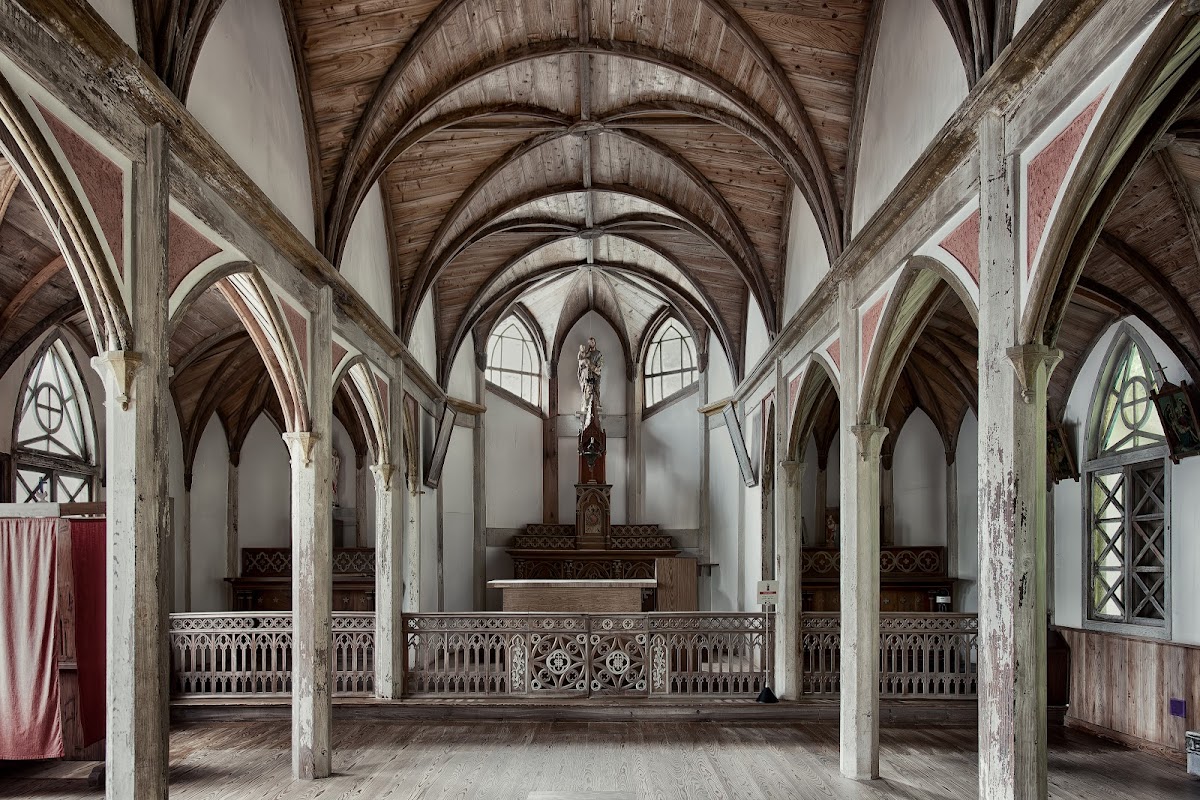
Aoganogaura Church is a nationally designated important cultural property and features beautiful brick construction. Interior viewing is possible, but advance contact is recommended (Nagasaki and Amakusa Region Latent Christians Heritage Information Center: 0959-42-0964).
Precautions
The church is an active religious facility. When visiting, please maintain silence, photograph only the exterior, and refrain from photographing the interior. Avoid clothing with excessive skin exposure, and remove your hat when entering.
No. 03 Nara Port Terminal
Scenes in the Work
The model for a flashback scene of young Asuka in Episode 9 of the anime version. It is also featured in the PS4 version key visuals.
Access Information
- Location: Narashougou, Shinkamigoto Town, Minamimatsuura District, Nagasaki Prefecture
- Parking: Free parking lot available in front of the terminal
- Access: Approximately 50 minutes by car from Arikawa Port, or direct access by ferry from Nagasaki Port
Nara Port is located at the southern end of Nakatsutsu Island and is a major port where ferries from Nagasaki Port and Sasebo Port arrive and depart. The exterior of the terminal building, waiting areas, and the port scenery appear in the work.
Nearby Facilities
There are restaurants and shops around Nara Port, where you can enjoy local cuisine such as Goto udon. It is possible to enjoy pilgrimage tours during ferry waiting times.
Other Nakatsutsu Island Spots
Hamawaki Church
One of the church models appearing in the work. A simple wooden church where you can feel the history of faith in Goto.
Arikawa Port Area
The gateway to Nakatsutsu Island, where the landscapes of the shopping street and surroundings are incorporated into the work.
② Sacred Sites on Naru Island
Naru Island is located northeast of Fukue Island and is a quiet island with a population of approximately 2,000.
No. 04 Miyanohama Beach
Scenes in the Work
A beautiful beach used in flashback scenes of Episode 9 of the anime version and in PS4 key visuals. Depicted as an impressive scene featuring white sand and emerald-green water.
Access Information
- Location: Urafutsu, Narucho, Goto City, Nagasaki Prefecture
- Parking: Free parking lot available at the beach (approximately 20 spaces)
- Access: Approximately 15 minutes by car from Naru Port
- Swimming Season: Mid-July through late August
This beautiful beach was selected as one of the Ministry of the Environment’s “100 Best Swimming Beaches.” It has excellent transparency and is suitable for snorkeling.
Photography Tips
The sea color on clear sunny days best matches the atmosphere of the work. Outside the summer season, there are fewer people, allowing for leisurely photography. However, in winter, strong winds and high waves are common, so caution is necessary.
No. 05 Naru Senjogashiki
Scenes in the Work
The vast grassland landscape is used as the background for scenes of characters flying through the sky in the work.
Access Information
- Location: Tomashougou, Narucho, Goto City, Nagasaki Prefecture
- Parking: None (parking along roadside)
- Access: Approximately 20 minutes by car from Naru Port
A vast grassland facing the sea with a spectacular view of Goto-nada on clear days. Wind is often strong, so be careful about items being blown away, such as hats.
Access to Naru Island
- From Fukue Port: Approximately 40 minutes by ferry, approximately 25 minutes by high-speed ship
- From Nagasaki Port: Direct access by ferry (approximately 2 hours 30 minutes)
There are few rental car companies on the island, so advance reservations are essential. Bicycle rentals are available, but given the distance between sacred sites, they are best suited for those with considerable stamina.
③ Sacred Sites on Kuka Island
Kuka Island is located northeast of Fukue Island and is a small island with a population of approximately 200. It is home to the “Kuka Island Settlement,” a component of the UNESCO World Heritage Site “Hidden Christian Sites in the Nagasaki Region and the Goto Islands.”
Former Goringo Church
Scenes in the Work
Said to be one of the church models appearing in the work.
Access Information
- Location: Warabimachi, Goto City, Nagasaki Prefecture
- Viewing: Advance reservation required (Nagasaki and Amakusa Region Latent Christians Heritage Information Center)
- Access: Approximately 30 minutes on foot from Tanoura Port, or approximately 10 minutes by car
A nationally designated important cultural property and component of a UNESCO World Heritage Site. Advance reservations are absolutely required for viewing.
Access to Kuka Island
- From Fukue Port: Approximately 20 minutes by regular ferry (4-5 departures daily)
- Arrival at Tanoura Port
Kuka Island has almost no accommodations or rental cars. Day trips are typical, with movement on foot or by pre-arranged taxi. Since regular ferry schedules are limited, planned actions are necessary.
④ Sacred Sites on Fukue Island
Fukue Island is the largest island in the Goto Islands and is the center of Goto City. It is the most convenient island to use as a base for pilgrimage tours.
Fukue Shopping Street Arcade
Scenes in the Work
Appears in game and anime versions in scenes where the protagonists shop and visit the arcade.
Access Information
- Location: Fukuemachi, Goto City, Nagasaki Prefecture
- Parking: Multiple paid parking lots in the vicinity
- Access: Approximately 5 minutes on foot from Fukue Port
Various restaurants, souvenir shops, and other establishments line the arcade, allowing visitors to experience local life. You can also enjoy local cuisine such as Goto udon and Goto beef.
Samurai Residence Street (Around Ishida Castle Ruins)
Scenes in the Work
Historic townscapes are used as backgrounds in the work.
Access Information
- Location: Samurai Residence Street, Goto City, Nagasaki Prefecture
- Parking: Ishida Castle Ruins parking lot available
- Access: Approximately 5 minutes by car from Fukue Port, approximately 15 minutes on foot
A street that retains traces of Edo period samurai residences, with beautiful stone walls and hedgerows creating picturesque scenery.
Osezaki Lighthouse
Scenes in the Work
A white lighthouse standing on a cliff that appears impressively in anime and game versions.
Access Information
- Location: Tamanouramachi, Tamaura, Goto City, Nagasaki Prefecture
- Parking: Free parking lot before the lighthouse
- Access: Approximately 60 minutes by car from Fukue Port
- Walking: Approximately 20 minutes from the parking lot to the lighthouse
Selected as one of “Japan’s 50 Best Lighthouses,” this beautiful lighthouse stands at the tip of a cliff jutting into the East China Sea. There is a well-maintained walking trail from the parking lot to the lighthouse, though it has some ups and downs, so comfortable shoes are necessary.
Photography Tips
The contrast between clear blue sky and the white lighthouse matches the atmosphere of the work. Wind is extremely strong most of the time, so caution is necessary when using tripods.
Takahama Beach
Scenes in the Work
A beautiful beach with exceptional transparency appearing in flashback scenes of Episode 9 of the anime version, among other scenes.
Access Information
- Location: Kaizutsu, Miuraku, Goto City, Nagasaki Prefecture
- Parking: Free parking lot at the beach (approximately 50 spaces)
- Access: Approximately 40 minutes by car from Fukue Port
- Swimming Season: Mid-July through late August
This representative Goto beach has been selected as one of “Japan’s 100 Best Beaches” and “Japan’s 88 Best Swimming Beaches.” The emerald-green sea and white sand create a spectacular view.
Daienji Temple (Five-Story Pagoda)
Scenes in the Work
Said to be the model for a temple appearing in the work.
Access Information
- Location: Okuuracho, Goto City, Nagasaki Prefecture
- Parking: Several spaces available in front of the temple
- Access: Approximately 15 minutes by car from Fukue Port
This temple is distinctive for its five-story pagoda built in the Meiji era.
Furusato Hall (Goto History and Culture Museum)
Scenes in the Work
The exterior of the building and surrounding scenery appear in the work.
Access Information
- Location: Iketacho, Goto City, Nagasaki Prefecture
- Hours: 8:30 AM–5:30 PM
- Closed: Mondays (or the next day if Monday is a holiday)
- Admission: ¥200 (general)
- Parking: Available (free)
- Access: Approximately 10 minutes by car from Fukue Port
This museum allows visitors to learn about Goto’s history and culture, providing an opportunity to deepen understanding of Goto between pilgrimage site visits.
⑤ Sacred Sites in Nagasaki City
Beyond the Goto Islands, there are important sacred sites within Nagasaki City.
Udon Shimaya (Model for Mashiro Udon)
Scenes in the Work
A real udon restaurant that served as the model for “Mashiro Udon,” which appears in the work. It is an important spot appearing multiple times in game and anime versions.
Restaurant Information
- Location: Hamaguchimachi, Nagasaki City, Nagasaki Prefecture
- Hours: 11:00 AM–3:00 PM, 5:00 PM–8:00 PM (subject to change)
- Closed: Irregular
- Parking: Several spaces in front of the restaurant
- Access: Approximately 10 minutes by car from Nagasaki Station, approximately 5 minutes on foot from Hamaguchimachi tram stop
A popular restaurant serving Goto udon that has become established as a pilgrimage site for work fans. Goto udon is characterized by its thin noodles with excellent texture and the gentle flavor of ago dashi (flying fish broth).
Ordering Tips
To recreate menu items appearing in the work, simple “kake udon” or “kamaage udon” are recommended. Long wait times occur during busy periods, so plan to visit with ample time.
Other Nagasaki City Spots
Nagasaki’s streetscapes and tram cars are also used as backgrounds in the work. You can enjoy pilgrimage tours combined with Nagasaki sightseeing before or after traveling to the Goto Islands.
Efficient Pilgrimage Tour Model Courses
2-Night, 3-Day Fukue Island-Centered Course
Day 1
- Nagasaki Airport → Fukue Airport
- Arrange rental car
- Fukue Shopping Street, Samurai Residence Street, Daienji Temple, Furusato Hall
- Stay in Fukue City
Day 2
- Takahama Beach
- Osezaki Lighthouse
- Day trip to Kuka Island (using regular ferry)
- Stay in Fukue City
Day 3
- Day trip to Naru Island (Miyanohama Beach, Naru Senjogashiki)
- Return rental car
- Fukue Airport → Nagasaki Airport
3-Night, 4-Day Goto Islands North-to-South Course
Day 1
- Nagasaki Port → Nara Port (ferry)
- Arrange rental car
- Nara Port Terminal, Aoganogaura Church
- Stay on Nakatsutsu Island
Day 2
- Visit sacred sites on Nakatsutsu Island (abandoned bus, Hamawaki Church, etc.)
- Move to Fukue Island by ferry
- Stay in Fukue City
Day 3
- Visit Fukue Island sacred sites (Takahama Beach, Osezaki Lighthouse, etc.)
- Stay in Fukue City
Day 4
- Day trip to Naru Island or Kuka Island
- Fukue Airport → Nagasaki Airport or Fukue Port → Nagasaki Port
4-Night, 5-Day Complete Tour Course
The above routes expanded to include detailed exploration of Wakamatsu Island, overnight stays on each island, and sacred sites in Nagasaki City. Recommended for those with ample time who wish to thoroughly explore the sites.
Best Season for Pilgrimage Tours and Precautions
Best Seasons
Spring (April–May)
- Pleasant, mild weather
- Beautiful fresh greenery
- Golden Week is crowded; early reservations for rental cars and accommodations are essential
Summer (July–August)
- Swimming beaches are open, allowing visitors to most vividly experience the sea scenes from the work
- Typhoon season carries risk of ferry cancellations
- Very crowded period
Autumn (September–November)
- Relatively stable weather
- Fewer tourists, allowing leisurely visits
- September requires typhoon caution
Winter (December–March)
- Fewest tourists, allowing quiet pilgrimage tours
- Rough seas increase the likelihood of ferry cancellations
- Cold-weather preparation necessary
- Some facilities close seasonally
Precautions
Weather and Transportation
Since the Goto Islands are remote, weather significantly impacts transportation. Ferries in particular may be canceled due to sea conditions. Build flexibility into your schedule and plan a buffer day before or after.
Rental Cars
During busy seasons, rental cars are extremely difficult to book. Reservations should be made at least one month in advance, or ideally two to three months ahead. The number of gas stations is also limited, so refuel regularly.
Accommodations
Accommodations on the Goto Islands are limited, with particularly few options on Nakatsutsu Island and Naru Island. Early reservations are necessary. Fukue Island has the most abundant accommodations.
Church Visits
Churches are active religious facilities. Observe visiting etiquette, and contact churches in advance for those where it is recommended. You cannot visit during Mass times.
Abandoned Bus
Since it is situated on private land, unauthorized entry into the property is strictly forbidden. Be considerate of nearby residents by not leaving trash or making noise.
Packing
- Comfortable walking shoes (walking is necessary to reach lighthouses and churches)
- Sunscreen and hat (strong sun exposure)
- Warm clothing (winter, windy locations)
- Camera and smartphone (chargers too)
- Work reference materials (screenshots helpful for identifying locations)
Enhancing Your Pilgrimage Experience
Preparation by Experiencing the Work
Playing the game version (PC, PS4, Switch) and watching the anime version before visiting enhances understanding of each location’s significance and importance, making the experience more moving.
Enjoying Local Cuisine
Goto Udon
Considered one of Japan’s three best udon, featuring thin noodles. Traditionally eaten with ago dashi (flying fish broth).
Goto Beef
Black wagyu cattle raised on the Goto Islands. Tender with rich umami.
Fresh Seafood
Fish and shellfish caught in Goto waters are exceptional. Mackerel, sardines, and yellowtail are especially famous.
Kankoroomochi
A traditional Goto sweet made with sweet potatoes. Perfect as souvenirs.
Regional Events
The Goto City and Shinkamigoto Town occasionally hold work-related events. Check official websites and local tourism associations for information.
Photography Tips
Prepare screenshots beforehand to match angles from work scenes. Weather significantly changes atmosphere, so checking forecasts and adjusting your visit schedule accordingly is one approach.
The Charm of Nagasaki Prefecture’s Goto Islands
Through pilgrimage tours, you can experience the Goto Islands’ rich nature, history, and culture. The world heritage churches, beautiful coastlines, and the warmth of island residents all explain why these islands became the setting for the work.
The Goto Islands are registered as a UNESCO World Heritage Site, “Hidden Christian Sites in the Nagasaki Region and the Goto Islands,” preserving the history of Christians during the period of religious persecution. Combining pilgrimage tours with learning this historical background creates a deeper, more meaningful travel experience.
Summary
The Nagasaki Prefecture Goto Islands, the sacred sites of “A Lull in the Sea,” are captivating places where beautiful nature and rich history converge. Numerous work-related spots are scattered across Fukue Island, Nakatsutsu Island, Kuka Island, Naru Island, and Wakamatsu Island, making them must-visit sacred sites for fans.
Successful pilgrimage tours require careful planning. Don’t neglect preparations such as early reservations for rental cars and accommodations, scheduling that considers weather, and confirming inter-island transportation methods.
A pilgrimage tour to the Goto Islands, where you can actually experience the world of the work, will undoubtedly become an unforgettable memory. Through beautiful scenery, delicious food, and encounters with warm people, your love for the work will deepen further.
Please use this guide as a reference when planning your pilgrimage to “A Lull in the Sea’s” sacred sites in Nagasaki Prefecture’s Goto Islands. Wonderful experiences immersed in the work’s world await you in Goto, where blue skies and blue seas spread wide.