Directed by Mamoru Hosoda and released in July 2021, the latest work “The Belle” is a moving story set in Kochi Prefecture. Through the growth of the protagonist Suzu, who moves back and forth between the virtual world “U” and the real world, important themes of life are depicted. This article will thoroughly introduce the pilgrimage spots in Kochi Prefecture that appear in the film.
The Deep Connection Between “The Belle” and Kochi Prefecture
“The Belle,” which garnered attention as a work by director Mamoru Hosoda, is centered on the Niyodo River area, with Ochi Town in Takaoka District, Kochi Prefecture as its model. In the film, Suzu, a high school girl living in a rural town, is depicted growing as a singer named “Belle” in the virtual world “U,” while carrying the sadness of losing her mother.
The beautiful natural scenery of Kochi Prefecture functions as an important element of the film, with the “Niyodo Blue” of the highly transparent Niyodo River and the quiet landscape of mountain villages symbolically expressing Suzu’s inner world. Since its release, many fans have visited the pilgrimage sites, and by actually experiencing the places they saw in the film, they are able to appreciate the world of the work on a deeper level.
Must-Visit Main Pilgrimage Spots
Asao Chinkabasashi Bridge (Ochi Town)
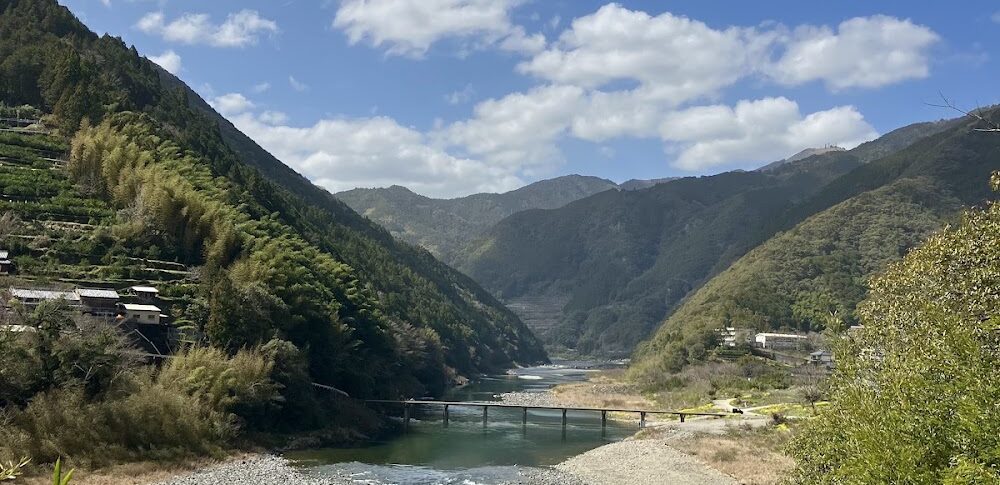
The most famous pilgrimage spot for “The Belle” is the Asao Chinkabasashi Bridge in Takaoka District, Ochi Town, Kochi Prefecture. This bridge, which has been used in the film’s poster and key visuals, appears numerous times in the work, including scenes of Suzu cycling to school and scenes of the canoe club practicing.
A chinkabasashi is a bridge without railings, designed to be submerged underwater during floods, and many such bridges exist in the Shikoku region. The Asao Chinkabasashi is a bridge spanning approximately 120 meters over the Niyodo River, and the landscape created by the surrounding mountains and clear stream is spectacular.
Access Information:
- About 40 minutes by car from Ino IC on the Kochi Expressway
- About 20 minutes by car from Sakawa Station on the JR Dosan Line
- Parking: A few spaces near the bridge available (free)
Points to Note When Visiting:
- Currently used as a local access road, so be careful of passing vehicles
- Avoid spending long periods on the bridge
- Always take your trash with you
- Be considerate so as not to cause inconvenience to local residents
Ago Gorge and Crystal Pool (Niyodo Town)
One of the most beautiful scenes in the film that remains in memory is the Crystal Pool in Ago Gorge. This place, which is emblematic of Niyodo Blue, has exceptionally high transparency and displays various expressions from emerald green to deep blue depending on the light.
In the film, it appears as the background for scenes where Suzu recalls memories with her mother and scenes where she finds peace in nature. When you actually visit, you will be overwhelmed by the transparency of the water and the lush natural surroundings that cannot be fully conveyed in photographs or videos.
Access Information:
- About 50 minutes by car from Ino IC on the Kochi Expressway
- Free parking lot at the entrance to Ago Gorge
- About 15 minutes walk to Crystal Pool
Best Season:
- June to September: Water levels are stable and Niyodo Blue is at its most beautiful
- November: A spectacular sight combined with autumn foliage
- Winter snow and icing are possible, so caution is necessary
Kagami River (Kochi City)
The Kagami River flowing through Kochi City appears in the film as Suzu’s school commute route. In particular, the area around Kagami River Bridge serves as the model for scenes where Suzu cycles, and the river maintains beautiful clear water despite being in an urban area.
A walking path is laid out along the Kagami River and serves as a place of leisure for local residents. The canoe practice scenes are also said to be modeled after this Kagami River.
Access Information:
- About 15 minutes by streetcar from Kochi Station, get off at Kagami River Bridge station
- About 20 minutes by car from Kochi IC on the Kochi Expressway
- Parking: Numerous coin parking lots in the surrounding area
Nozu Elementary School (Ochi Town)
The Nozu Elementary School in Ochi Town served as the model for the school where Suzu studies. In the film, it appears in scenes depicting Suzu’s school life with her friends.
Important Notes When Visiting:
- As it is currently an active educational facility, entry into the grounds is prohibited
- Only view the exterior from a distance
- Avoid visiting during class hours
- Prioritize the safety and privacy of students
Ino Station and Ino Station Plaza (Ino Town)
The Ino Station, the terminus of the Tosaden Ino Line, and its plaza appear in an important scene at the end of the film. This place served as the model for a scene where Suzu waits for a bus and has been visited by many fans.
There is a shopping street in front of the station where you can feel the life of local people. You can stand in the same location while recalling the touching final scene of the film.
Access Information:
- About 30 minutes by Tosaden Ino Line from Kochi Station
- About 10 minutes by car from Ino IC on the Kochi Expressway
- Parking: Paid parking lots around the station
Fureai no Sato Yanagino (Ochi Town)
The area around Fureai no Sato Yanagino served as the model for Suzu’s home and surrounding villages. This quiet mountain village allows you to experience the rural atmosphere that appears exactly as depicted in the film.
Old houses are scattered about, and the landscape surrounded by rice paddies and mountains can be said to be Japan’s original natural landscape. In the film, it appears as the exterior of the house where Suzu lives with her father and the surrounding natural scenery.
Access Information:
- About 50 minutes by car from Ino IC on the Kochi Expressway
- Be careful on narrow mountain roads
- Much of the village is private property, so do not enter without permission
Pilgrimage Spots in Kochi City
Kochi Station
Kochi Station appears in the film as the setting for scenes heading to the city and scenes of returning home. The current station building, which was rebuilt in 2008, is characterized by a warm design that makes abundant use of timber from Kochi Prefecture.
There is a statue of Sakamoto Ryoma in front of the station, making it ideal as a starting point for sightseeing. It is recommended to plan your route to each spot from here as the starting point for your pilgrimage.
Facility Information:
- Tourist information office available (pilgrimage maps can be obtained)
- Multiple car rental companies available
- Streetcar and bus terminal
Obiya-cho Shopping Street
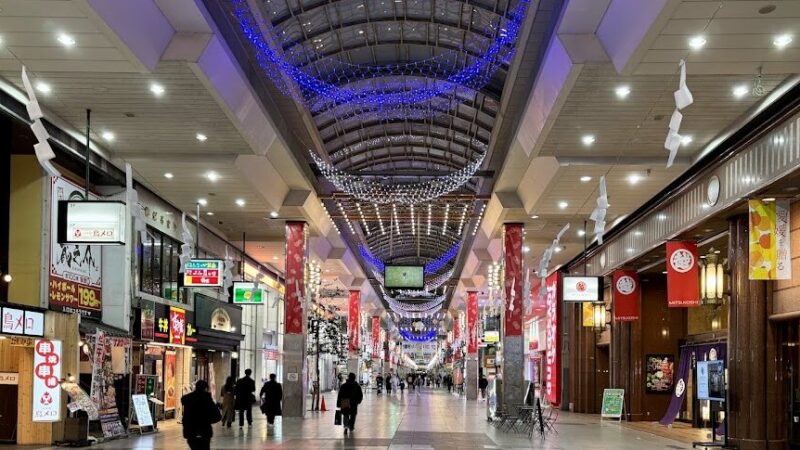
The Obiya-cho Shopping Street in the center of Kochi City is pointed out as a possible location that appears in urban scenes in the film. Operating as an arcade shopping street, it is one of Kochi Prefecture’s commercial centers.
It is the ideal place to enjoy Kochi’s cuisine and souvenirs during breaks from pilgrimage visits.
Efficient Pilgrimage Model Courses
1-Day Course: Major Spots Tour
Morning:
- Depart from Kochi Station (9:00)
- Ino Station and plaza (9:30-10:00)
- Kagami River area (10:30-11:00)
- Asao Chinkabasashi Bridge (12:00-13:00) *Lunch in Ochi Town
Afternoon:
- Nozu Elementary School (exterior only) (14:00-14:15)
- Fureai no Sato Yanagino area (15:00-15:30)
- Ago Gorge and Crystal Pool (16:30-17:30)
- Arrive back at Kochi Station (19:00)
2-Day Course: In-Depth Enjoyment Plan
Day 1:
- Morning: Pilgrimage spots in Kochi City (Kochi Station, Kagami River, Obiya-cho Shopping Street)
- Afternoon: Ochi Town area (Asao Chinkabasashi Bridge, Nozu Elementary School, Fureai no Sato Yanagino)
- Lodging: Accommodation in Ochi Town or Sakawa Town
Day 2:
- Morning: Leisurely walk through Ago Gorge
- Afternoon: Around Ino Station, sightseeing in Ino Town
- Evening: Purchase souvenirs in Kochi City
Optimal Seasons and Access Methods for Pilgrimage Visits
Recommended Seasons
Spring (March-May):
- Fresh greenery is beautiful and the weather is comfortable
- The cherry blossom season is especially beautiful along the Kagami River
- Niyodo Blue can be seen relatively stably
Summer (June-August):
- The time when Niyodo Blue is at its most beautiful
- Abundant water levels and the river landscape is at its best
- Heat precautions and frequent hydration are essential
Autumn (September-November):
- The contrast between autumn foliage and clear streams is spectacular
- Ago Gorge is especially beautiful
- Comfortable weather makes it ideal for sightseeing
Winter (December-February):
- Fewer tourists allow for quiet pilgrimage visits
- Water transparency is high
- Be cautious of snow and icing in mountain areas
Access Methods
By Car (Most Recommended):
- Use the Kochi Expressway and exit at Ino IC for convenience
- Car rentals are available around Kochi Station
- Car navigation or smartphone map apps are essential
- Be cautious as there are many mountain roads
By Public Transportation:
- Use the JR Dosan Line and Tosaden
- Bus frequency is limited, so check timetables in advance
- Consider using taxis (may be expensive)
- Some spots are difficult to reach by public transportation
By Sightseeing Taxi/Tour:
- Recommended for those who want to tour efficiently
- Plans with commentary by local guides are also available
- Advance reservation required
Etiquette and Precautions When Visiting Pilgrimage Sites
Basic Etiquette
- No Trespassing on Private Property
- Many locations featured in the film are private property or local roads
- Do not enter premises without permission
- Photography should be done from public roads
- Consideration for Local Residents
- Avoid loud conversation and noise
- Refrain from visiting in early morning or late evening
- Park only in designated areas
- Environmental Protection
- Always take your trash with you
- Do not damage nature
- Avoid dangerous activities near rivers or gorges
- Traffic Rule Compliance
- Chinkabasashi bridges are used as local access roads
- Parking on roads is prohibited
- Be careful of oncoming vehicles on narrow mountain roads
Safety Precautions
- River Accident Prevention: The Niyodo River has areas with fast currents, so exercise caution near water
- Mountain Road Driving: There are many curves and narrow sections, so drive carefully
- Heat Stroke Prevention: In summer, drink water frequently and take regular breaks
- Check the Weather: In rainy conditions, be aware of river flooding and road closures
The Charm of Kochi to Enjoy Alongside Pilgrimage Visits
Kochi Cuisine
It is recommended to enjoy local Kochi cuisine during breaks from pilgrimage visits.
- Bonito Tataki: A representative local Kochi dish
- Sarashi Cuisine: Banquet food characterized by bold presentation
- Utsubo Cuisine: A delicacy unique to Kochi
- Imo Kenpi: Traditional sweets ideal for souvenirs
- Ice Cream: Old-fashioned Kochi ice cream
Nearby Sightseeing Spots
- Katsurahama Beach: Scenic area famous for the Sakamoto Ryoma statue
- Kochi Castle: One of the twelve existing castles
- Hirome Market: Enjoy Kochi cuisine all in one place
- Shimanto River: Japan’s last pristine river (worth the detour)
Kochi Traditional Crafts
To appreciate the world of the film more deeply, pay attention to Kochi’s traditional crafts.
- Tosa Washi: Ino Town is famous as a paper-producing region
- Tosa Forged Blades: Traditional crafts showcasing artisan skill
- Tosa Coral: Beautiful decorative items
The Theme of “The Belle” and Kochi’s Landscape
“The Belle” depicts the importance of human connection and finding one’s true self by contrasting the virtual world “U” with the real world. The beautiful nature of Kochi Prefecture serves as a setting that symbolically expresses the purity of the protagonist Suzu and her feelings toward her lost mother.
The transparent water of Niyodo Blue represents Suzu’s transparency of heart, and the quiet mountain villages reflect the loneliness and conflicts she carries. By actually visiting the pilgrimage sites, the theme of the film becomes more deeply understood, and affection for the work will deepen further.
Director Mamoru Hosoda is known for depicting real locations carefully, as evidenced by his previous work “The Boy and the Beast,” which is set in Shibuya. In “The Belle” as well, the scenery of Kochi Prefecture is faithfully recreated and its charm is fully brought out.
Tips for Enjoying Your Pilgrimage Visit More
Advance Preparation
- Rewatch the Film: Rewatching the film before visiting will refresh your memory of each scene
- Scene-Specific Screenshots: Prepare for comparative photography fun
- Download Map Applications: Since radio waves are weak in some mountain areas, also prepare offline maps
- Reserve Accommodations: Early reservations are essential during peak seasons
Photography Tips
- Time of Day: Light in early morning and evening is beautiful (morning is recommended especially for Niyodo Blue)
- Weather: Clear weather makes the river colors appear more beautifully
- Angles: Find angles that recreate scenes from the film
- Seasonal Landscapes: Enjoy the different faces of the four seasons
Souvenir Information
Merchandise and pamphlets related to “The Belle” may be sold at Kochi Station and various sightseeing spots. Additionally, the Ochi Town Tourism Association distributes pilgrimage maps, so it is recommended to obtain one before your visit.
Conclusion: Experiencing the World of “The Belle” in Kochi Prefecture
A pilgrimage visit to the sites of “The Belle” is not merely a visit to film locations but a valuable experience of touching Kochi Prefecture’s rich nature and culture. The beautiful landscape of the Asao Chinkabasashi Bridge, the mysterious Niyodo Blue of Ago Gorge, the gentle flow of the Kagami River, and the quiet villages in the mountains—all of these shape the world of the film.
Through pilgrimage visits, by walking the path that Suzu walked and confirming with your own eyes the landscapes she saw, your understanding of and affection for the work will deepen further. By touching the warmth of Kochi’s people and the grandeur of nature, the message the film wanted to convey will resonate even more in your heart.
Remembering to follow proper etiquette and being considerate of local residents, enjoy your wonderful pilgrimage journey. The world of “The Belle,” set in Kochi Prefecture, is waiting for you.
Frequently Asked Questions (FAQ)
Q1: How many days are needed for a pilgrimage visit?
A1: If you want to efficiently tour the major spots, you can do it in one day, but if you want to enjoy each location at leisure, one night and two days are recommended. If you want to include hiking at Ago Gorge and sightseeing in Kochi City as well, two nights and three days would allow you to enjoy the experience comfortably.
Q2: Can I go on a pilgrimage visit without a car?
A2: Some spots like Kochi Station and Ino Station are accessible by public transportation, but it is difficult to visit spots like Asao Chinkabasashi Bridge and Ago Gorge without a car. It is recommended to consider renting a car or taking a sightseeing taxi tour.
Q3: What is the best time to see Niyodo Blue?
A3: The summer season from June to September is when it can be seen most beautifully. Especially on clear mornings following several days of clear weather, the water’s transparency is high and the blue color appears vivid. However, the autumn foliage season also has its own beauty.
Q4: What etiquette should I be aware of when visiting pilgrimage sites?
A4: The most important thing is to avoid entering private property without permission. In particular, Nozu Elementary School is currently an active educational facility, so entry into the grounds is strictly prohibited. Also, since Asao Chinkabasashi Bridge is a local access road, avoid occupying it for long periods or parking on the road. Always take your trash with you and do not forget to be considerate of local residents.
Q5: Can I purchase “The Belle” related merchandise in Kochi Prefecture?
A5: Pilgrimage maps and pamphlets can be obtained at the Kochi Station tourist information office and Ochi Town tourism facilities. While related merchandise was sold at the time of the film’s release, it is recommended to check the current inventory status before your visit. Also, local specialty products and traditional crafts of Kochi Prefecture make good souvenirs.