
What is “Blue Orchestra”? Overview of the Work and Charm of Sacred Sites
“Blue Orchestra” is an anime adaptation based on a youth music manga by Akui Makoto. The story depicts Hajime Aono, who was once called a genius violinist, stepping away from the violin for certain reasons, but then joining the orchestra club in high school and growing together with his teammates.
The greatest feature of this work is its faithful recreation of real locations in Chiba Prefecture. Various places throughout Chiba Prefecture serve as the setting, including Chiba Prefectural Makuhari Comprehensive High School, the model for Kaiman High School where the protagonists study, the Shin-Matsudo area near Aono’s home, and the Chiba Prefecture Culture Hall, which appears as an important competition venue.
Since the anime broadcast began in 2024, many fans have visited Chiba Prefecture, and in 2025, Chiba City was officially recognized as a sacred site in “88 Japanese Anime Sacred Sites Worth Visiting.” The prefecture has officially acknowledged it as a pilgrimage destination.
Basic Information and Access for Sacred Site Pilgrimage
Two Major Areas for Sacred Site Pilgrimage
The sacred sites of Blue Orchestra are mainly divided into the following two areas:
1. Mihama-Makuhari Area (Around the School)
- Chiba Prefectural Makuhari Comprehensive High School (model for Kaiman High School)
- Wakaba Intersection vicinity
- Streets that appear as school commute routes
2. Shin-Matsudo Area (Around Aono’s Home)
- Shin-Matsudo Station
- Shin-Sakagawa Sakura Street
- Living areas of Aono and Akine Ritsuko
How to Travel Between Areas
From Shin-Matsudo Station to Mihama-Makuhari Station is accessible via the JR Musashino Line in one line, taking approximately 30 minutes. This route is also depicted in the work as the commute route for Aono and the others, and actually tracing the same path enhances immersion in the work.
Recommended Pilgrimage Route:
- Shin-Matsudo Station vicinity (morning) → Travel via Musashino Line → Mihama-Makuhari Station vicinity (afternoon)
- Time required: Half day to 1 day
- Travel costs: Approximately 400 yen per way (Shin-Matsudo-Mihama-Makuhari)
Precautions for Sacred Site Pilgrimage
Chiba Prefectural Makuhari Comprehensive High School is an active school with currently enrolled students. Please be sure to follow the following etiquette when visiting:
- Trespassing on school grounds is strictly prohibited
- Photography of the exterior should be done from public roads
- Be especially quiet during class hours
- Do not forget to be considerate of students and nearby residents
- Always take trash with you
Detailed Sacred Sites in the Mihama-Makuhari Area
Chiba Prefectural Makuhari Comprehensive High School (Kaiman High School)
Appearance in the Work: The model for Kaiman High School, attended by protagonist Aono Hajime and heroine Akine Ritsuko
Chiba Prefectural Makuhari Comprehensive High School is the most important spot on the Blue Orchestra sacred site pilgrimage. The school building’s distinctive curved design has been faithfully reproduced in the anime, and many fans are moved by how accurately it has been recreated.
The school’s actual Symphonic Orchestra Club served as the model for the work, and author Akui Makoto conducted extensive research to create the piece. The building’s exterior, particularly the arched design of the front entrance and the layout of the buildings, appears multiple times throughout the work.
Access Information:
- Address: 3-1-6 Wakaba, Mihama Ward, Chiba City, Chiba Prefecture
- Nearest Station: Approximately 15 minutes walk from JR Mihama-Makuhari Station, or bus from Keisei Makuhari-Hongo Station
- Viewing Points: Photography of the exterior from public roads only is permitted
Wakaba Intersection and Pedestrian Bridge
Appearance in the Work: The pedestrian bridge that Aono and the others cross during school commute, background of everyday scenes
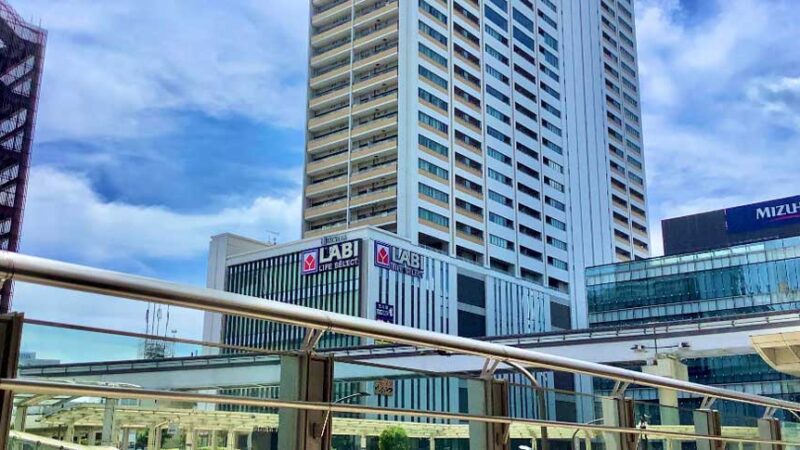
The pedestrian bridge at Wakaba Intersection near Kaiman High School is an important spot that frequently appears in the work. It serves as the setting for many memorable scenes, including when Aono and Ritsuko have conversations while walking and when teammates talk on the way home from club activities.
From the pedestrian bridge, you can get a panoramic view of the surrounding area, and it’s also possible to take photos from the same angle as in the anime. The scenery at dusk is particularly recommended as a time of day when you can strongly feel the atmosphere of the work.
Access Information:
- Address: Wakaba 3-chome, Mihama Ward, Chiba City, Chiba Prefecture
- Nearest Station: Approximately 12 minutes walk from JR Mihama-Makuhari Station
- Photography Points: Views from the pedestrian bridge, angles overlooking the intersection
Mihama-Makuhari Station Area
Appearance in the Work: Starting point of school commute, meeting place
JR Mihama-Makuhari Station is a major station that also appears in the work. The Chiba City Makuhari Tourism Information Center inside the station features exhibits related to “Blue Orchestra,” making it an ideal location for gathering sacred site pilgrimage information.
The area surrounding the station is well-equipped with commercial facilities, which can also be used as a rest spot during sacred site pilgrimage. Additionally, by actually walking the commute route from the station to school, you can more deeply experience the daily lives of Aono and the others.
Access Information:
- JR Keiyo Line/Musashino Line Mihama-Makuhari Station
- Tourism Information Center: Inside the station (business hours to be confirmed)
Detailed Sacred Sites in the Shin-Matsudo Area
Shin-Matsudo Station
Appearance in the Work: The nearest station for protagonist Aono Hajime and Akine Ritsuko, the starting point of their commute
Shin-Matsudo Station is the gateway to the area where Aono Hajime and Akine Ritsuko live. The station’s exterior and the vicinity of the ticket gates are depicted in the work, and it serves as the setting for important scenes in the story, such as when the two coincidentally meet.
A station where the JR Joban Line and Musashino Line intersect, the Musashino Line is used for commuting to Mihama-Makuhari. The area around the station is a quiet residential neighborhood, and you can feel the atmosphere of the work as it is.
Access Information:
- Address: Shin-Matsudo, Matsudo City, Chiba Prefecture
- Lines: JR Joban Line, Musashino Line
- Points of Interest: Station exterior, station front rotary
Shin-Sakagawa Sakura Street
Appearance in the Work: A riverside path near Aono’s home, leisure scenes
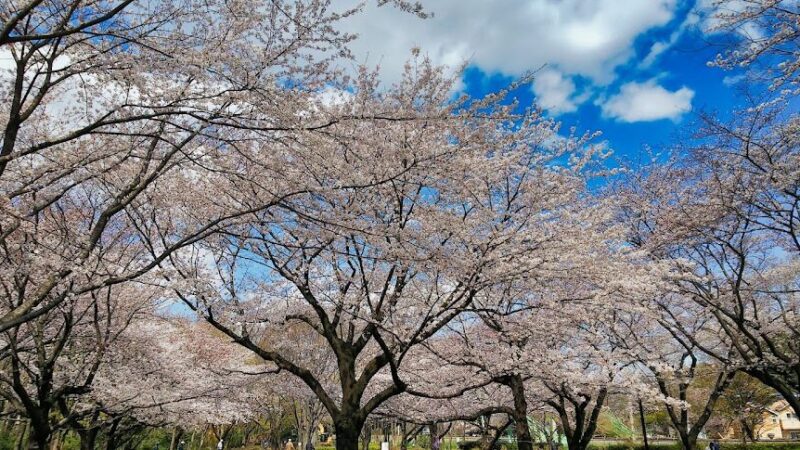
Shin-Sakagawa Sakura Street is a promenade along a river with beautiful cherry blossom trees within walking distance from Shin-Matsudo Station. It appears in the work in scenes where Aono takes walks or thinks about things. In spring, cherry blossoms bloom fully, and you can actually see the beautiful scenery depicted in the work.
The quiet atmosphere along the river is effectively used as a place representing Aono’s emotional relationship with the violin, making it a poignant spot for fans.
Access Information:
- Address: Shin-Matsudo area, Matsudo City, Chiba Prefecture
- Nearest Station: Approximately 5 minutes walk from JR Shin-Matsudo Station
- Best Season: Cherry blossom season (late March to early April)
Streets Around Shin-Matsudo
Appearance in the Work: Background of the daily lives of Aono and Ritsuko
The shopping streets and residential neighborhoods around Shin-Matsudo Station are depicted in detail as the background for the daily lives of Aono and the others in the work. Convenience stores, shopping street scenery, alleyways in residential areas—seeking out the places that appear in seemingly ordinary daily scenes is part of the fun of sacred site pilgrimage.
In particular, the shopping street that extends from the station front appears in shopping scenes and scenes of heading home, and actually walking through it allows you to feel the world of the work more intimately.
Chiba Prefecture Culture Hall and Other Important Spots
Chiba Prefecture Culture Hall
Appearance in the Work: A competition venue, an important performance scene
Chiba Prefecture Culture Hall is the setting for important competition scenes in the work. The exterior and interior of the grand hall where Aono and the others perform are depicted in detail, making it an important sacred site that marks the climax of the story.
The actual hall is also known as a facility with excellent acoustics, and classical music concerts are frequently held there. If you’re fortunate, you may be able to attend an actual orchestra performance.
Access Information:
- Address: 11-2 Ichiba-cho, Chuo Ward, Chiba City, Chiba Prefecture
- Nearest Station: Approximately 10 minutes walk from JR Chiba Station, or approximately 8 minutes walk from Keisei Chiba-Chuo Station
- Viewing: The exterior can be freely photographed; interior only when events are held
Other Appearing Spots
Ramen Shop (Shin-Matsudo Main Store)
A ramen shop where Aono and the others eat in the work also actually exists in the Shin-Matsudo area. It is recommended to use it as a rest stop during sacred site pilgrimage and taste the same menu as depicted in the work.
Efficient Sacred Site Pilgrimage Model Courses
Full 1-Day Conquest Course (Time Required: Approximately 8 hours)
Morning (Shin-Matsudo Area): 9:00–12:00
- Arrive at Shin-Matsudo Station (9:00)
- Photography around the station (9:00–9:30)
- Stroll along Shin-Sakagawa Sakura Street (9:30–10:30)
- Exploration of surrounding streets (10:30–11:30)
- Lunch at ramen shop (11:30–12:30)
Travel: Musashino Line to Mihama-Makuhari (12:30–13:00)
Afternoon (Mihama-Makuhari Area): 13:00–17:00
- Arrive at Mihama-Makuhari Station (13:00)
- Information gathering at Tourism Information Center (13:00–13:30)
- Walk along commute route to Wakaba Intersection (13:30–14:00)
- Photography at Wakaba Intersection and pedestrian bridge (14:00–14:30)
- Viewing the exterior of Chiba Prefectural Makuhari Comprehensive High School (14:30–15:30)
- Exploration of surrounding areas (15:30–17:00)
Optional: Chiba Prefecture Culture Hall (recommended for a different day)
- Access via JR Chiba Station
- Time required: 2–3 hours
Half-Day Casual Course (Time Required: Approximately 4 hours)
An efficient course for those with limited time.
Mihama-Makuhari Concentrated Course
- Mihama-Makuhari Station (10:00)
- Tourism Information Center (10:00–10:20)
- Wakaba Intersection and pedestrian bridge (10:30–11:00)
- Makuhari Comprehensive High School (11:15–12:15)
- Area exploration and lunch (12:15–14:00)
With this course, you can efficiently visit the most important sacred sites.
Seasonal Approaches to Sacred Site Pilgrimage
Spring (March–May)
The season when cherry blossoms bloom in full on Shin-Sakagawa Sakura Street. Cherry blossom scenes are also depicted in the work, making sacred site pilgrimage during this period a particularly special experience. Cherry blossoms also bloom in the Mihama-Makuhari area, allowing you to feel the atmosphere of a new school year.
Recommended Points:
- Cherry blossom trees along Shin-Sakagawa (late March to early April)
- Experience the atmosphere of the new school year
- Pleasant weather makes for easy walking
Summer (June–August)
Sacred site pilgrimage that coincides with the competition season depicted in the work is recommended. Chiba Prefecture Culture Hall often hosts summer concerts, and if timing aligns, you may be able to enjoy an actual orchestra performance.
Precautions:
- Heat countermeasures essential (hat, hydration)
- Daytime sun is intense; visiting early morning or evening is recommended
Autumn (September–November)
An ideal season for extended sacred site pilgrimage with pleasant weather. The work also depicts the autumn school festival season, and the atmosphere around the school aligns with the work.
Recommended Points:
- Pleasant weather allows for long hours of exploration
- Beautiful autumn foliage season (November)
- School atmosphere during festival season
Winter (December–February)
A season with clear air ideal for photography. The work contains many winter scenes, particularly striking depictions of characters practicing hard for competitions.
Precautions:
- Cold weather protection essential
- Sunset comes early; act early
- Be aware of facility closures during year-end and New Year holidays
Preparations and Tips for Better Enjoying Sacred Site Pilgrimage
Prior Preparation
1. Preview of the Work
- Watch all anime episodes and confirm appearance scenes
- Reading the original manga allows for deeper enjoyment
- Save screenshots of appearance scenes
2. Map and Route Confirmation
- Mark sacred site locations in advance on Google Maps
- Confirm travel time and transportation methods
- Check the latest business hours and opening times
3. Checklist of Items to Bring
- Smartphone (for maps and photography)
- Mobile battery
- Image data from the work (for comparison photography)
- Transportation IC card (Suica/PASMO)
- Drinks and light snacks
- Rain gear (folding umbrella)
Photography Tips
Angle Matching
- Find the same position and angle as in the work
- Consider how lighting changes depending on time of day
- Confirm surrounding safety before photographing
Comparison Photography
- Photograph work images and actual scenery side by side
- Use #青のオーケストラ #聖地巡礼 tags when posting on SNS
Reconfirmation of Etiquette and Precautions
Etiquette Around Schools
- Be considerate so as not to disrupt classes
- Keep conversations quiet
- Do not enter school grounds
- Absolutely do not photograph students
Etiquette in Residential Areas
- Do not trespass on private property
- Respect residents’ lives
- Always take trash with you
- Avoid visiting early morning or late night
Surrounding Spots to Enjoy Along with Sacred Site Pilgrimage
Mihama-Makuhari Area
Makuhari Messe, Aeon Mall Makuhari Shintoshin
- Perfect for shopping and rest during sacred site pilgrimage
- Abundant dining options
- Within walking distance from Mihama-Makuhari Station
Makuhari Seaside Park
- A rest spot with ocean views
- Immerse yourself in the work’s world while refreshing
Shin-Matsudo Area
Walking Paths Along Sakagawa
- Beautiful walking paths continue beyond Shin-Sakagawa Sakura Street
- Quiet environment to appreciate the work’s lingering impression
Around Chiba Station
Chiba City Center
- Can be visited when touring Chiba Prefecture Culture Hall
- Abundant commercial facilities and dining options
- Enjoy local Chiba cuisine
Accommodation Information and Access Bases
Recommended Accommodation Areas
Around Mihama-Makuhari Station
- Optimal as a pilgrimage base
- Abundant hotel options
- Good access to major sacred sites
- Price range: 5,000 yen–15,000 yen/night
Around Chiba Station
- Convenient access throughout Chiba Prefecture
- Many business hotels at relatively affordable prices
- Price range: 4,000 yen–10,000 yen/night
Shin-Matsudo and Matsudo Area
- For those who prefer quieter accommodation
- Good access to the city center
- Price range: 4,000 yen–8,000 yen/night
Access from Distant Locations
From Tokyo Area
- Approximately 30 minutes from Tokyo Station to Mihama-Makuhari Station on JR Keiyo Line
- Approximately 25 minutes from Ueno Station to Shin-Matsudo Station on JR Joban Line
From Kansai Area
- Get off at Tokyo Station on Shinkansen, transfer to Keiyo Line
- Or via Haneda Airport with airport limousine bus
When Using Air Travel
- From Narita Airport: Via JR Narita Line and Sobu Line to Chiba Station
- From Haneda Airport: Via Keikyū and Toei Asakusa Line with transfers in the city
Recording and Sharing Sacred Site Pilgrimage
Posts on SNS
When sharing memories of sacred site pilgrimage on SNS, the following hashtags are recommended:
- #青のオーケストラ
- #青オケ
- #聖地巡礼
- #千葉県
- #海浜幕張
- #新松戸
- #アニメ聖地
Creation of Pilgrimage Notebook
Whether digital or analog, keeping a record of your pilgrimage increases the enjoyment of looking back later:
- Date and time of visit and weather
- Photographs taken
- Comparison impressions with the work
- Points to address on next visit
- Records of interaction with other fans you meet
Charm of Blue Orchestra Sacred Site Pilgrimage
High Recreation Accuracy
The greatest charm of Blue Orchestra sacred site pilgrimage is the high accuracy of reproduction between the work and actual locations. When you visit actual places after seeing the work—the distinctive architectural design of Chiba Prefectural Makuhari Comprehensive High School, the streets around Shin-Matsudo Station, the pedestrian bridge at Wakaba Intersection—you will be surprised by how faithfully they have been recreated.
Convenience of Access
Located in Chiba Prefecture in the greater Tokyo area with good access from Tokyo, it’s possible to complete sacred site pilgrimage as a day trip. Additionally, travel between sacred sites can be accomplished on a single Musashino Line, making it efficient to visit.
Value as a Music Sacred Site
The actual Orchestra Club of Chiba Prefectural Makuhari Comprehensive High School served as the model for the work, allowing you to experience the work’s theme of youth through music at actual locations. At Chiba Prefecture Culture Hall, you can also enjoy real classical music, deepening your understanding of the work.
Summary: How to Succeed at Blue Orchestra Sacred Site Pilgrimage
The Blue Orchestra sacred site pilgrimage is centered on the Mihama-Makuhari area and Shin-Matsudo area in Chiba Prefecture. The major sacred sites are as follows:
- Chiba Prefectural Makuhari Comprehensive High School (model for Kaiman High School)
- Wakaba Intersection and Pedestrian Bridge (important commute route spot)
- Shin-Matsudo Station (nearest station for Aono and Ritsuko)
- Shin-Sakagawa Sakura Street (Aono’s walking route)
- Chiba Prefecture Culture Hall (competition venue)
Points for Efficient Sacred Site Pilgrimage:
- Shin-Matsudo area and Mihama-Makuhari area are approximately 30 minutes apart on the Musashino Line
- It’s possible to visit both areas in one day
- School viewing is exterior only; visit while following etiquette
- Different charm depending on season (cherry blossoms in spring especially recommended)
- Confirm appearance scenes by watching the work in advance
With Chiba City recognized as one of “88 Japanese Anime Sacred Sites Worth Visiting,” further improvements to the sacred site pilgrimage environment are expected in the future. The Tourism Information Center at JR Mihama-Makuhari Station provides related information and should be used as a pilgrimage starting point.
The Blue Orchestra sacred site pilgrimage is a valuable opportunity to experience the world of a work themed around music and youth at actual locations. Following etiquette and deepening your love for the work, it will be a wonderful experience. Please visit Chiba Prefecture in person to feel the beautiful streets and the passion embedded in the work.