What is Uma Musume Pretty Derby?
“Uma Musume Pretty Derby” is a multimedia content project developed by Cygames. A youth story unfolds in which “Uma Musume” (horse girls)—personifications of real racehorses—aim for victory in races called the Twinkle Series.
As an anime series, Season 1 aired in 2018, Season 2 in 2021, and Season 3 in 2023, gaining support from many horse racing fans and anime enthusiasts. Famous racehorses that were active in actual history, such as Special Week, Silence Suzuka, and Kitasan Black, are portrayed as attractive characters, becoming a catalyst for increased interest in the actual world of horse racing.
The game version also sparked a major boom, and the content as a whole has become established as something to be enjoyed on a daily basis. The appeal of the work lies in its ability to move audiences through carefully depicting horse racing history and human drama, as well as stories of the Uma Musume characters’ growth, friendship, and competition with rivals.
Works and Scenes Featuring Tachikawa Station North Entrance
Tachikawa Station North Entrance is one of the important settings that appears in “Uma Musume Pretty Derby,” the theatrical film “Oath of BNW.” In this scene, an impressive moment is depicted in which Daiwa Scarlet searches for Narita Taishin.
Tachikawa Station is located in Tachikawa City, Tokyo, and serves as the central station of the Tama region, with multiple railway lines running through it. The area around the station is characterized by urban scenery with commercial facilities and office buildings lined up, and it is known as a frequently used location in other anime works as a setting.
The scene of Tachikawa Station North Entrance depicted in “Oath of BNW” faithfully reproduces the actual landscape, making it a relatively easy-to-understand location for fans engaging in sacred site pilgrimage. The arrangement of buildings and the atmosphere in front of the station are described carefully in the work, making the joy of discovery when visiting in person—”This is it!”—a major point.
Detailed Sacred Site Information on Tachikawa Station North Entrance
Basic Information and Access
Location: 2-chome Akebonomachi, Tachikawa City, Tokyo
Access:
- JR Chuo Line Tachikawa Station North Entrance immediately adjacent
- JR Ome Line Tachikawa Station North Entrance immediately adjacent
- JR Nanbu Line Tachikawa Station North Entrance immediately adjacent
- 3 minutes walk from Tachikawa Kita Station on the Tama Urban Monorail
Tachikawa Station is approximately 30 minutes from Shinjuku Station via the Chuo Line Express, and approximately 50 minutes from Tokyo Station. It is the largest terminal station in the Tama region and is bustling with crowds on both weekdays and holidays.
Photography Points and Recreation Methods
When reproducing scenes from “Uma Musume” at Tachikawa Station North Entrance, the main photography point is the composition seen from the station plaza looking toward the north entrance.
Specific Photography Points:
- From the Station North Entrance Pedestrian Deck: Exiting the ticket gates and heading to the north entrance pedestrian deck allows you to capture a composition close to the viewpoint depicted in the work.
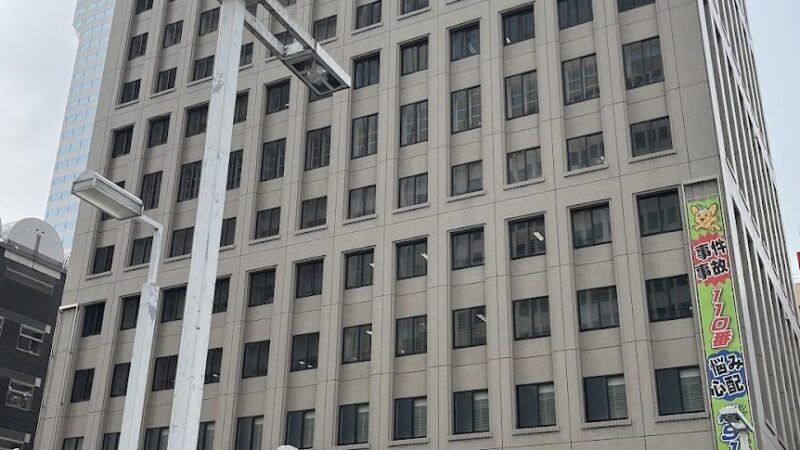
- Near Sumitomo Mitsui Trust Bank: The building depicted in the work as having a large vision screen is modeled after Sumitomo Mitsui Trust Bank. In reality, no large vision screen exists, but the building’s exterior and layout match the work’s depiction.
- Time of Day Selection: To match the work’s scene, daytime with bright lighting is recommended. However, Tachikawa Station North Entrance at dusk is also beautiful, allowing you to capture photos with a different atmosphere.
- Consideration for Crowds: Tachikawa Station North Entrance is always a crowded place. When taking photos, be mindful not to inconvenience pedestrians and aim for efficient, short-duration shooting.
Nearby Attractions and Facilities
The area around Tachikawa Station North Entrance is well-equipped with facilities where you can stop by during your sacred site pilgrimage.
Major Facilities:
- Lumine Tachikawa: A shopping mall directly connected to the station. With abundant dining options, it’s perfect for a break.
- Isetan Tachikawa Store: An established department store and a local landmark.
- Takashimaya Tachikawa: Located on the south side of the station, but within walking distance.
- Showa Kinen Park: Approximately 15 minutes walk from Tachikawa Station. A vast national park where seasonal flowers can be enjoyed.
- IKEA Tachikawa: Located at Tachihi Station, one monorail stop from Tachikawa Station.
Other Sacred Site Spots in the Tachikawa Area
Beyond “Uma Musume,” there are various anime work settings scattered throughout Tachikawa City. Being able to enjoy sacred site pilgrimages for multiple works in the same area is one of Tachikawa’s charms.
The area around Tachikawa Station is undergoing active urban development, featuring a unique landscape where modern buildings coexist with verdant parks. In anime works, this contemporary urban scenery is often used, appearing as the setting for a wide range of genres from everyday-life anime to youth stories.
How to Enjoy Uma Musume Sacred Site Pilgrimage
Basic Manners for Stage Exploration
When engaging in sacred site pilgrimage, consideration for local residents and other visitors is essential.
Manners to Follow:
- Do Not Enter Private Property: Limit photography to public roads and public facilities.
- Be Considerate of Noise: In residential areas and commercial facilities, refrain from loud conversation or commotion.
- Take Garbage Home: To keep the sacred site beautiful, manage trash carefully.
- Obey Traffic Rules: Be careful not to obstruct traffic while focused on photography.
- Be Considerate of Business Premises: When photographing in front of a store, do so in a way that does not hinder business.
Organizing an Efficient Pilgrimage Route
A proposed route for efficiently visiting “Uma Musume” sacred sites in the Tama area, including Tachikawa Station North Entrance.
Full Day Course Example:
- Morning: Visit Fuchu Area (Tokyo Racecourse, etc.)
- Lunch: Rest around Fuchu Station
- Afternoon: Move to Tachikawa Station North Entrance (about 10 minutes from Fuchu Station via Chuo Line)
- Evening: Photography and strolling around Tachikawa Station
- Option: Move to Kichijoji Area (about 20 minutes from Tachikawa via Chuo Line)
Half Day Course Example:
- Photography at Tachikawa Station North Entrance (30 minutes to 1 hour)
- Showa Kinen Park stroll (1-2 hours)
- Shopping and dining around Tachikawa Station
Photography Equipment and Preparation
Explanation of equipment and preparation for making sacred site pilgrimage photography more fulfilling.
Recommended Equipment:
- Smartphone: The latest smartphone cameras can capture sufficiently high-quality photos.
- Mirrorless Camera/DSLR: For those seeking higher quality photos. A wide-angle lens is useful.
- Mobile Battery: Essential since photography and map app usage consume battery.
- Tripod: May be difficult to use at crowded Tachikawa Station North Entrance, but effective during early morning and quiet times.
Advance Preparation:
- Save screenshots of relevant scenes from the work
- Check the location on Google Maps
- Check the weather forecast (rainy weather may differ from the work’s atmosphere)
- Confirm sunrise and sunset times for your visit date
Other Sacred Site Areas Accessible from Tachikawa
Fuchu Area
Fuchu, approximately 10 minutes from Tachikawa via the Chuo Line, is one of the most important areas for “Uma Musume” sacred site pilgrimage.
Major Spots:
- Tokyo Racecourse: Frequently appears as a setting in the work. You can also enjoy watching actual races.
- Around Fuchu Station: The setting for everyday scenes depicted in anime.
- Ōkunitama Shrine: An historic shrine where many people visit to pray for victory in horse racing.
Tokyo Racecourse is one of the major racecourses operated by the Japan Racing Association (JRA), hosting important races including the Japan Derby. For “Uma Musume” fans, it is a popular destination as the place where the work’s worldview is most strongly felt. By visiting paddocks, stands, and other places depicted in anime, your understanding of the work deepens further.
Kichijoji Area
Kichijoji, approximately 20 minutes from Tachikawa via the Chuo Line, is also an area with scenes that appear in “Uma Musume.”
Kichijoji is a popular area that consistently ranks highly on “neighborhoods you want to live in” rankings and is well-equipped with commercial facilities and dining establishments. Inokashira Park is known as a verdant place of respite and is frequently used as a setting in anime works.
The move from Tachikawa to Kichijoji is direct via the Chuo Line, so visiting both areas in a single day is entirely feasible. In Kichijoji, you can also enjoy strolling through shopping streets and café hopping, combining sacred site pilgrimage with sightseeing for a fulfilling time.
Other Areas in Tokyo
The settings for “Uma Musume” are scattered throughout various locations in Tokyo.
Major Areas:
- Ōi Racecourse (Shinagawa Ward): Appears in the work as a setting for local horse racing. The location that became the model for the Twinkle Race.
- Shibuya/Shinjuku: Appearing in urban everyday scenes. Direct access via Chuo Line from Tachikawa.
- Odaiba: Waterfront scenery is used in the work.
Ōi Racecourse is a local racecourse operated by Tokyo, famous for night horse racing called “Twinkle Race.” The name “Twinkle Series,” an important element of the “Uma Musume” worldview, is derived from this. For fans, it holds special significance.
Chiba Prefecture Area
There are also “Uma Musume” related sacred sites in Chiba Prefecture near Tokyo.
Nakayama Racecourse (Funabashi City): One of JRA’s major racecourses. Important races such as the Grand Prix (Arima Memorial) are held, and it also serves as the setting for important scenes in the work.
From Tachikawa to Nakayama Racecourse, the typical route is via Shinjuku using the Sobu Line. Travel time including transfers is approximately 1 hour 30 minutes. On horse racing days, you can experience the “Uma Musume” worldview while watching actual races.
Trivia to Enjoy Sacred Site Pilgrimage More
Points for Visiting Racecourses
Visiting racecourses is indispensable in “Uma Musume” sacred site pilgrimage. Here are tips for visiting racecourses.
Regarding Admission:
- Admission to Tokyo Racecourse and Nakayama Racecourse is 200 yen (on event days)
- Ōi Racecourse offers free admission
- Minors are allowed entry (guardian accompaniment is desirable)
Ways to Enjoy:
- Paddock viewing: See horses up close before races
- Grandstand watching: Experience the thrill of races in person
- Turf vision: Watch races on large screens
- Cuisine: Dining menus unique to racecourses are also abundant
The racecourse is where you can most realistically feel the “Uma Musume” worldview. Experiencing the power and beauty of actual racehorses and the excitement of racing further deepens your understanding of the work.
The Relationship Between History and Uma Musume
One of the major charms of “Uma Musume Pretty Derby” is its careful depiction of the history of real racehorses.
The Uma Musume characters featured in the work are based on famous racehorses that were active in the world of horse racing. Special Week was the 1998 Japan Derby winner, Silence Suzuka was a legendary horse that created “Silent Sunday” with overwhelming wire-to-wire victories, and Kitasan Black was a representative horse of the 2010s, winning 7 GI titles.
Understanding the history allows you to comprehend the work’s story more deeply. Each Uma Musume’s racing style and personality reflect the characteristics of actual racehorses, making the work nostalgic for horse racing fans while serving as a catalyst for new fans to learn about horse racing history.
Seasonal Attractions
The area around Tachikawa Station North Entrance has different charms depending on the season.
Spring (March-May):
- Cherry blossoms and rape blossoms bloom in Showa Kinen Park
- Good weather, ideal for long-duration strolls
- Golden Week sees crowds; weekday visits are recommended
Summer (June-August):
- Sunflower fields in Showa Kinen Park are spectacular
- Heat prevention measures (hats, hydration) are essential
- Early morning and evening visits are more comfortable
Autumn (September-November):
- Autumn foliage in Showa Kinen Park is beautiful
- Stable weather, ideal season for photography
- Coincides with autumn GI racing season, perfect for combining with Fuchu visits
Winter (December-February):
- Clear air is suited for photography
- Illumination events may be held
- Proper cold weather preparation is essential
Accommodation and Dining on Sacred Site Pilgrimage
Accommodation Facilities Near Tachikawa
There are various types of accommodation facilities around Tachikawa Station.
Major Hotels:
- Tachikawa Grand Hotel: An established hotel within walking distance of the station
- Palace Hotel Tachikawa: Directly connected to the station with outstanding convenience
- Business Hotel Chains: Multiple locations around the station, reasonably priced
- Capsule Hotels: For budget-conscious visitors
When visiting multiple sacred sites in the Tama area over several days, using Tachikawa as a base is efficient. Tachikawa is a hub on the Chuo Line with good access to Fuchu, Kichijoji, Shinjuku, and other areas.
Recommended Dining Spots
The area around Tachikawa Station has diverse dining establishments.
Genre-Specific Recommendations:
- Ramen: Tachikawa is known as a hotly contested area with numerous famous shops
- Cafés: Multiple diverse stores in Lumine Tachikawa and Ecute Tachikawa
- Izakayas: Many located around the station, ideal for celebrations after sacred site pilgrimage
- Fast Food: Various chain stores fully stocked in the station building
Tachikawa is the largest commercial area in the Tama region, offering extremely abundant dining options. Depending on budget and preference, you can enjoy various genres of cuisine.
Interaction with the Uma Musume Community
Information Sharing on SNS
Sharing records of sacred site pilgrimage on SNS creates connections with other fans.
Major Platforms:
- Twitter(X): Search and post with hashtags “#ウマ娘聖地巡礼” “#ウマ娘舞台探訪”
- Instagram: Ideal for recording memories with photos as the main focus
- YouTube: Videos of pilgrimage records are also popular
- Blogs: For those wanting to keep detailed visit records
When posting, be careful with location information handling and respect privacy. By referring to other fans’ posts, you can also discover new information and photography points.
Event Information
“Uma Musume” related events are held regularly.
Major Events:
- Anime Screening Events: Such as during theatrical releases
- Collaboration Cafés: Limited-time openings at various locations in Tokyo
- Racecourse Collaboration Events: Collaborations with JRA and local horse racing
- Merchandise Events: Official goods sales meetings
By checking the official portal site and SNS official accounts for the latest information, you can create a fulfilling experience by combining sacred site pilgrimage with event attendance.
Conclusion: The Charm of Tachikawa Station North Entrance Sacred Site Pilgrimage
Tachikawa Station North Entrance is a sacred site for “Uma Musume Pretty Derby,” serving as the setting for important scenes in the work. The coexistence of urban convenience and the atmosphere where you can feel the work’s worldview makes it an ideal spot for first-time sacred site pilgrimages.
Starting from Tachikawa, you can efficiently visit multiple sacred sites, from Tokyo Racecourse in Fuchu to Kichijoji and even Nakayama Racecourse in Chiba. The excellent transportation access is a major appeal for fans wanting to visit many places in limited time.
Sacred site pilgrimage for “Uma Musume” goes beyond simple location visiting, becoming a valuable opportunity to deepen understanding of the work, and to experience horse racing history and culture. By visiting actual racecourses, you can experience the power of the stage where the Uma Musume ran and reflect on the achievements of real legendary horses.
Please enjoy the world of “Uma Musume Pretty Derby” fully while respecting manners and local considerations. I hope that your sacred site pilgrimage journey beginning at Tachikawa Station North Entrance becomes a special memory for you.
As a fan of the work and as a traveler visiting sacred sites, your experience at Tachikawa Station North Entrance will surely become a catalyst for deepening your love for “Uma Musume.” The joy of standing at the very place where Daiwa Scarlet searched for Narita Taishin and recreating a scene from the work is something unique to sacred site pilgrimage.