“Uma Musume Pretty Derby” and Tokyo Racecourse: A Holy Land Pilgrimage Guide
For fans of “Uma Musume Pretty Derby,” the paddock at Tokyo Racecourse holds special significance as a sacred site. The paddock of the actual Tokyo Racecourse is where countless memorable scenes were created—from the scene in Anime Season 1 where Special Week enters her first race, to the stage where Tokaiteio and Mejiro Macqueen galloped in Season 2.
This article provides a detailed explanation from the perspective of holy land pilgrimage, covering essential information for Uma Musume fans visiting Tokyo Racecourse. It encompasses the actual structure of the racecourse, comparison points with the anime, shooting locations, and access methods—all the information you should know before visiting.
Tokyo Racecourse and the Uma Musume World
Basic Information about Tokyo Racecourse
Tokyo Racecourse is located in Fuchu, Tokyo and is operated by the Japan Racing Association (JRA). Established in 1933, it is known as a central facility of Japanese horse racing, hosting numerous G1 races including the Japan Derby (Tokyo Yushun) and Japan Cup.
It boasts a capacity of approximately 223,000 people and is recognized as one of the world’s largest racecourses, drawing many racing fans on weekends. The vast grounds contain the main stand, Fuji View Stand, paddock, racing track, and family-friendly park areas.
Depiction of Tokyo Racecourse in Uma Musume
In the anime “Uma Musume Pretty Derby,” Tokyo Racecourse appears repeatedly as an important stage. In the work’s worldview, large four-legged animals called horses don’t exist; instead, girls called “Uma Musume” (horse girls) compete in races.
Uma Musume raised at the “Japan Uma Musume Training Center Academy” located in Fuchu, Tokyo are depicted competing in races at actual racecourses, with the paddock and stands of Tokyo Racecourse faithfully recreated as the stage.
The anime production team conducted meticulous research of the actual racecourse, carefully depicting the structure and atmosphere of the buildings, providing holy land pilgrims with the joy of matching anime scenes with actual locations.
What is the Paddock?
The Role of the Paddock in Horse Racing
The paddock is the place where horses (or Uma Musume in the Uma Musume world) circulate before a race to warm up and present themselves to spectators and fans. In actual horse racing, it functions as an important location where fans confirm the condition of horses before the race.
Observing the horse’s gait, coat condition, and spirit of fighting provides material for inferring its condition that day. It also serves as a final confirmation stage before “entering the main track,” conducted together with trainers and stable staff.
Depiction of the Paddock in Uma Musume
In the anime “Uma Musume Pretty Derby,” the paddock is depicted as a place where Uma Musume gather before a race to present themselves to fans. According to the official website’s glossary, it is “a place where Uma Musume warm up by circulating before a race,” and “a runway is installed in the center of the paddock, where each announced Uma Musume is presented one by one.”
This setting follows the functions of actual racing paddocks while serving as a stage to express the individuality and drama of Uma Musume. Particularly in Episode 1 of Season 1, the impressive scene of Special Week standing in Tokyo Racecourse’s paddock for the first time, looking up at other Uma Musume, is memorable.
Structure and Features of Tokyo Racecourse Paddock
Paddock Layout and Design
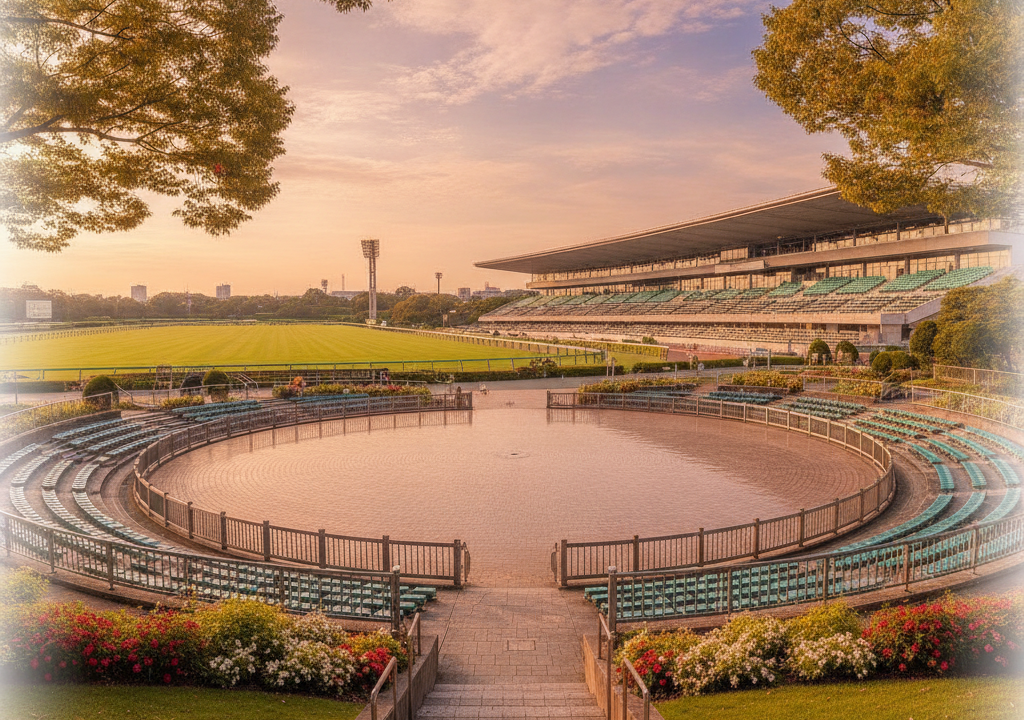
Tokyo Racecourse’s paddock is positioned between the main stand and Fuji View Stand, in a relatively accessible location from the main gate. It centers on an oval circuit where spectators can observe horses from 360 degrees.
Multiple viewing areas surround the paddock, with both ground-level viewing spots and elevated stands for overview perspectives. The anime uses both viewpoints, with the scene of looking down at the paddock from the upper stand particularly effective as the scene where Special Week first sees other Uma Musume in Season 1.
Actual Points of Interest
The central part of the paddock contains a runway-like space where horses (Uma Musume) walk individually for fan presentation. The circuit is covered with grass, designed for easy horse walking.
The surrounding viewing areas have announcer booths for paddock commentary and electronic displays showing horse information. On race day, each horse’s race number, name, and jockey name are displayed, allowing fans to observe and check the horses’ conditions.
Comparison with Anime Appearances
Season 1 Maiden Race Scene with Special Week
The maiden race of Special Week depicted in Anime Season 1, Episode 1 is set at Tokyo Racecourse. In the paddock scene, Special Week stands in Tokyo Racecourse’s paddock for the first time, looking up at senior Uma Musume like Silence Suzuka and Tokaiteio.
This scene is depicted from an elevated stand perspective overlooking the paddock, and visitors to actual Tokyo Racecourse can see similar angles from specific positions on Fuji View Stand or the main stand. When holy land pilgrims visit, looking for positions with paddock views allows them to recreate anime scenes.
The clock showing 1:25 PM matches actual race schedules, suggesting the time around the seventh race when maiden races are held. Such detailed depictions reveal the production team’s thorough research.
Season 2 Scenes with Tokaiteio and Mejiro Macqueen
Tokyo Racecourse’s paddock appears as an important stage in Anime Season 2 as well. In depicting the rivalry between Tokaiteio and Mejiro Macqueen, their expressions and gestures in the paddock are used effectively.
Season 2 features multiple scenes overlooking the paddock from above, functioning as visual expression of Uma Musume’s psychological states and relationships. At actual racecourses, overlooking the paddock from upper stands reveals the overall movement and arrangement of horses, allowing visitors to sense the pre-race tension.
Other Memorable Scenes
The paddock is depicted not merely as a preparation place before races but as a stage where Uma Musume’s dramas unfold. Fan interactions, rival glances, final confirmations with trainers—various scenes take place on the paddock stage.
These scenes are based on sights actually seen at racecourses; visiting Tokyo Racecourse on race day allows experiencing the atmosphere depicted in anime—jockey and trainer conversations, fan cheers, and horses’ tense expressions.
Photography Spot Guide for Holy Land Pilgrimage
Photography Points around the Paddock
There are several photography spots around Tokyo Racecourse’s paddock where anime scenes can be recreated. Most popular is the elevated angle overlooking the paddock from the stands. Particularly the areas on floors 2-3 of Fuji View Stand provide perspectives close to the scene in Season 1, Episode 1 where Special Week looked up at other Uma Musume.
Ground-level paddock photography is also possible. Photographing the circuit through the paddock fence can recreate scenes of Uma Musume warming up. However, on race days with heavy crowds, arriving early to secure good positions is recommended.
Differences in Appearance by Time of Day
The paddock’s atmosphere changes significantly by time of day. Early morning hours are relatively empty, allowing leisurely photography and observation. Afternoon, especially before major races, the paddock is lively with spectators, allowing experience of the enthusiastic atmosphere depicted in anime.
Sun position also affects photography. Morning light comes from the east, afternoon has strong western light. To recreate anime scenes with matching light conditions, confirming race times is advisable.
Photography Notes
Tokyo Racecourse generally permits personal photography, but consideration for other visitors is necessary. Tripod use may be restricted during crowded times, so hand-held photography is recommended.
When photographing actual horses, jockeys, or stable staff, avoiding flash is essential for horse safety. The paddock is where horses concentrate before races, and startling actions are strictly prohibited.
Access Methods to Tokyo Racecourse
Train Access
Train is the most convenient access to Tokyo Racecourse. The nearest stations are “Fuchu-Honmachi Station” on JR Musashino and Nambu Lines and “Fuchu Keiba-Seimen Station” on the Keio Line.
Access from Fuchu Keiba-Seimen Station
Keio Line’s “Fuchu Keiba-Seimen Station” is closest to Tokyo Racecourse’s main gate. About 2 minutes walk from the station reaches the main gate, with smooth access to the paddock. It’s approximately 25 minutes by express from Shinjuku Station and about 30 minutes by semi-express or local trains.
On race days, express and semi-express trains sometimes make temporary stops, further improving access convenience. For Uma Musume fan holy land pilgrimages, using this station is most streamlined.
Access from Fuchu-Honmachi Station
JR “Fuchu-Honmachi Station” is about 10 minutes walk away. Served by Nambu and Musashino Lines, it’s convenient for access from Tachikawa or Minami-Urawa directions. The path from the station to the racecourse has directional signs on race days, with many people heading the same way, so getting lost is unlikely.
Car Access and Parking Information
Car access is possible, but peripheral roads become congested on race days, especially during major G1 races. It’s about 10 minutes from Chuo Expressway’s “Chofu IC” and about 5 minutes from “Fuchu Smart IC,” but considering traffic congestion, public transportation is recommended.
Tokyo Racecourse has paid parking, but capacity is limited, sometimes reaching full before gates open. Parking fees are approximately ¥1,000 for regular vehicles (varying by event). For guaranteed parking, arriving well before opening time is recommended.
Differences between Race Days and Non-Race Days
Tokyo Racecourse has different admission conditions for race and non-race days. On race days, admission fees (¥200, with separate charges for reserved seats) apply, allowing viewing of the entire facility including the paddock.
On non-race days, the racecourse is partially open as a park, but access to race-related facilities like the paddock is restricted. For holy land pilgrimage paddock viewing, visiting on race days is necessary.
Event schedules are available on the JRA official website. Tokyo Racecourse typically hosts races in spring (February-June) and autumn (September-December).
How Uma Musume Fans Can Enjoy Tokyo Racecourse
Points of Interest Beyond the Paddock
Tokyo Racecourse has many places for Uma Musume fans to enjoy besides the paddock. From the main stand, actual races can be observed, allowing viewing of the course where Uma Musume galloped.
The Fuji View Stand’s observation deck provides a panoramic view of the entire racecourse. A perspective close to the racecourse’s overall scene depicted in anime is obtainable, and it’s ideal for photography. On clear days, Mount Fuji is also visible, hence the “Fuji View” name.
The infield contains extensive green areas developed as parks for family enjoyment. There are mini-shinkansen and play equipment, offering fun beyond race observation.
Race Observation Guide for Racing Beginners
Many Uma Musume fans visit a racecourse for the first time due to the work. Purchasing race programs (¥100) at the racecourse reveals that day’s race information and details on competing horses.
After observing horses in the paddock, the basic flow is to purchase betting tickets and observe races. Betting tickets start at ¥100, and beginners should start with win (picking 1st place) or place (picking top 3) bets.
Race observation is possible from various locations—grandstand seats, standing areas near the paddock, etc. The excitement before the finish is unique to racecourse experience, allowing real feeling of the race’s thrill depicted in Uma Musume.
Uma Musume Collaboration Event Information
Tokyo Racecourse has previously held collaboration events with “Uma Musume Pretty Derby.” Full-size panels, limited merchandise sales, and voice actor talk shows offer special experiences for fans.
Collaboration event information is announced on JRA official sites and Uma Musume official portal sites. Implementation often coincides with major holidays or G1 race hosting, so regularly checking official information is recommended.
Also, race days expecting many Uma Musume fans offer opportunities for fellow enthusiasts to interact. Cosplay events sometimes occur, creating spaces to share passion for the work.
Manners and Precautions for Holy Land Pilgrimage
Racecourse Manners
Tokyo Racecourse is both a sacred site for Uma Musume and an actual sports facility where horse racing occurs. Holy land pilgrimages require consideration for racing fans and general visitors.
During paddock photography, avoid interfering with actual horses, jockeys, or stable staff. Particularly, loud noises or flash use is strictly forbidden as it may startle horses.
Also, avoid occupying shooting spots for extended periods during busy times, showing consideration for other visitors. Uma Musume fans’ manners affect future collaboration events and acceptance as sacred sites.
Clothing and Item Advice
Tokyo Racecourse is vast, requiring considerable walking from paddock to stands to infield parks. Comfortable walking shoes and easy-movement clothing are essential.
Weather-appropriate measures are necessary. Summer requires hats, sunscreen, and drinking water for hydration. Winter needs winter clothing as winds are strong and cold. Rain requires umbrellas or raincoats.
Cameras and smartphones are essential for holy land pilgrimage. Spare batteries and chargers provide peace of mind. Carrying small change for race programs and betting tickets is convenient.
Tips to Avoid Crowds
G1 races and major events draw tens of thousands, causing crowding. For leisurely holy land pilgrimage photography and viewing, choosing weekday racing or regular days without major races works better.
Even on race days, morning hours are relatively empty. Arriving at opening time (usually around 9 AM) allows smooth paddock photography. Pre-main-race times are congested, so completing important photography in the morning is recommended.
Related Surrounding Spots
Training Centers (Miho and Ritto)
In Uma Musume, the “Japan Uma Musume Training Center Academy” exists in Fuchu, but actual racehorse training centers are in Ibaraki’s Miho and Shiga’s Ritto. General viewing is restricted, but viewing tours occasionally occur on specific days. It’s a valuable opportunity to see racehorses being trained up close, deepening understanding of Uma Musume.
Racing Museum
The racing museum adjacent to Tokyo Racecourse allows learning Japanese racing history and records of famous horses. Displays include materials on real horses that inspired Uma Musume characters, perfectly suited for deepening work understanding.
Admission is free (special exhibitions sometimes charged), open even on non-race days. Searching for material on model horses for Uma Musume characters like Special Week, Silence Suzuka, and Tokaiteio is enjoyable.
Tourist Spots in Fuchu City
Fuchu City, home to Tokyo Racecourse, has other tourist attractions. Ōkunitama Shrine, a 5-minute walk from Fuchu Station, is a historical shrine where many visit for racing luck prayers.
Fuchu no Mori Park and Kyodo no Mori Museum offer natural and historical enjoyment opportunities. Combining holy land pilgrimage with Fuchu City tourism is worthwhile.
Uma Musume and Real Racehorses
Real Horses as Models
Many characters in “Uma Musume Pretty Derby” are based on real famous horses. Special Week is modeled on the 1998 Japan Derby winner; Silence Suzuka on the legendary undefeated sprinter who suffered a tragic breakdown during the 1998 Emperor’s Prize (Autumn); Tokaiteio on the undefeated 1991 triple crown winner.
Many races these horses actually ran occurred at Tokyo Racecourse, where they walked the paddock. Uma Musume depicted in anime, overlapped with real horse memories, evoke deeper emotion.
Racing History and Uma Musume’s Story
Horse racing has a long history with numerous dramas born from it. Uma Musume carefully researches real racehorse records and anecdotes, reflecting them in character individuality and stories.
Standing in Tokyo Racecourse’s paddock means standing where racing history and stories are staged. The paddock holds special meaning as where anime fiction and actual racing history intersect.
Summary: Maximizing Holy Land Pilgrimage Enjoyment
Tokyo Racecourse’s paddock is an essential holy land for “Uma Musume Pretty Derby” fans. Actually visiting the stage of memorable anime scenes deepens understanding and affection for the work.
When planning holy land pilgrimage, confirm race schedules, and research access methods and shooting locations beforehand. Remember racecourse manners and consideration for other visitors, fully enjoying the Uma Musume worldview.
Seeing actual horses at the paddock, experiencing race excitement, and standing in the same spot remembering anime scenes—all become special memories for Uma Musume fans.
Tokyo Racecourse is where Uma Musume’s story began and where racing stories continue being born weekly. Please visit in person and experience its charm. As a trainer and fan, confirming with your own eyes the stage where Uma Musume galloped will surely become an unforgettable experience.