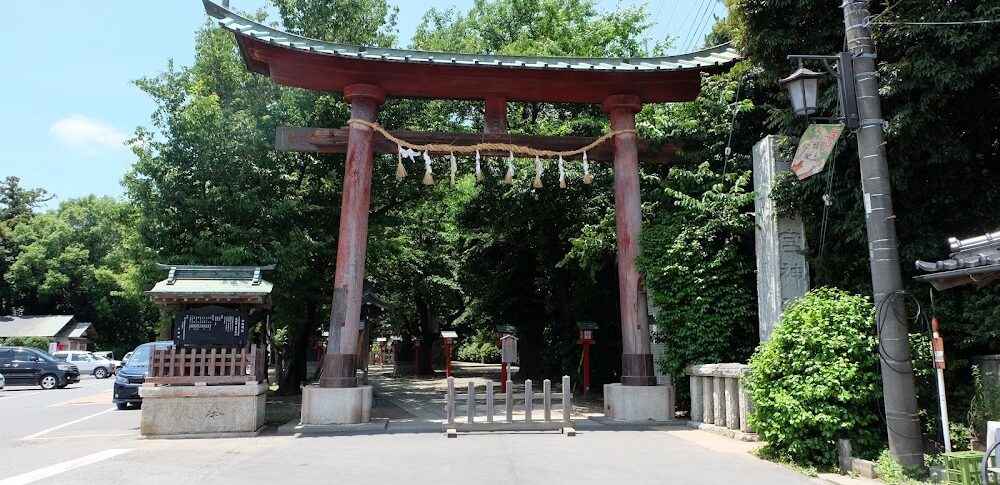
Kashima Shrine in Washinomiya, Kuki City, Saitama Prefecture, holds an extremely important position in the history of anime tourism in Japan as a sacred site for the anime “Lucky Star.” More than 18 years have passed since the anime began airing in 2007, yet many fans continue to visit this area, which is now recognized from both domestic and international perspectives as the “Sacred Site of Sacred Sites” and the “Birthplace of Sacred Site Pilgrimage,” serving as a successful model for content tourism.
The Relationship Between Lucky Star and Kashima Shrine
Overview of the Work
“Lucky Star” is an anime adaptation of a four-panel manga by Mizuisomething, which aired from April to September 2007. Depicting the daily lives of female high school students attending a high school in Saitama Prefecture, this work gained significant popularity as a late-night anime by lightly portraying the mundane conversations and school life of distinctive characters including the protagonist Konata Izumi, the Hiiragi sisters Kagami and Tsukasa, and Miyuki Takara.
The setting of the work primarily consists of multiple regions within Saitama Prefecture, with actual locations serving as models, including Washinomiya in Kuki City (the residential area of the Hiiragi sisters and Kashima Shrine), Satte City (the Izumi household and rice paddies in the opening), and Kasugabe City (areas around Konata’s school).
How Kashima Shrine Became a Model
The “Takamiya Shrine” that appears in the work is set as the home of the Hiiragi sisters Kagami and Tsukasa, and since the appearance and grounds faithfully recreate Kashima Shrine, it became a topic of discussion on the Internet from the time of broadcast. In the anime, the shrine’s torii gate, approach, and main hall are depicted in detail, with viewers taking great interest in the precision of the background art.
Kashima Shrine is known as the oldest major shrine in the Kanto region and is also called the “Honsha of Tori-sama.” The overlap of its historical significance and the anime work’s setting created a special place of meaning for fans.
Development of Sacralization and Impact on the Region
Early Boom in Sacred Site Pilgrimage
Soon after the anime broadcast began in 2007, anime fans from across Japan began visiting Kashima Shrine. At that time, the term “sacred site pilgrimage” was not yet common, and the act of visiting an anime’s setting itself was becoming recognized as a new cultural phenomenon.
Fans took photographs at the shrine grounds and conducted “stage exploration,” recreating scenes from the anime with the same composition, sharing their experiences online. This spontaneous fan activity spread through word of mouth, drawing even more people to Washinomiya.
Dramatic Increase in New Year’s Visitors
The most notable change at Kashima Shrine was the increase in New Year’s visitors. The number of New Year’s visitors, which was around 130,000 before 2007, increased to approximately 300,000 in 2008 after the anime aired, 420,000 in 2009, and 470,000 in 2010. This made it the second-largest number of New Year’s visitors in Saitama Prefecture after Hikawa Shrine, representing a remarkable transformation for the region.
This increase was not merely a temporary boom but has maintained a stable number of visitors thereafter, serving as a case study proving the sustainability of anime sacred site pilgrimage.
Ripple Effects on the Regional Economy
The increase in New Year’s visitors had a significant impact on economic activities throughout the Washinomiya region. Restaurants, souvenir shops, and accommodation facilities around the shrine benefited greatly, leading to the revitalization of the regional shopping streets. According to surveys by the Kuki Chamber of Commerce and Industry Washinomiya Branch (formerly Washinomiya Chamber of Commerce), the related economic effects are reported to have reached hundreds of millions of yen.
Particularly noteworthy is how local shops began actively developing products for anime fans and decorating their stores. Sales of Lucky Star merchandise, development of food products with character motifs, and anime-related displays at storefronts became common, increasing the points of contact between the region and fans.
Collaborative Community Revitalization Between Region and Fans
Initiatives by the Kuki Chamber of Commerce and Industry Washinomiya Branch
One of the success factors of sacred site pilgrimage in Washinomiya is the flexible and proactive response of the region. The Kuki Chamber of Commerce and Industry Washinomiya Branch viewed the arrival of anime fans as an opportunity for regional revitalization and implemented various measures.
The chamber launched a community development project utilizing “Lucky Star,” implementing activities that prioritized dialogue with fans. The characteristic approach was to listen to fan voices while providing the products and services they sought, while being careful not to fall into one-sided commercialism.
Birth and Continuation of the Lucky Star Mikoshi
An initiative symbolizing collaboration between the region and fans is the “Lucky Star Mikoshi” that began in 2008. During the Kashima Shrine’s annual festival (Haji Festival), a mikoshi decorated with anime characters is created and carried together by fans and local residents, demonstrating a new form of sacred site pilgrimage.
The production costs of the mikoshi are covered by donations from fans, and the operation on the day is conducted cooperatively by fans and local residents. This activity transcends being merely an anime event and has become established as a new regional culture where traditional festival culture and popular culture converge.
The Lucky Star Mikoshi continues as of 2025, with many fans from across the country gathering at the Haji Festival in September each year. This continuation itself speaks to the true success of sacred site pilgrimage in Washinomiya.
Establishment of Year-Round Events
Throughout the year, Lucky Star-related events are held in Washinomiya. Major ones include the following:
Year-End and New Year’s Lucky Star Merchandise First Sale: From December 31 to January 3, members and related parties of the Kuki Chamber of Commerce sell Lucky Star merchandise. This has become a regular event attracting many fans alongside New Year’s visits.
Hiiragi Sisters’ Birthday Event: Coinciding with the birthday of the Hiiragi sisters Kagami and Tsukasa as depicted in the work (July 7), commemorative events are held in early July each year. Limited merchandise sales and fan meetings are held, with fans converging from across the nation.
Haji Festival and Lucky Star Mikoshi: During Kashima Shrine’s annual festival held in early September, the Lucky Star Mikoshi processes, allowing visitors to experience the fusion of regional traditional culture and anime culture.
These events are not one-off phenomena but enable continuous relationship-building with fans throughout the year.
Points of Interest at Kashima Shrine and Its Surroundings
History and Significance of Kashima Shrine
Kashima Shrine is known as the oldest major shrine in the Kanto region, with its founding said to trace back to ancient times before the Common Era. Its principal deities are Amenohohiminokoto, Takehimaodorinokoto, and Onamuchino mikoto, and it has long been revered as a shrine for martial success, business prosperity, and good fortune.
Also known as the “Honsha of Tori-sama,” the Tori-no-Ichi (rooster market) held on the day of the rooster in November is said to be the origin of rooster markets throughout the Kanto region. This historical and cultural significance, combined with its value as an anime sacred site, attracts diverse visitors.
Points of Interest in the Grounds
The grounds of Kashima Shrine offer numerous points of interest for both anime fans and general visitors.
Main Hall and Worship Hall: The solemn shrine buildings that appeared in the anime convey the beauty of traditional shrine architecture to the present day. Worshipping before the worship hall is a special experience for fans.
Ema (Votive Tablet) Hanging Area: Numerous ema with Lucky Star illustrations are dedicated, and visitors can read fan messages. The ema inscribed with devotion to the work and memories of sacred site pilgrimage create the special atmosphere of this place.
Goshuin (Shrine Seal): In addition to standard goshuin, Kashima Shrine sometimes issues special Lucky Star-related goshuin. These have become valuable items for collectors.
Sacred Sites Around Washinomiya Station
Along the approximately 10-minute path from Washinomiya Station on the Tobu Isesaki Line to Kashima Shrine, various locations from the anime and related facilities are scattered.
Washinomiya Station: The station building that appeared in the anime’s opening and ending is the starting point of sacred site pilgrimage. Lucky Star-related decorations and posters may be posted within and around the station.
Washinomiya City Center: Along the approach from the station to the shrine, scenes and streetscapes from the anime unfold. By comparing them with scenes from the work while walking, one can re-experience the characters’ daily lives.
Washinomiya Post Office: The post office that appeared in the anime actually exists and has become a fan photography spot. Displays related to Lucky Star may occasionally be held within the office depending on the season.
Kuki Chamber of Commerce and Industry Washinomiya Branch: Functions as a sales point for Lucky Star merchandise, with many fans visiting during events. Limited merchandise sales and displays are sometimes held on the second floor of the chamber hall.
Kuki City Hall Washinomiya General Branch: The hub of regional administration that also provides Lucky Star-related information. Convenient for obtaining tourist information and regional information.
Otori Chaya Denden (Otori Tea House Denden): An rest house that opened in front of Kashima Shrine in November 2018, serving oden and dengaku. Ideal for resting and dining after worship, and also issues goshuin.
National Impact and Recognition as “88 Anime Sacred Sites Worth Visiting in Japan”
Pioneering Anime Tourism
The success case in Washinomiya has had a significant impact on anime sacred site pilgrimages throughout Japan. The model of building a sustainable relationship between region and fans through cooperation has been referenced by many local governments and regional organizations.
Later successful cases such as “Girls und Panzer” in Oaizumi Town, Ibaraki Prefecture, and “Your Name” in Hida City, Gifu Prefecture, have learned much from Washinomiya’s experience. The basic principles of resident understanding and cooperation, respect for fans, and continuous communication are the path Washinomiya has shown.
Recognition as “88 Anime Sacred Sites Worth Visiting in Japan”
In 2018, Kuki City, Saitama Prefecture was recognized as a sacred site for “Lucky Star” in the “88 Anime Sacred Sites Worth Visiting in Japan” selected by the Anime Tourism Association. This recognition means that more than a decade of community revitalization efforts in Washinomiya were officially evaluated.
Through selection for the 88 sacred sites, Washinomiya has become more widely known to anime fans both domestically and internationally, contributing to the promotion of inbound tourism. The number of visitors from abroad has increased, and the area is attracting attention as a unique tourist destination where Japanese pop culture and traditional culture converge.
Case Study by the Ministry of Foreign Affairs
Japan’s Ministry of Foreign Affairs also introduces the initiatives of Washinomiya and Lucky Star as a successful case of regional revitalization. Under the title “From Zero to Legend,” it is evaluated as a pioneering model of regional activation through anime sacred site pilgrimage, and is also valued from the perspective of international cultural exchange.
This case is positioned as part of Japan’s soft power diplomacy, contributing to the promotion of international understanding through anime culture.
Factors Leading to Success in Sacred Site Pilgrimage
Understanding and Cooperation of Local Residents
The greatest factor in Washinomiya’s success was the warm reception of anime fans by local residents. Although there was initial bewilderment, as residents witnessed the good manners of fans and their respect for the region, understanding and cooperation gradually spread.
The good relationship between local residents and fans is based on mutual respect. Fans respect the shrine and regional culture, while residents understand fans’ cultural activities. This mutual understanding became the foundation for a long-term relationship.
Flexible Response of the Chamber of Commerce
The flexible and prompt response of the Kuki Chamber of Commerce and Industry Washinomiya Branch was also an important success factor. Faced with a new category of visitors—anime fans—it responded with creative thinking not bound by existing frameworks.
The attitude of prioritizing dialogue with fans and implementing measures based on understanding their needs realized true fan service without falling into one-sided commercialism. This stance led to fan trust and continued support.
Spontaneous Fan Activity and Good Manners
The spontaneous activity of fans and their high level of manner consciousness were also important elements of success. Most fans visiting Washinomiya showed respect for the shrine and region, and acted while following proper etiquette.
By adhering to basic manners such as taking garbage home, being mindful of noise, and following regional rules, they avoided friction with residents and built good relationships. Additionally, fans themselves disseminated information and conducted manner awareness activities, with self-correction working within the community.
Continuous Events and Communication
Sustaining the relationship through continuous year-round events rather than allowing the boom to end, and maintaining communication with fans was key to success. Regular points of contact such as the Lucky Star Mikoshi, birthday events, and merchandise sales encouraged fans’ continued visits.
Active information dissemination through SNS and websites also maintained connections with fans from distant areas. This continuous communication contributed to maintaining a long-term fan base.
Washinomiya Today and the Future
Current Situation as of 2025
As of 2025, more than 18 years have passed since the Lucky Star anime broadcast began, yet many fans continue to visit Kashima Shrine. The area is particularly crowded during New Year’s visits, annual festivals, and various events, with the shrine’s position as a sacred site firmly established.
While new fan acquisition is less active than initially, long-time fans devoted to the work make regular visits, and younger generations newly exposed to the work also undertake sacred site pilgrimage. At a time when anime sacred site pilgrimage culture has become generalized, Washinomiya maintains special significance as the “origin of sacred sites.”
Collaboration with Other Sacred Sites
Lucky Star’s sacred sites are not limited to Washinomiya; they also exist in Satte and Kasugabe cities. Collaboration among these regions is also progressing, with tours visiting multiple sacred sites and joint events being planned.
Saitama Prefecture as a whole has also been putting effort into promoting anime tourism, advancing branding as an “anime prefecture” with various work sacred sites scattered throughout, including Lucky Star.
Succession to the Next Generation
Passing on the sacred site pilgrimage culture in Washinomiya to the next generation is also an important task. Efforts are being made to convey the value of this cultural asset to younger generations in the region and encourage their participation in ongoing activities.
It is also important to transmit the appeal of the anime work itself to new generations. Through provision of viewing opportunities via distribution services and holding commemorative events, new encounters with the work are being created.
Guide to Enjoying Sacred Site Pilgrimage
Access Methods
By Train: From Washinomiya Station on the Tobu Isesaki Line, it is approximately a 10-minute walk to Kashima Shrine. From central Tokyo, access is possible in about one hour.
By Car: Approximately 15 minutes from the “Kuki IC” or “Kazo IC” on the Tohoku Expressway. Visitor parking is available around the shrine, but congestion is expected during events, making public transportation recommended.
Precautions When Visiting
Manners at the Shrine: Kashima Shrine is a historic shrine and a place of faith before being an anime sacred site. Follow worship etiquette and be mindful not to disturb other visitors.
Photography: Photography at the grounds is generally permitted, but consideration is needed when rituals or ceremonies are being held. Also, be careful not to include other visitors in photographs.
Consideration for Local Residents: When passing through residential areas, be mindful of noise and avoid trespassing on private property. Respect for residents’ living spaces is essential.
Recommended Visiting Periods
New Year’s (December 31 – January 3): The busiest period, during which Lucky Star merchandise first sale is held. Many fans gather for interaction, but be prepared for crowds.
Hiiragi Sisters’ Birthday Event (Early July): A special time for work fans, with limited merchandise sales and events held.
Haji Festival (Early September): A traditional festival where the Lucky Star Mikoshi processes, allowing visitors to experience the fusion of regional and anime culture.
Quiet Weekdays: For those wishing to leisurely worship at the shrine and explore the surroundings, visiting on non-event weekdays is recommended.
Conclusion
The “Lucky Star” sacred site pilgrimage in Washinomiya, Kuki City, Saitama Prefecture, is a cultural phenomenon created through collaboration among diverse entities: anime fans, local residents, the chamber of commerce, and the shrine. More than 18 years have passed since the anime broadcast began in 2007, yet this region continues to attract many fans, and its sustainability is highly evaluated as a successful model in Japan’s content tourism.
The case where the historical and cultural value held by Kashima Shrine, the oldest major shrine in the Kanto region, beautifully converges with contemporary popular culture and creates a new regional culture offers much insight for future anime tourism and regional revitalization.
Washinomiya, where one can experience multilayered values—devotion to anime works, respect for regional culture, and exchange among fans—through sacred site pilgrimage, is truly worthy of being called the “Sacred Site of Sacred Sites.” Many more fans will visit in the future, continuing to foster new culture together with the region.
The story of Lucky Star and Washinomiya demonstrates the possibilities that arise when content and regions mutually respect and cooperate. This success experience continues to contribute to regional revitalization and anime tourism development throughout Japan, with its impact expected to expand further.