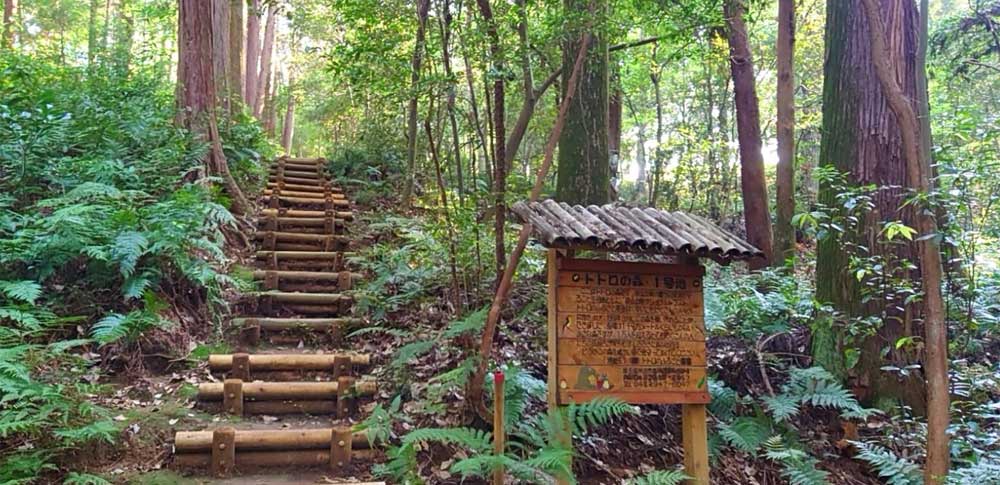
Tenranzan Mountain, located in Hanno City, Saitama Prefecture, is a sacred site beloved by many fans as an important setting in the popular anime “Yama no Susume.” Despite being a low mountain with an elevation of 197 meters, it is supported by a wide range of people, from beginner climbers to pilgrimage fans, due to its convenient access from the city center, abundant nature, and the charm of experiencing the world of the work. This article provides a detailed explanation of the appeal of Tenranzan, climbing courses, access methods, and sacred site pilgrimage points.
The Relationship Between Yama no Susume and Tenranzan
“Yama no Susume” is an anime series based on a manga work by Shiro, depicting the story of an indoor enthusiast named Aoi who is invited by her childhood friend Hinata to start climbing and awakens to the charm of mountains. Hanno City, Saitama Prefecture, the setting of the work, is known for featuring many real locations.
Tenranzan appears from Episode 1 of the work and is depicted as the first mountain that Aoi and Hinata climb together after reuniting. It is an important stage that serves as the catalyst for the protagonists to discover the joy of mountain climbing and can be said to be the origin of the story. In the anime, the view from the summit and the appearance of the climbing trail are carefully depicted, making it possible to recreate scenes from the work when actually visiting, which has made it a popular spot for sacred site pilgrimages.
Basic Information and History of Tenranzan
Overview of Tenranzan
Tenranzan is a low mountain with an elevation of 197 meters in Hanno City, Saitama Prefecture. It forms part of the Okumusashi Nature Trail and is familiar to residents as a symbol of Hanno City. The travel time to the summit from the trailhead is approximately 20 to 30 minutes, making it popular as a mountain that even beginners and families with children can easily climb.
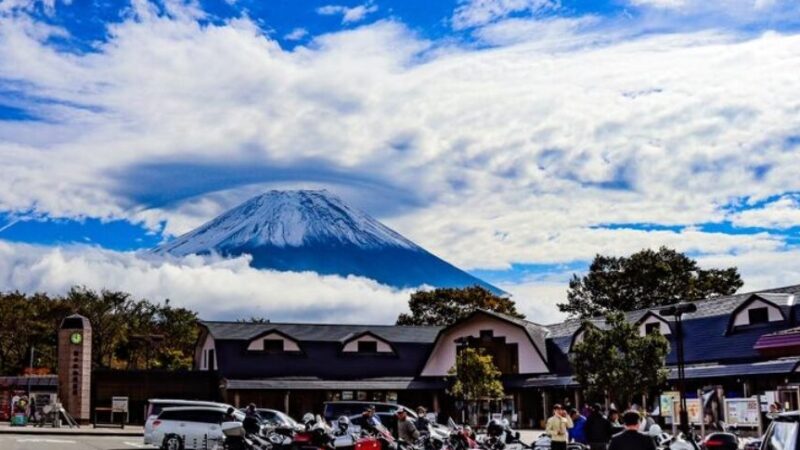
From the summit, you can see not only the Hanno cityscape but also Tokyo Skytree and Mount Fuji on clear days, and the beauty of the view captivates many climbers. The ability to enjoy nature in all four seasons is also a major appeal of Tenranzan, offering cherry blossoms in spring, fresh greenery in early summer, autumn colors in fall, and clear-air climbing in winter.
The Origin of Tenranzan’s Name
The name “Tenranzan” has historical background. In 1883 (Meiji 16), the then Crown Prince (who later became Emperor Taisho) observed Imperial Guard maneuvers on this mountain, which led to it being called “Tenranzan.” It is said that before that, it was called “Atagoyama.”
This historical episode shows that Tenranzan was recognized as an important location in the region from long ago. Even now, there is Ninin Temple at the foot of the mountain and sixteen arhat statues midway up, giving it aspects as a sacred mountain.
Detailed Access Methods to Tenranzan
Access by Train
Access to Tenranzan is convenient by public transportation. The nearest station is “Hanno Station” on the Seibu Ikebukuro Line, with excellent access from the city center.
From Ikebukuro Station to Hanno Station:
- Seibu Ikebukuro Line Limited Express “Chichibu”: Approximately 40 minutes
- Seibu Ikebukuro Line Express: Approximately 50 minutes
- Local train: Approximately 70 minutes
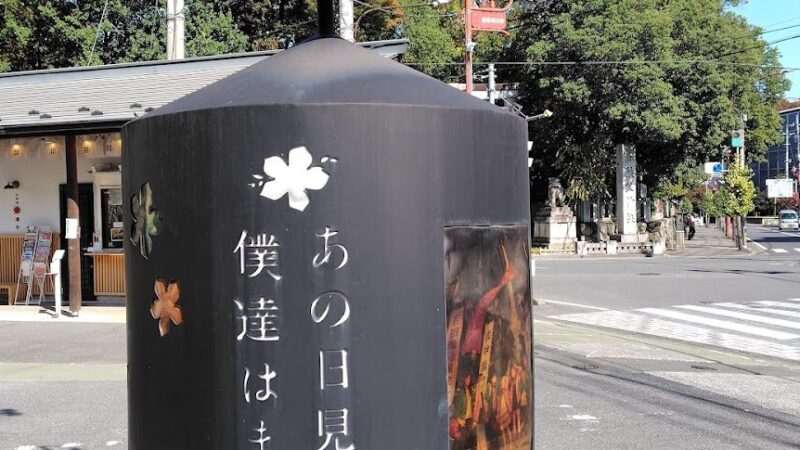
From Hanno Station to the Tenranzan trailhead is approximately 20 to 25 minutes on foot. Exiting from the north exit, you pass through the city area heading toward Ninin Temple. Along the way, there are signboards and character panels from “Yama no Susume,” allowing you to enjoy sacred site pilgrimages while walking.
Access by Car and Parking Information
For those driving, access is possible in approximately 20 to 30 minutes from either the “Sayama-Hidaka IC” or “Ome IC” on the Shuto Metropolitan Expressway.
Regarding parking:
- Citizen’s Hall Parking Lot: The public parking lot closest to the Tenranzan trailhead (free)
- Hanno Central Park Parking Lot: Somewhat distant but with larger capacity
- Ninin Temple Parking Lot: For temple visitors, but may be available for climbers
On weekends, during autumn foliage season, and during anime-related events, parking lots may become crowded, so arriving early is recommended. Additionally, there are multiple coin parking options around Hanno Station.
Detailed Tenranzan Climbing Course Guide
Standard Course (via Ninin Temple)
The most common course is the route via Ninin Temple toward the summit. This course is the standard route depicted in “Yama no Susume” and is also ideal for sacred site pilgrimages.
Course Overview:
- From Hanno Station North Exit through the city area to Ninin Temple (approximately 20 minutes on foot)
- Through Ninin Temple grounds to the trailhead
- Via the sixteen arhat statues at the midpoint
- Arrival at the summit observation platform (approximately 20 to 30 minutes from the trailhead)
Required Time: Round trip approximately 1 to 1.5 hours (including rest)
Difficulty: Beginner (safe for novice climbers)
Distance: Approximately 1 km one way
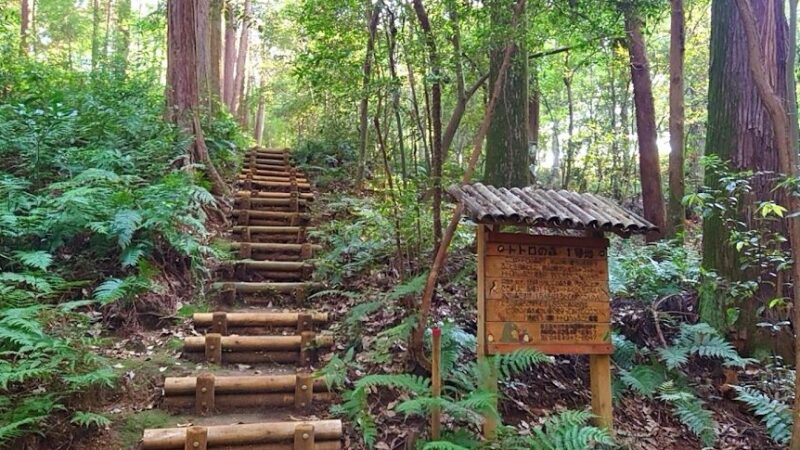
The trail is well-maintained, with stairs and handrails installed on steep sections. However, the trail can be slippery after rain, so shoes with good grip are recommended.
Midpoint Landmark: Sixteen Arhat Statues
Midway along the trail are sixteen arhat statues carved into the rock face. These stone Buddhist statues, said to have been carved during the Edo period, are important cultural heritage that evoke the history of Tenranzan. The scene also appears in “Yama no Susume,” and it has become a popular spot for fan photography.
The area around the arhat statues is somewhat open and suitable for rest. From here to the summit is approximately 10 to 15 minutes away.
The Appeal of the Summit and Views
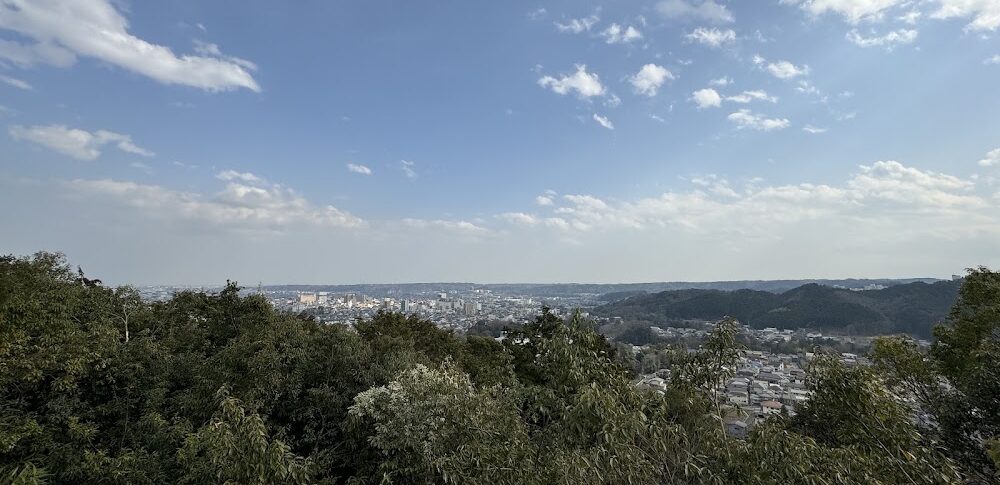
The summit of Tenranzan is relatively spacious with an observation platform installed. Although the elevation of 197 meters is low, with no tall buildings in the surrounding area, you can enjoy a wonderful view that, while not 360 degrees, is still impressive.
Main views from the summit:
- Full panorama of Hanno city
- Okumusashi mountains (Tofuza, Izugadake, etc.)
- Mount Fuji on clear days (western direction)
- Tokyo Skytree (southeast direction, if conditions are favorable)
- Mountains in the Chichibu direction
In “Yama no Susume,” Aoi and Hinata have an emotional reunion at the summit, and the view during this scene is beautifully depicted. Seeing the same scenery in person will deepen your understanding of the work.
The summit has a shelter and benches, making it ideal for eating lunch or resting. While weekends are often crowded with climbers, weekdays are relatively quiet.
Points for Yama no Susume Sacred Site Pilgrimage
Main Scenes Appearing in the Work
Tenranzan appears as an important stage in Episode 1 of “Yama no Susume.” Key scenes include:
Important Scenes from Episode 1:
- The scene where Aoi and Hinata plan to climb Tenranzan
- Near Ninin Temple at the trailhead
- Rest scene at the sixteen arhat statues
- Emotional view scene at the summit
- Scene experiencing the sense of accomplishment after descent
These scenes are faithfully depicted with actual locations, allowing you to experience the excitement of “this is that scene from the work!” when visiting.
Recommended Photography Spots for Sacred Site Pilgrimage
Here are recommended spots for taking commemorative photos during sacred site pilgrimages:
- In front of Ninin Temple gate: As the starting point of the climb
- Signboard at the trailhead: A marker that appears in the work
- Sixteen arhat statues: Midpoint rest spot
- Summit observation platform: The most important sacred site spot
- Compass at the summit: Equipment for confirming the view
When photographing, be considerate of other climbers. The summit can be crowded on weekends, so a spirit of cooperation is important.
Related Spots in Hanno City
Beyond Tenranzan, there are many sacred sites from “Yama no Susume” throughout Hanno City:
Main Sacred Sites:
- Around Hanno Station (appears frequently in the work)
- Hanno Ginza Shopping Street
- Hanno Riverside (along the Iruma River)
- Kannon Temple (near the model for Aoi’s home)
- Tofuza/Tenbozan (elevation 271m, possible to traverse from Tenranzan)
If time permits, visiting these spots before or after climbing Tenranzan will make for a more fulfilling sacred site pilgrimage. The Hanno City Tourist Information Center distributes sacred site maps of “Yama no Susume.”
Clothing and Gear for Tenranzan Climbing
Recommended Clothing
Although Tenranzan is a low mountain with short climbing time, wear appropriate clothing for safe and comfortable climbing.
Basic Attire:
- Comfortable clothing (stretch pants recommended over jeans)
- Quick-drying materials (cotton is avoided due to chill from sweat)
- Layerable clothing (for temperature adjustment)
- Hat (for sun protection and branch protection)
- Hiking boots or trekking shoes (sneakers are acceptable if they have non-slip soles)
“Yama no Susume” features scenes where Hinata advises Aoi on appropriate clothing. To ensure safety even as a beginner, having basic equipment is recommended.
Essential Items
Even for short climbs, prepare minimum necessities:
Essential Items:
- Drinking water (500ml or more)
- Towel, hand towel
- Snacks (chocolate, candy, etc.)
- Smartphone (map app, emergency contact)
- Coins (for vending machines)
- Plastic bag (for trash)
Convenient to Have:
- Camera (for sacred site pilgrimage photos)
- Picnic sheet (for rest at summit)
- Sunscreen
- Insect repellent (summer)
- Basic first aid kit (adhesive bandages, etc.)
- Rain gear (if weather is unstable)
Seasonal Ways to Enjoy Tenranzan
Spring (March to May)
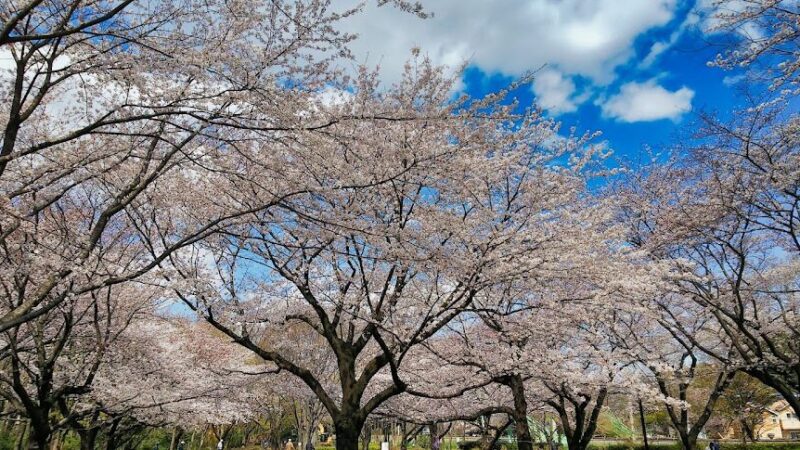
Spring on Tenranzan is beautiful with new greenery and cherry blossoms. From late March to early April, cherry blossoms bloom around Ninin Temple and along the trail, offering flower-viewing climbs.
Spring Characteristics:
- Cherry blossom blooms (late March to early April)
- Beautiful new greenery (mid-April to May)
- Pleasant temperatures
- Bird songs
Spring is one of the best seasons for beginners. However, crowds are expected during Golden Week.
Summer (June to August)
Summer on Tenranzan offers thick greenery and forest bathing. However, with high temperatures, early morning climbing is recommended.
Summer Characteristics:
- Dense green forest
- Cool early morning hours
- Cicada songs
- Increase in families during summer vacation
Summer Precautions:
- Heat illness prevention (frequent hydration)
- Insect prevention
- Early morning or evening climbs recommended
Autumn (September to November)
Autumn is one of the most beautiful seasons on Tenranzan. From mid to late November, autumn foliage reaches its peak, with many climbers visiting.
Autumn Characteristics:
- Beautiful autumn colors (mid to late November)
- Clear air with excellent views
- Pleasant temperatures
- Autumn flavors to enjoy in Hanno City after descent
The foliage season is particularly popular, with trails crowded on weekends. Parking lots also fill up early, so public transportation use or early morning visits are recommended.
Winter (December to February)
Winter on Tenranzan has clear air and the best views of the season. The chance of seeing Mount Fuji and Skytree increases.
Winter Characteristics:
- Excellent views
- Quiet mountain walks (fewer visitors)
- Beautiful winter clear days
- Natural beauty of frost and ice
Winter Precautions:
- Dress warmly (summit can be windy)
- Early action due to early sunset
- Watch for ice (especially early morning)
Traverse from Tenranzan to Tofuza
From the Tenranzan summit, you can continue further and traverse to Tofuza (elevation 271m). This mountain appears in later seasons of “Yama no Susume” and is recommended for those wanting more serious climbing.
Traverse Course Overview:
- From Tenranzan summit to Tofuza: approximately 40 to 50 minutes
- More technical with ups and downs than Tenranzan
- Excellent views from Tofuza summit
- Descent toward Hanno Station area or Hanno Riverside area
Required Time: Approximately 2.5 to 3 hours from Tenranzan trailhead through Tofuza to descent
Those with confidence in their fitness or wanting longer climbing should definitely try the traverse.
Enjoyment After Descent
Gourmet Spots in Hanno City
One pleasure of climbing is enjoying local cuisine. Hanno City has many appealing restaurants.
Recommended Cuisine:
- Sweetpotato (a confectionery shop that appears in “Yama no Susume”)
- Hanno udon (local specialty)
- Soba restaurants (soba raised in Okumusashi’s clear streams)
- Cafes (numerous around Hanno Station)
“Sweetpotato” in particular appears as an important location in the work and has become a standard sacred site pilgrimage spot.
Hot Spring Baths
To ease fatigue after climbing, day-use hot spring facilities in Hanno City or nearby areas are recommended.
Main Hot Spring Facilities:
- Sawarabi-no-yu (in Hanno City, natural hot spring)
- Miyazawa Lake Onsen Kirari Bettei (near Metsa Village)
- A Small Journey Kawagoe Onsen (approximately 30 minutes by car)
After bathing and relaxing at these facilities, you can head home refreshed.
Relaxing at Hanno Riverside
If time permits, spending time at Hanno Riverside (along the Iruma River) is also recommended. This location appears in camping scenes in “Yama no Susume” and offers river play and barbecue (in designated areas).
Important Safety Precautions for Safe Climbing
Basic Climbing Etiquette
Although Tenranzan is beginner-friendly, basic climbing etiquette should be followed:
- Always take trash back with you
- Greet when passing others
- Uphill has priority (downhill yields the path)
- Do not pick plants
- Stay on designated trails
- Avoid loud noise (consideration for nature and other climbers)
Emergency Response
Should injury or health issues occur:
- Emergency contacts: 110 (Police) or 119 (Fire)
- How to communicate location: Clearly state “Tenranzan in Hanno City, Saitama Prefecture”
- In case of mountain rescue: Contact the Saitama Prefectural Police Mountain Rescue Team
Tenranzan is near the city with good cellular reception, making emergency contact relatively easy. However, avoid overexertion. Making an early descent decision is important if feeling unwell.
Weather Considerations
Weather attention is necessary for Tenranzan climbing:
- Rainy weather: Avoid climbing as the trail becomes slippery
- Thunderstorms: The open summit requires immediate descent if storms approach
- Typhoon approach: Cancel climbing
- Winter ice: Especially careful early morning
Check weather forecasts beforehand and have the flexibility to reschedule if bad weather is predicted.
A Message for Yama no Susume Fans
Tenranzan, a sacred site of “Yama no Susume,” holds special meaning for fans of the work. It is the mountain Aoi and Hinata first climbed together and has served as an inspiration for many viewers to want to try mountain climbing.
Visiting Tenranzan in person will deepen your appreciation of the work while allowing you to experience the joy of climbing and the wonder of nature. Despite being a 197-meter low mountain, the views and sense of accomplishment from climbing it are anything but small.
Hanno City actively promotes its status as a sacred site of “Yama no Susume,” with character panels and signboards installed throughout the city. Local residents warmly welcome sacred site pilgrims.
Please use this article as a reference to visit Tenranzan and experience the emotion that Aoi and Hinata felt for yourself. Then, inspired by Tenranzan, challenge yourselves to climb more mountains.
Summary: Taking Your First Step in Mountain Climbing at Tenranzan
Tenranzan in Hanno City, Saitama Prefecture, is simultaneously a sacred site of “Yama no Susume” and an ideal mountain where beginners can safely start mountain climbing. With convenient access from the city center and short climbing time, it is easy to visit.
Summary of Tenranzan’s Appeal:
- Important setting from Episode 1 of “Yama no Susume”
- 197m elevation with approximately 20 to 30 minute climb time for beginners
- Wonderful views from the summit
- Natural beauty across all seasons
- Convenient access approximately 1 hour from the city center
- Possible traverse to Tofuza
- Numerous sacred sites within Hanno City
Even those without climbing experience can safely enjoy it with proper preparation and basic etiquette. Like Aoi from “Yama no Susume,” many discover mountain charm starting with Tenranzan.
Why not visit Tenranzan on a weekend or holiday and recreate the anime world while refreshing yourself in nature? We hope Tenranzan becomes your first step in mountain climbing.
Climb safely and happily with affection for the work, and enjoy wonderful time on Tenranzan.